
Writing Slowly
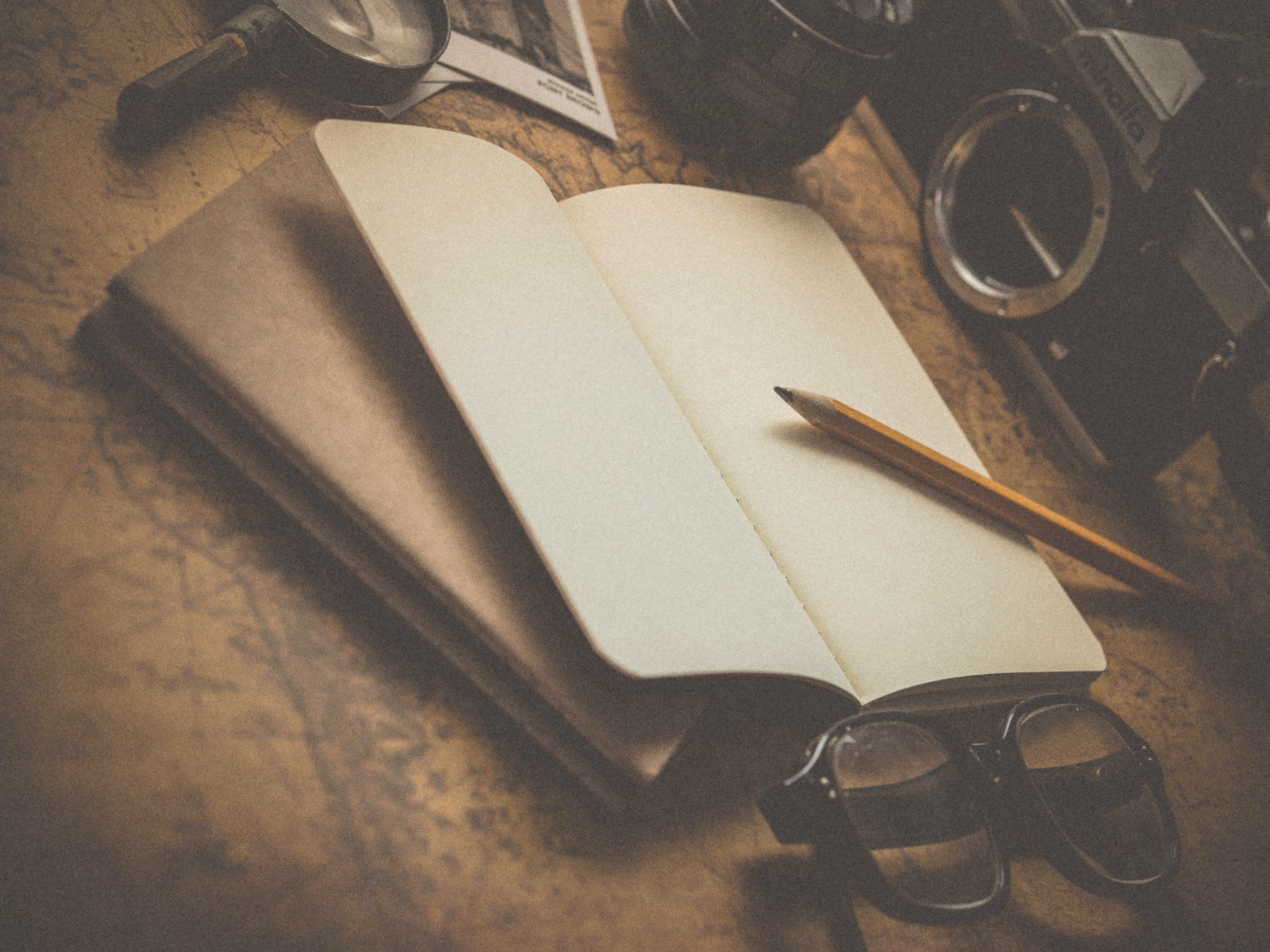 Jamie’s Desk
As I said in my last newsletter, I’m an extremely slow writer—a fast typer, but a slow drafter. I used to envy people who could write thousands of words a day, whereas I routinely write around five hundred. It took me a long time to let go of the idea that fast writing is something to envy; that is, to realize that no one speed or way of writing is better than the other.
I always knew I shouldn’t compare my writing (and publishing) speed to people who were quicker than I was—or to anyone, really—but I couldn’t truly stop comparing and envying that quickness until I reached a point in my life where I felt happy and able to accept where I was. When I let go of the idea that I needed to be successful in the eyes of the world or expectant friends and family members, that I needed to be anything other than what I was, or that writing needed to be all-consuming, working on my book became smooth and fun again—I was able to remember what it felt like to write just to write like I did when I first started, and I felt less guilty spending time away from my computer.
Now, I see writing slowly as a positive. Not that there’s anything wrong with being a fast writer, but I’ve accepted that being slow is just how I am: my brain needs time to rest and work through story problems in order to write the best stories that I can, and I only write in the mornings, so it’s not feasible to expect thousands of drafted words in addition to research, outlining, and all of the things that go into writing a novel. As helpful as word-count-tracking can be, placing too much weight on numbers can easily turn it into a burden.
Not every writing session has to yield thousands of words—the words will find their way onto the page in their own time, without being forced or rushed, and the book will end up in the right place at the right time, and find its way into the right hands.
If you’re an author or a writer, I hope you can let go of expectations and find joy in the process of writing. ♥️
In writing news, I finished the first draft of Book II in my Fractalists series. It ended up being 117,287 words, and I’m planning for Book III to be even longer (I’m hoping for around 130k) but I probably won’t be starting that one until the end of the year.
After finishing BII, I was torn between two different project ideas (I’m still going to write those eventually!), but I ended up getting sucked into a story that I started in the autumn of 2020–think Pretty Little Liars meets Bad Summer People inspired by Wuthering Heights. It’s adult fiction despite the PLL mention, and I’m expecting it to be a lot shorter than my historical fantasy books—maybe 70k? But novels have a way of carrying on, so we’ll see.
I will share the title for this one though! Unless something drastic changes in the story, its title will be Vicarious Devastation. I can’t wait to share more about it in the future!
Field SketchbookMy Fractalists series takes place in a fantasy world made up of four countries. Each of those countries represents a season and is based on a real-world culture/people—Book I was based on the Norsemen and Book II is based on the Ancient Greeks. So I wanted to feature a Greek artifact in this newsletter: the fibula, which was used to pin cloaks or other types of clothing, usually at the shoulder. Fibulae feature often in Book II as each polis has distinctly decorated cloak pins.
Fibulae were used throughout the ancient world, and there are many different types and styles of decoration, but the Thessalian one I’ve drawn here dates back to the 8th century and is on display at the Met.

I’m in favour of replacing modern safety pins with elaborate fibulae, who’s with me?
Returning HomeWhat I’m reading: I just finished Little Fires Everywhere by Celeste Ng and started reading Cruel Beauty by Rosamund Hodge. I’m only a few pages in, but it isn’t what I expected—in a good way—and I’m loving the atmosphere.
Next, I plan to read either Ivory and Bone by Julie Eshbaugh or The Storm of Echoes by Christelle Dabos—I absolutely loved the first three books in The Mirror Visitor Quartet and I’m excited about reading the last one, but I also keep putting it off because I don’t want it to end (I frequently leave the final episodes of shows unwatched for that reason 🥲).
What I’m watching: Dr. Cha, Castaway Diva, Singles Inferno (no spoilers, I’m not caught up—but I’m so invested), Unforgotten, The Escape Artist, When Calls the Heart, and The Great British Bake Off (Collection 11). Oh, and I recently watched Business Proposal for the second time (it was so good I had to make my husband watch it with me 😂).
What I’m listening to: When I’m not listening to project-specific playlists while writing, I usually put on indie folk music, soft jazz, Enya, or this playlist (it’s one of my favourites to write to):
Behind the Scenes of ACoRWhen I’m writing, I always have a notes/outlining document open next to my draft. They’re usually Word documents riddled with errors, incorrect grammar, ridiculous comments I’ve left for my future self, and all sorts of random facts/odds and ends, and they usually wind up being incredibly long (the one for Hearts Like Silver was 55917 words—over half as long as the actual book). But the one for A Conspiracy of Ravens was a super short Notepad note (yay, short stories!), so I thought I’d share it for those who want to have a look into how I plotted ACoR:

Thanks for reading The Ink-Dipped Trowel! Subscribe for free to receive new posts and support my work.


