Walking in the Shoes of Jane Austen
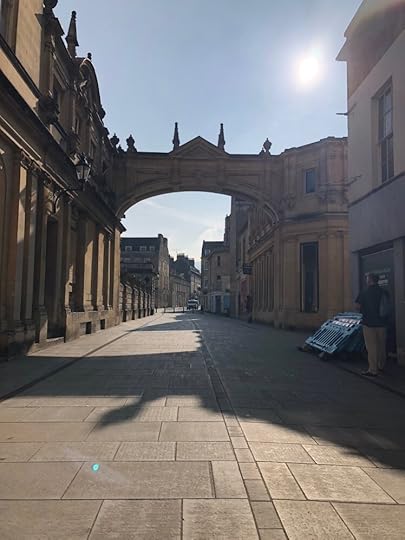
During our recent visit to England we had the distinct privilege of visiting a city with strong literary connections: Bath! Bath sits in the southwestern county of Sommerset in England, not far from Bristol, and straddles the Avon River. It’s known for its many natural thermal springs which have bubbled up to the surface since before the Romans lived here. The springs are known to have medicinal properties and have hence attracted many wealthy and elite people to Bath over the centuries.
At the beginning the 19th century, Bath was especially popular and was seen as a vacation destination for the rich and aspiring members of society, something of a Nantucket or Monaco for affluent British at the time. Charles Dickens spent a fair amount of time here in the Victorian era, working as a Parliamentary journalist.
It was in 1801 that Jane Austen first came to live here, and during the five years of her stay, her writing was greatly affected by the lifestyles and attitudes she saw all around her in Bath. It was in Bath that she wrote Northanger Abbey and Persuasion, two of her most popular and beautifully written novels.
In order to get to know Jane a little better, we followed a walking tour from the book Bath as Jane Knew It, by Terry Old. Here are a few of the places we saw in Bath, and a bit about their connection to her:
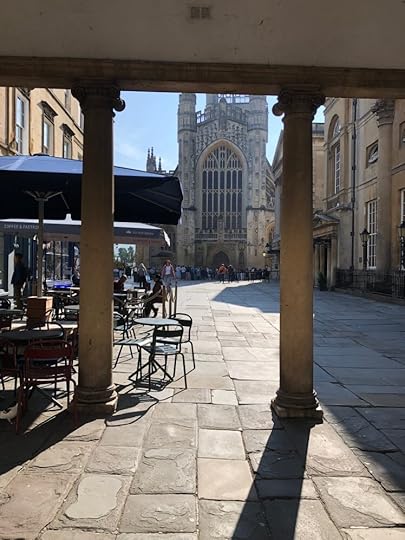 1. Bath Abbey
Bath Abbey has existed since 1499, so Jane certainly knew it. The flying buttresses and pinnacles were added later, but this church stood here, overlooking the Pump Yard (known now as the Abbey Churchyard). At the time Jane lived here, the Abbey was constantly surrounded by lean-to shops. In a few places it’s possible to see where these shops were joined to the Abbey walls.
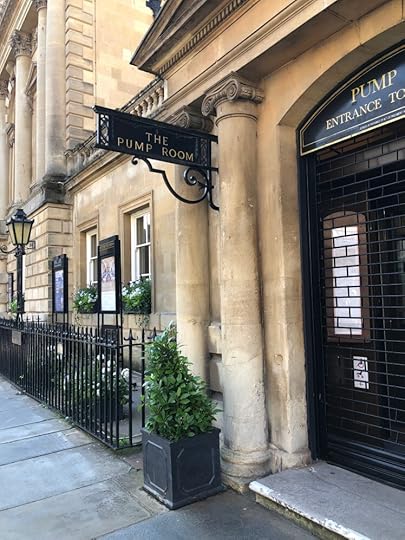
2. The Pump RoomThe Pump Room was also here in Jane’s time, although the Roman Bath Museum next door was not. The largest and most active springs in Bath inside that museum were unknown in Jane’s time, as they were covered by buildings. But the springs that fed into the Pump Room were very well known throughout England and became a gathering place for England’s elite. This beautiful Georgian-style room was built in 1795 by John Palmer on one such spring. Inside is a large room for people to sit and socialise and an elegant fountain where you can buy a glass of Bath’s famous spring water. The Pump Room is mentioned in Northanger Abbey and featured in the BBC film of Persuasion.
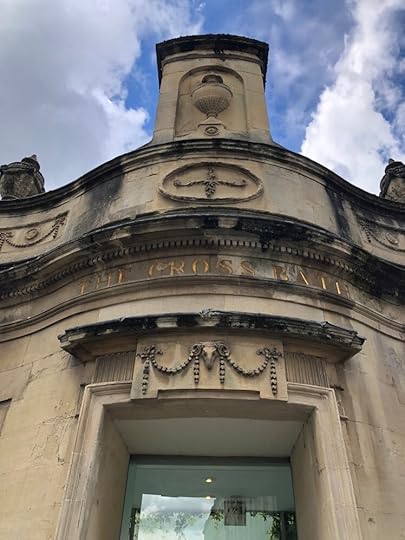 3. The Cross Bath and Thermae Bath Spa (Hetling Street)
Thermal baths such as the Cross Bath and Thermae Bath Spa also attracted visitors to the area. The Cross Bath was first built by the Romans but is now part of the Thermae Bath complex. These baths were formerly flanked by the “Westgate Buildings,” a poor and seedy area of Bath in Jane’s time that appear in her novel Persuasion.
Jane’s brother Edward is also known to have visited these baths for both bathing and drinking medicinal water as part of his health routine.
4. The Former HaberdashersJust around the corner from the Pump Room one can see the building that housed the Haberdashers Shop where Jane’s esteemed aunt, Mrs. Leigh Perrot, was accused of stealing a length of black lace. She had been framed as a subject for blackmail, and the incident caused a great deal of trouble for Jane’s family since stealing was at the time punishable by imprisonment, death, or exile in Australia! Luckily Mrs. Perrot was acquitted during the trial and the family was absolved of any guilt.
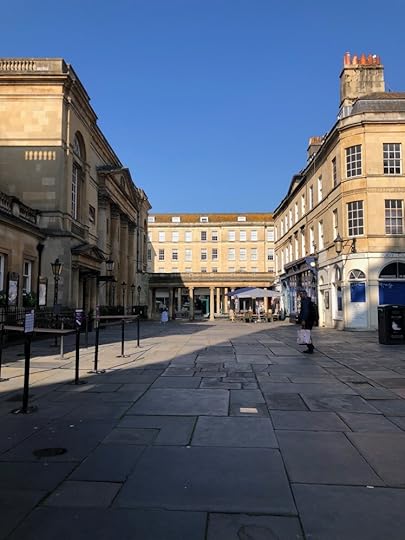
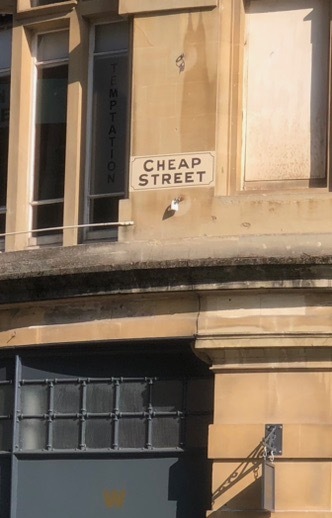 5. Cheap Street & Union Passage
Jane included Cheap Street & Union Passage in Northanger Abbey as Catherine Morland and Isabella Thorpe spot two eligible young men in the Pump Room and then attempt to follow them up Cheap Street. However, the busy traffic of horses and carriages prevents them from following closely, and the two men disappear into the Union Passage never to be seen again.
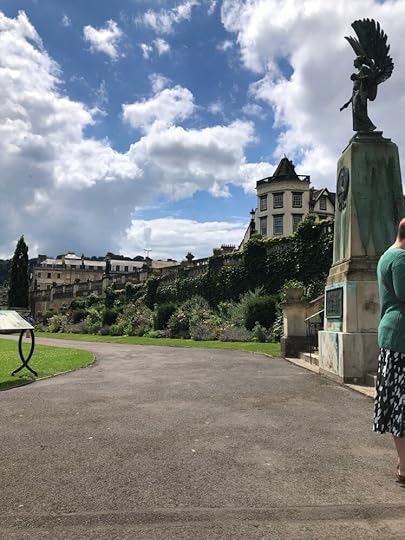
6. The Grand ParadeThe Grand Parade is located just next to the Parade Gardens which flank the Avon River. The colonaded area of the Grand Parade used to be the entrance to the Lower Assembly Rooms (Lower Rooms). In Northanger Abbey, Catherine attends a ball there where she meets Henry Tilney.
 7. Camden Crescent
Camden Crescent is one of the eight Georgian crescents to be built in Bath. Built along the northern slopes, it’s quite steep up there, but it also boasts the best view of Bath. In Jane’s time this was called Camden Place, and it’s here that Walter Elliot, in Persuasion, comes to live when he must lease Kellynch Hall to Admiral Croft for financial reasons.
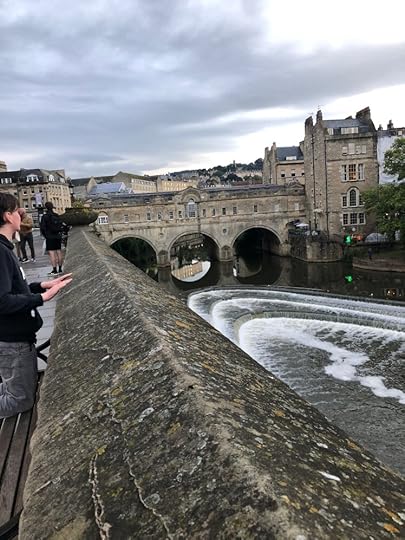
8. Great Pulteney StreetJust above the Pulteney Bridge (pictured here) is Great Pulteney Street, a large boulevard mentioned in both Persuasion and Northanger Abbey.
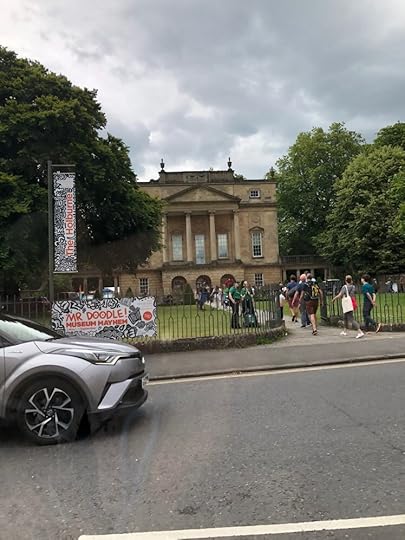
9. The Holburne MuseumThe Holburne Museum is one of England’s finest art museums. In Jane’s time, this was known as Sydney House. It had coffee, tea and card rooms on the ground floor, a ballroom on the first floor, and a pub in the basement.
10. Sydney PlaceTo the right of the Holburne Musem was Sydney Place, and #4 was the location of the Austen’s main residence in Bath. It is mentioned in some of Jane’s letters.
 11. Walcot & St. Swithin’s Church
Though not pictured, Walcot and St. Swithin’s Church are worth mentioning. St. Swithin’s Church is where Jane’s parents were married in 1764. Her father, George Austen, is now buried there. Walcot was Jane’s preferred shopping street, because it was cheaper than Milson Street.
12. Milsom StreetIn Jane’s time, Milsom Street was a highly prestigious residential area with a few luxury shops, but today it is a exclusively a shopping street. Jane used Milsom Street in both Northanger Abbey and Persuasion as the place of residence of wealthier characters. A shop on Milsom Street is featured in the BBC film of Persuasion–it’s where Anne, her sister Elizabeth, and Mrs. Clay are seen sampling marzipan.
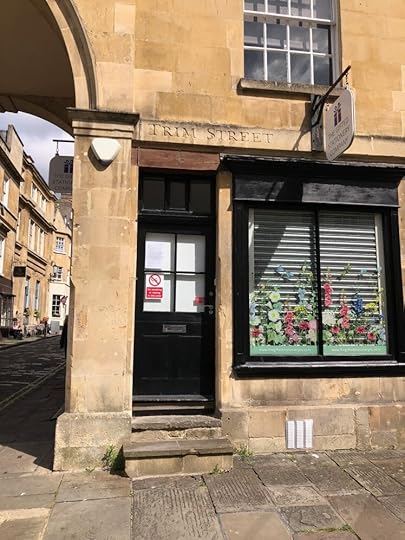 13. Trim Street
Trim Street was the location of the Austen’s final home in Bath. In Jane’s time it was a cheap and dirty part of the city, but the Austen’s loss of most of their fortune necessitated this move. Today Trim Street is quite a pleasant area: quiet, well-kept, and conveniently located.
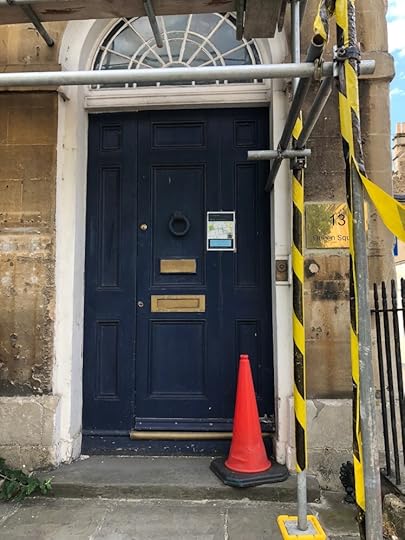
14. Queen SquareQueen Square No. 13 is another of the Austen addresses. Jane stayed here briefly with her mother and brother Edward in 1799 to enable him to take the spring water at the Hetling Pump Room. Jane mentions this let-residence in one of her letters, and also refers to Queen Square in Persuasion by way of Miss Musgroves:
“I hope we will be in Bath this winter; but remember papa, if we go, we must be in good situation — none of your Queen Square for us.”
 15. The Gravel Walk
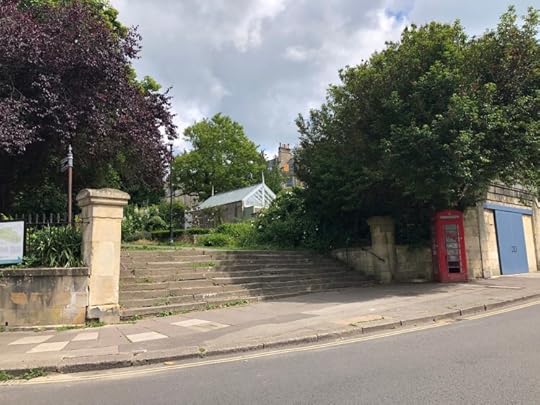
The Gravel Walk is just up from Queen Square and it is featured in the BBC films of both Northanger Abbey and Persuasion. This is where the proposal of marriage between Captain Wentworth and Ann Elliott is made and accepted. This elegant walk connects the Royal Crescent with the baths located in the city.
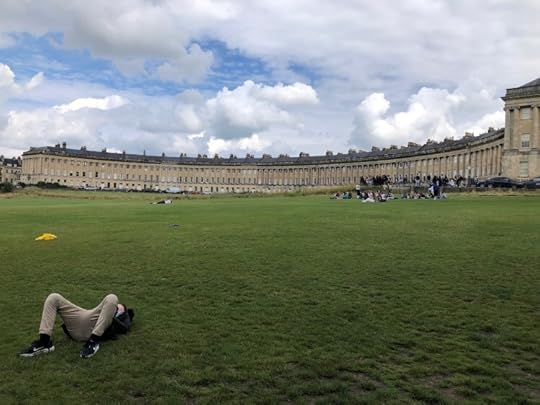
16. The Royal CrescentThe Royal Crescent is perhaps the most stately of all residences in Bath. Built in 1775 to the design of John Wood the Younger, it was the first of its kind. It has been copied in many parts of the world, and eight crescents are found in Bath. Jane’s aunt and uncle lived here at No. 12, and Jane most likely visited them here.
 17. The Circus
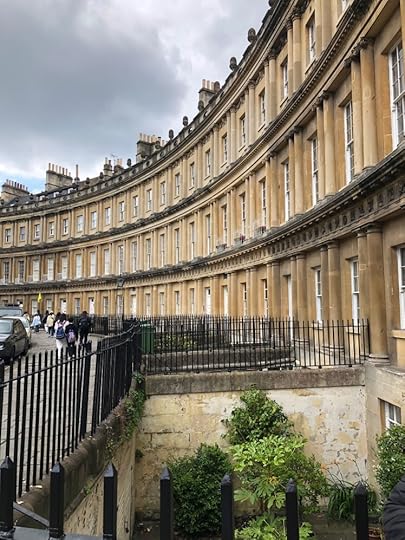
The Circus in Bath is sometimes compared to the Colosseum in Rome, only it faces inwards. Designed by John Wood the Elder, and completed by his son of the same name, it is detailed and ornate, with three types of columns, and intricate carvings, depicting the arts and sciences, at the ground level. This was the residence of the Austen’s family friends the Mapletons, but Jane never refers to it in either Northanger Abbey or Persuasion. Perhaps it was too fussy for her taste.
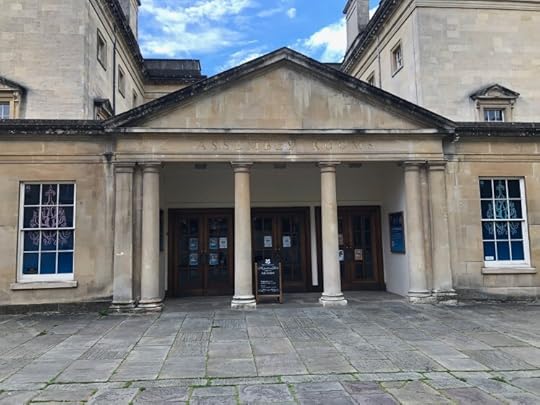
18. The Assembly RoomsThe (Upper) Assembly Rooms were also built by John Wood the Younger, and ran in competition with the Lower Assembly Rooms at the Grand Parade already mentioned. All assembly rooms in Jane’s time included a ballroom, a card room, and a tea room, indicating the three favorite Georgian pasttimes: dancing, gambling, and drinking tea! Jane mentions this one in her letters.
 19. Gay Street
Another of Jane’s residences, her family moved to Gay Street No. 25 in 1805 after leaving the home where her father had died. In her time, Gay street was a very good address, and it is mentioned in Persuasion as the place where Admiral Croft takes his lodgings in Bath.
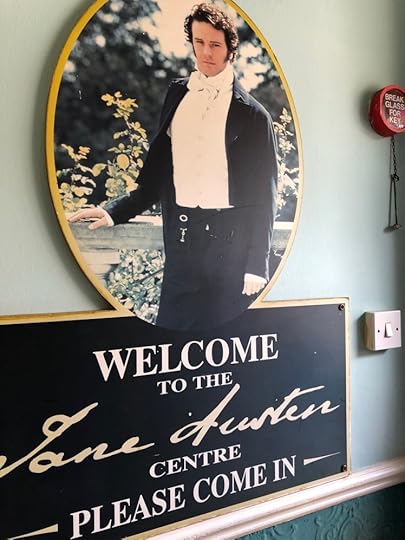
20. The Jane Austen CentreThe Jane Austen Centre is also on Gay Street, in No. 40, a house very similar to the one where Jane and her family lived in No. 25. The Centre provides an introductory talk and special exhibits which explore Jane’s life and homes throughout Bath. You can view regency-era day and evening wear, watch a film about Jane, and visit the tea room on the second floor. A well-equipped gift shop enables visitors to find any type of souvenir imaginable relating to Jane Austen, her novels, and even Bridgerton.
We hope you enjoyed this mini-tour of Bath. If you love the works of Jane Austen, we highly recommend that you go and visit. While reading her novels is a perfect delight, walking in Jane’s actual steps will bring her life and work to life!