Journeying into Children’s Lit: An Interview with Author Christine Karren
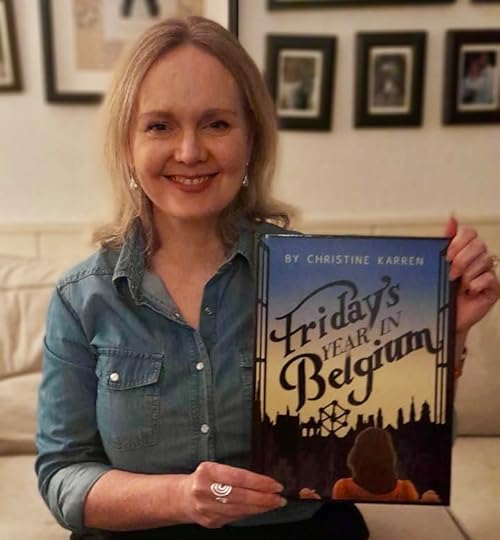 This interview with author-illustrator Christine Karren is based on the question and answer session during her recent book launch event. Here Karren tells us about her new children’s book, Friday’s Year in Belgium, from the World of Values series.
Fly-By-Night Press: Tell us about your new book!
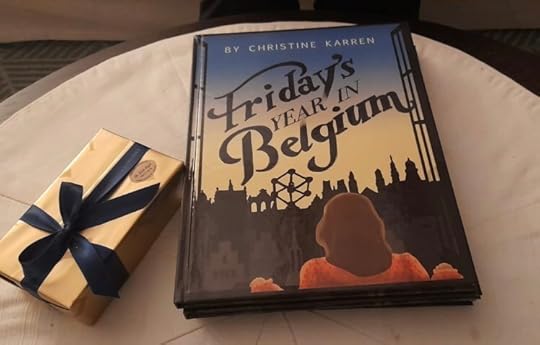
Christine Karren: My new book is called Friday’s Year in Belgium. It comes in both large-format hardcover and smaller paperback. The larger one reads like a picture book because it’s filled with large, colorful illustrations. The smaller paperback reads like a chapter-book for early readers. It’s also filled with a lot of illustrations but the story is broken up into chapters. Both are intended for children between 6-9 years old, but I think the large hardcover would be best read by an adult to a child, and the small paperback is best for an older child to read on their own.
FBN: What made you choose to write about Belgium?
CK: When I first had the idea about creating a children’s book about a family who moves to different countries every year, I wanted to focus mainly on European countries because that’s what I know. It made sense to start in Belgium, since it’s the main capital of the European Union, and I also chose it because there are so few books in English about it. I live in the Netherlands right next to Belgium, so I go to Belgium often and I know it well. I have quite a few Belgian friends whom I meet up with. Some of them come to visit me at home in the Netherlands, too. It’s cheaper to buy gas there so I usually go 3-4 times a month to fill up, but I also sometimes buy special things there like cheese for my daughter.
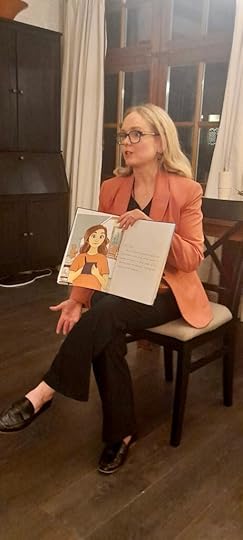
FBN: Tell us about Friday, your main character. What made you choose such a unique name?
CK: Friday is a nine-year-old girl from America who is smart and curious. She wants to become a detective when she grows up so she carries a notepad everywhere she goes in order to write everything down. She lives with her parents who move every year to a new location for work, so Friday has the chance to learn about new places all the time. When choosing her name, I wanted to choose something very unique so it would be memorable. Everyone has a good association with the word Friday, right? (laughs) One of my favorite books, which I have read to a couple of my kids, is Robinson Crusoe. There’s a character in that book named Friday, and he’s one of the best characters. He’s friendly to people different from him, and very adaptable to new situations! So I though this name was a good fit for my main character.
FBN: How have you developed your writing voice?
CK: Well, I’ve been writing my whole life. My mother was an English teacher who really loved to read, and read a lot to me. And at night before bed my father used to tell us stories he made up. When I was about 7 years old, I was really interested in Japanese culture, and I learned how to write Japanese poetry called haiku. It’s a very simple poetry form that only has three lines of text. I wrote a LOT of haiku poems, and once I had a whole stack of them, I asked my mom if she could tell me how to get them published. (laughs) I’m sure she didn’t expect it to work out for me, but since she was so supportive, she helped me write a cover letter and send the poems in an envelope to a publisher. I got a very kind rejection letter! And that was my first experience with a publisher.
Later as a teenager I worked for a publisher of non-fiction and textbooks called Sage Publications and learned a lot about the process behind publishing. In college I studied Art History, which involves a lot of critical writing. One of my professors was impressed with my writing and invited me to become her research assistant.
I’ve generally been stronger in expository writing or journalism because of my academic background and because I do a lot of blogging, but when I was a young mother I started writing a children’s book that I never finished.
In 2022 my husband Val and I put together a creative writing group called the Maastricht Writers’ Workshop. MWW is a group which gives its members a lot of opportunity to write and share their work, so it’s been helping me hone my creative writing skills. I think it’s MWW that really inspired me to write a this children’s book.
FBN: You have also illustrated your book. How have you developed your drawing style?
CK: Drawing and art have always been my thing. My parents always encouraged me and my siblings to draw as a form of entertainment when we were little, and they arranged for me to take drawing classes. Around age 8 I studied art with an artist/filmmaker named Bob Hummel, who first taught me about light and shadow. He really opened my eyes to seeing the world in a new way, which was very exciting to me and it motivated me to move into the world of art. Later I took drawing classes from a Hannah Barbera animator named Ric Estrada. In college I studied Graphic Design and Art History. My design classes included life drawing, perspective drawing, and so forth, which I excelled in and really enjoyed. I also loved studying the art of different cultures.
When we moved to the Netherlands, I didn’t have much to do, so I spent a lot of time drawing with my 2-year-old son. He’s now illustrating children’s books, too! I taught drawing classes to children for a few years from my home in the Netherlands. I loved watching the drawing styles of the different children emerge.
FBN: Your book series is intended to help children visit different cultures. What interest do you have in culture?
CK: Oh, I’ve always been fascinated by other cultures. I was an anthropologist before I knew what that word meant! When I was very young I had this book called the Children’s Book of Knowledge (or something like that). It was thick and it was filled with interesting pictures. I used to read it in my closet sometimes. That’s where I first found Japanese culture, which I mentioned before.
My mother was involved with some drama groups and kept a box of costumes. A lot of them were cultural costumes like Hawaiian muumuus, Mexican sombrero, etc. so I enjoyed dressing up in those costumes as a child. My mother made a beautiful Japanese kimono for me which I insisted on wearing when they took me out for dinner to a Japanese restaurant on my birthday (laughs). I’m sure it was awkward for her, but she was always supportive. My father traveled sometimes for business and brought me back a Tahitian traditional costume, made from grass and shells. It was beautiful! I still have it.
FBN: Your books also delve into the abstract world of values. What made you choose to incorporate these into your stories?
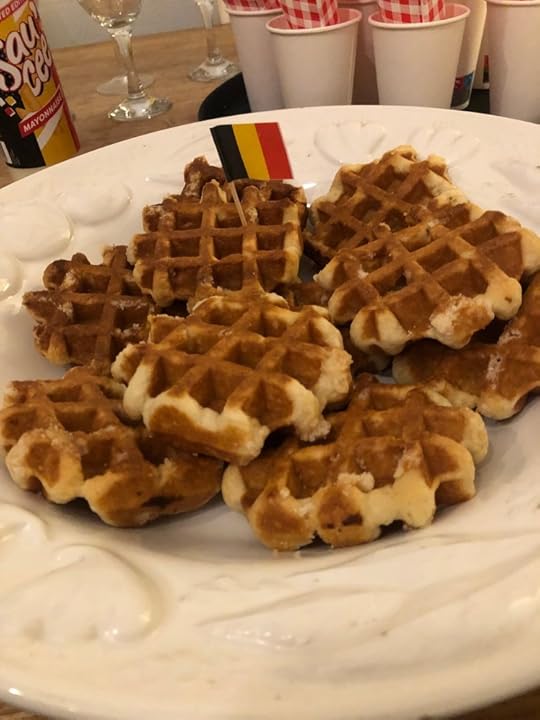
CK: Values are extremely important to me. I think they affect everything we do, and how we feel about things. They essentially make up our world of meaning. As I have lived in different places–America, Romania, and the Netherlands–I’ve realized that what motivates other people to act in certain ways are the values underlying their culture. It’s deeper than just the idea that people eat waffles or chocolate in Belgium. Understanding their values helps us really get into the minds and hearts of people. When we don’t understand them, we tend to judge them negatively. But when we ‘get’ why they do things, it helps us feel more love and acceptance toward them. Studying Art History really taught me this. I would go into a class about Asian Art or African Art with a preconceived idea of who those people are. But I would come out of the class with my mind broadened and a much greater interest in them and connection with them. I hope that my books can help children broaden their minds to love many kinds of people.
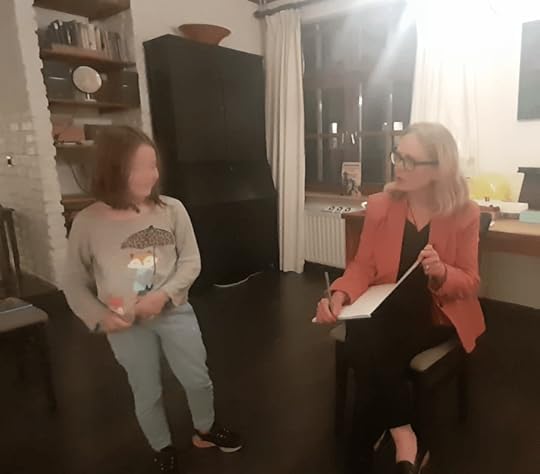
FBN: Who do you write for? Do you think your book is reaching its intended audience?
CK: My book is written for children, but I hope some adults will enjoy it, too. I recently heard about some kids who read my book and couldn’t put it down. One nine-year-old girl kept reading it by herself for about half an hour! Another grabbed the book as soon as it arrived at her house and ran off to read it. That makes me happy to hear! I think they like the pictures best.
The book is written from an American perspective, so it will be best understood by Americans. But I hope people from all over will read it. I hope they will be curious about all the unusual things they see in the pictures and want to learn more about Belgium.
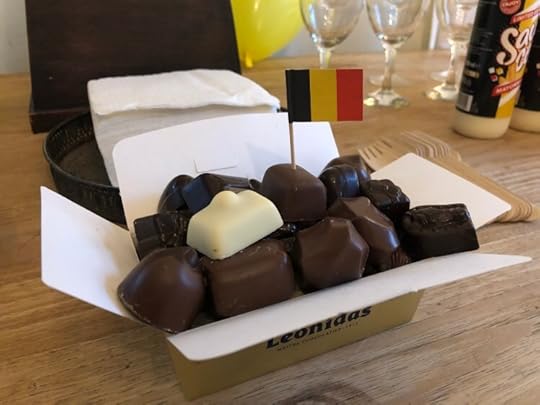
FBN: What do you love best about Belgium?
CK: Hmmm. There are a lot of great things. I eat Belgian chocolate almost every day because it truly is THE BEST in the world. But I also really love Belgian people. They are polite and kind. And they make beautiful art. I really love the work of Belgian artist Rene Magritte and Belgian designer Axel Vervoordt.
FBN: Have you already started your next book?
CK: Yes! My next book is about the Netherlands, my home country. I’ve already written the first draft of the manuscript and began a few illustrations. It’s different from the Belgian one because the culture is definitely different. I’ve chosen five new values to represent the Netherlands, which Friday and her parents will discover. It’ll be great! I’m excited to watch it develop and see how children respond to it.
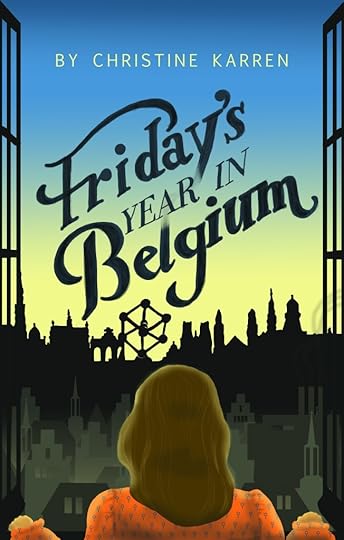 Friday’s Year in Belgium by Christine Karren
“[My daughter] loved it, especially the illustrations.” —N.C. from Kansas City, USA
“[My granddaughter] grabbed the book as soon as she saw it and ran off to read it!” —Grandmother from UT, USA
“It can be used to share information about Belgium with children at home or in school, but it’s also just a fun read!” —M.H. from the UK
“This book would be a great introduction for children who have never traveled outside their own country, allowing them to explore different cultures…” —L.V. from Bulgaria
Read more HERE.