Trail CamerasTrail cameras for wildlife spying have becom...
Trail cameras for wildlife spying have become a popular pastime. Not only has the video and photo quality improved, but the price point for high quality cameras is lower every year. I’ve been using trail cameras since around 2010. I thought it would be interesting to do a short post on my personal evolution of my use and what I’ve discovered.
Professional photographers and folks that are handy with manual camera adjustments have switched from store-bought trail cams to DSLR cameras. Using a DSLR camera trap requires a lot of knowledge of not just wildlife tracking but lighting positioning and camera settings, but the payoff is great. For my expanded Ghostwalker book out this year from University of Nebraska, even though I have thousands of great mountain lion photos and video, I needed to engage these experts for high quality photos that would reproduce in print. I’ve never been great with manual adjustments so point/shoot cameras, like trail cams, are my go-to.
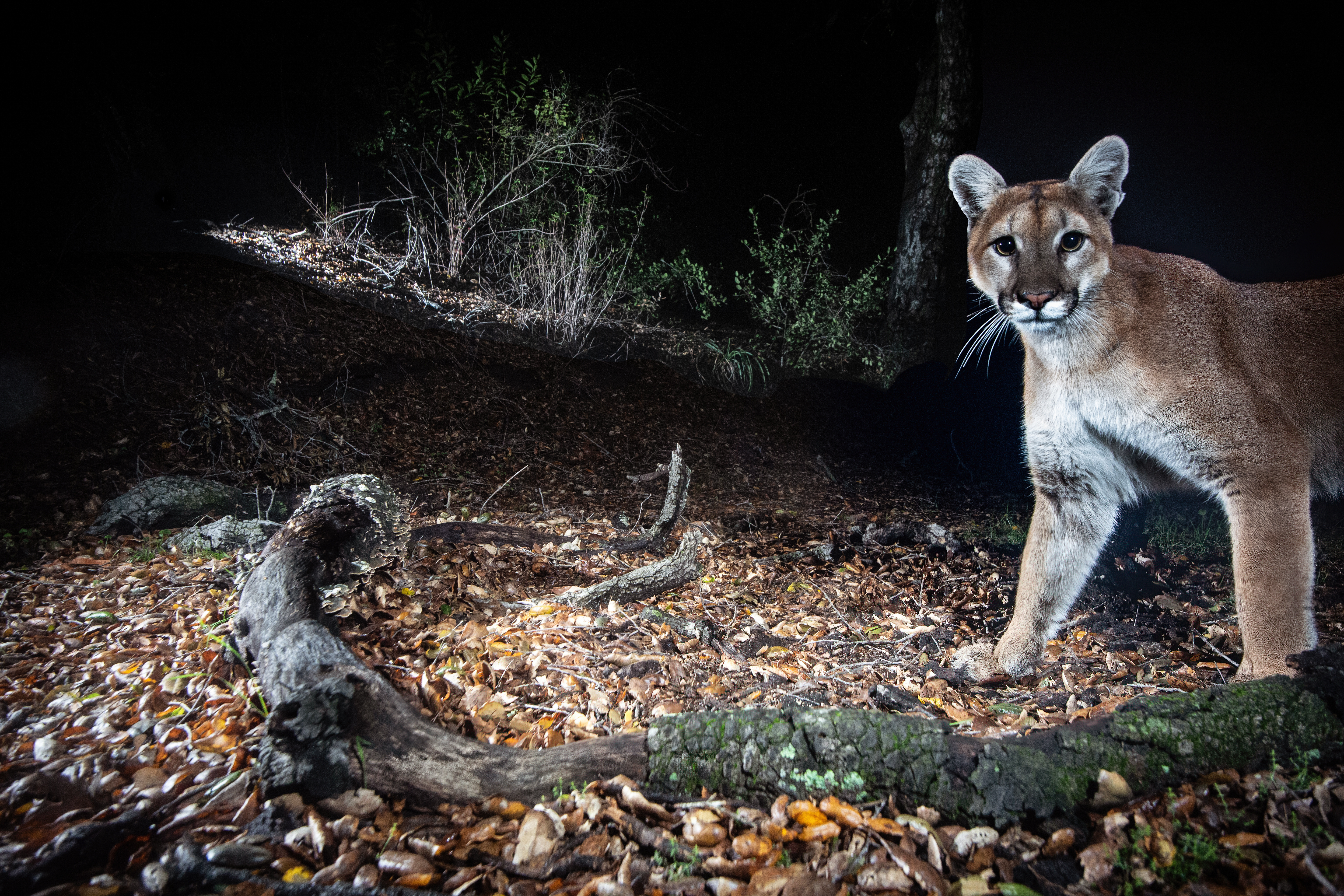 Amazing capture by Jeff Wirth using a DSLR. Wirth graciously consented to let me use some of his photos in Ghostwalker: Tracking a Mountain Lion’s Soul through Science and Story
When I first started using trail cameras their quality was very poor, but I was mainly interested in who was visiting the nearby forest. I caught grizzly and black bears on the animal trails, along with deer, coyotes, and wolves. I was anxious to catch martens who don’t follow trails. To that end I built a box trappers use, baited it, and put a camera on it (of course I didn’t put a trap inside!). Bobcats also don’t follow trails very much and since I do have bobcat trapping in my area in winter, the animals were rare on the landscape. I hung shiny objects to attract the cats with a camera positioned on it. Still, I almost never captured a photo of a bobcat.
After two years of camera trapping, I had several epiphanies that changed the course my experiments. First, after watching trapping in my area, I became aware that my baiting was contributing to these animals becoming less wary of actual kill traps. Therefore I stopped all baiting and scenting. But the biggest revelation was how to reliably capture animals on camera.
 Elk on frozen river at a crossing point. I could see the crossing using track I.D.
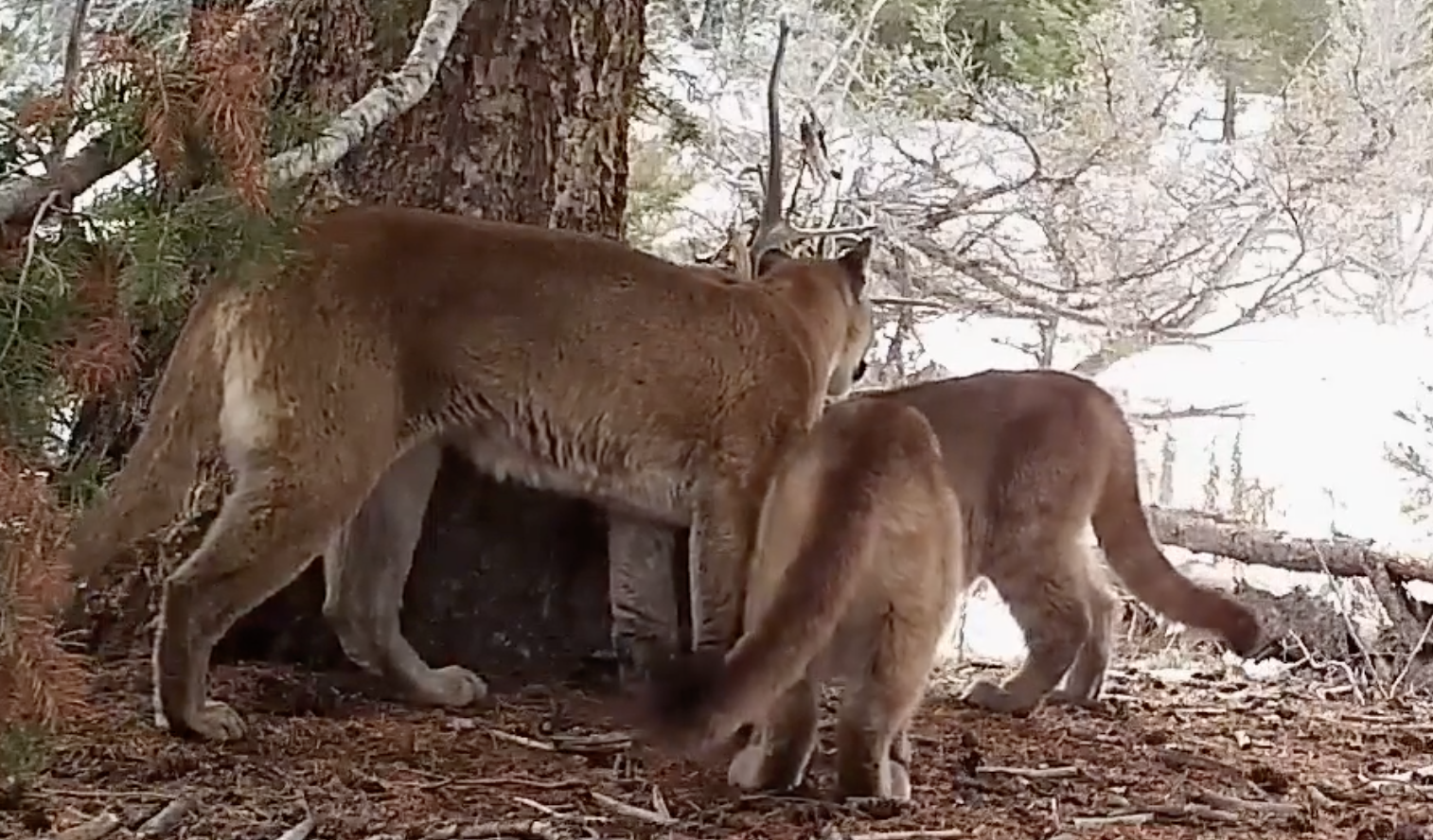
I had been lucky to capture several mountain lions, and found lion tracks in different areas. That piqued my interest so I attended a class on mountain lions by researcher Toni Ruth in Yellowstone. During that class I watched a video of wildlife on a mountain lion scrape site. I knew about scrapes but had never seen one nor did I know how to find them. A scrape is made by a male lion with his back feet, usually urinated on, to mark territory. Lion scrapes apparently are big attractants for all sorts of wildlife. Once I learned where to find scrapes, I sought these out and placed cameras on them. Scrapes draw almost all the prey and predators in an ecosystem. By continuing to use these same locations for over 15 years, I’ve captured amazing photos, but the real gold here is monitoring sites for so long that you get a read on the ebb and flow of wildlife activity.
(ABOVE VIDEO OF WOLVES HAD CAMERA PLACED ON A TRAIL HEAVY WITH SCRAPE SITES)
A friend who is a feline researcher told me keeping cameras at the same location for many years provides a good indication of the health of the local mountain lion population. Houndsmen and researchers use dogs to find lions, which gives a good clue to the waxing and waning of lions in a designated area. Would monitoring scrape sites alone give me a general idea of lion health?
Lions are impossible to identify. Puma concolor, their latin name, means cat of one color. Unless they have scars such as nicks in an ear, etc. they look alike. And in a hunted area, males usually don’t last long; but another young male will come to fill the void. I did get an indication that I could monitor lions this way a few years ago. In 2015-2016 we had record snows. Our mule deer population crashed. By early spring when the first grass emerged, the landscape was littered with dead deer. Predator populations lag behind prey drop, but it wasn’t long before I noticed I wasn’t catching females with kittens on my camera. Without sufficient prey, females will have smaller litters or none at all. 2017 was the last photo of a mom with young kittens. Although I did catch young dispersers, there seemed to be a dearth of females in my area until 2021. coinciding with a rebound in the mule deer population.
Additionally, the same thing was going on with cottontails and bobcats. Bobcats also visit lion scrape sites, and male bobcats like to scrape over lion scrapes. Rabbits go through seven year cycles and sometime around 2014 I noticed fewer and fewer rabbit tracks in my study area. I also stopped picking up bobcats on my cameras. The rabbit population had crashed and with it bobcat food. Then around 2020 a rabbit took up residence at one of my camera sites. Within a year, more rabbits at other sites, and soon there were rabbits everywhere. The bobcat population rebounded. Now I was catching bobcats with kittens frequently. An indication of how keeping cameras in situ for an extended period can tell the story of the land’s health.
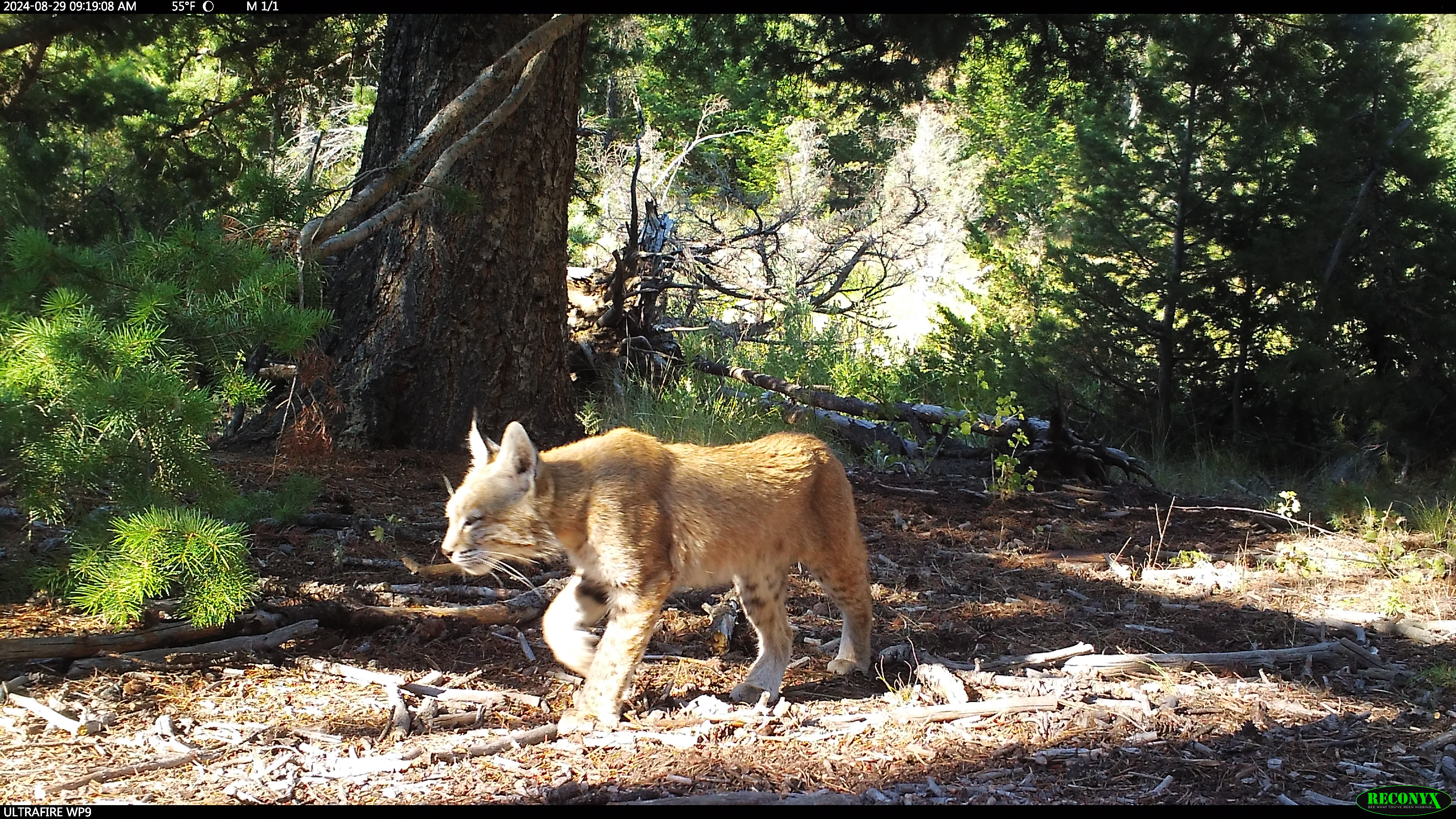 Bobcat visits lion scrape site
In summary, there are many ways to use trail cams. Research, exploration, pleasure. For me it’s become a tool not just to see who is visiting, but to monitor over time the swings of the ecosystem: how weather patterns, food availability, habitat health, and natural cycles affect the wildlife in my study area.
For more videos from my trail camera captures, see my YouTube site