Sorry
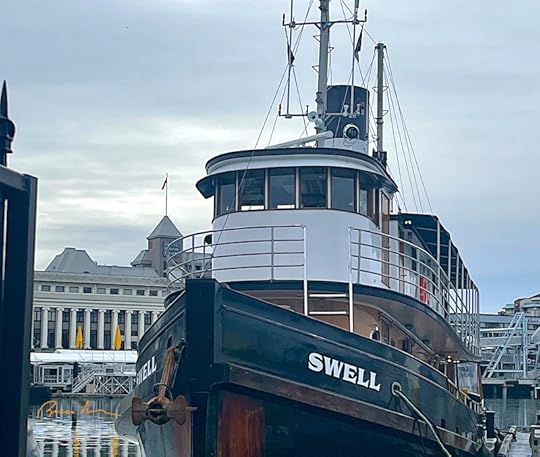 During election week in America, I visited Canada with Steelhead, celebrating 20 years of marriage. We spent a week in Victoria, B.C., prowling museums, beaches, restaurants, and (of course!) tea houses.We also watched U.S. election returns until we didn’t.
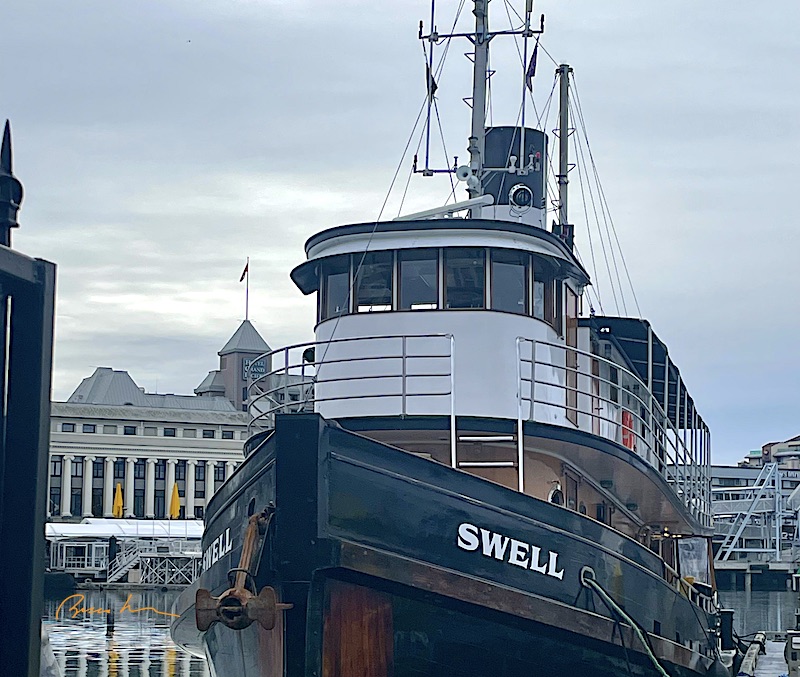 Victoria Causeway Marina. November 6, 2024. Photograph © Rebecca Lawton.On the morning of November 6, en route to meet a friend at the Royal B.C. Museum, I stepped into the spacious, well-lit lobby alongside a well-dressed woman (bundled up against the wind and rain). She held an e-pad on which she was collecting tourist information. I agreed to take a three-minute survey.First question: “Where are you from?”“California.”“Oh.” She lowered the device. “Sorry about your election.”So said my friend and fellow writer Sarah Boon when we spoke a few minutes later. First she said hello, then she said sorry.Sarah and I had never met in person before, although we’ve corresponded for a decade. (She interviewed me for her Watershed Moments blog in 2015.) Her new book,
Meltdown: The Making and Breaking of a Field Scientist
, is due out in June 2025 from University of Alberta Press, and it looks terrific.I never imagined we would share our first cups of London Fog over a conversation about the rise of populism (or nativism and authoritarianism) in both our countries.Until we discussed it, I hadn’t heard much about the growing dissent in Canada (with roots in the 2022 Freedom Convoy). There’s a growing movement, clearly, to burn all down.During our visit I overheard and read in the papers a range of sentiment: from they [Americans] didn’t deserve their republic to great opportunity, let’s recruit doctors and nurses over the border and let’s prepare now for the economic hit we’re going to take. All incredibly understandable—and sad.And now we find that the 2024 American president-elect won less than 50% of the vote. There is no MAGA mandate. (In Germany’s 1933 election, Adolph Hitler won less than 37% of the votes but argued, successfully, that 37% equalled a majority of half the electorate. Huh?)There are other parallels. Before the election, I’d been part of the massive letter-writing campaign to voters in swing states. (Volunteers for Vote Forward and other organizations say that over 11 million such letters went out pre election.)So letters were on my mind as we ferried to Canada, as was Anne Frank, who wrote her diary to “Dear Kitty,” in epistolary (letter-writing) style.We know her young writer’s voice was silenced just as she reached the verge of womanhood. Today her family home is a museum that keeps a timeline on how Germany lost its democracy to fascism over the years leading up to 1933, when Hitler was appointed Chancellor (without a mandate).Anne’s writing, which she hoped to publish in some form after the war, reveals the workings of her heart against a backdrop of traumatic change: “the approaching thunder that, one day, will destroy us too.”She held onto a ton of hope in the worst of situations. “I somehow feel,” she wrote, “that everything will change for the better, that this cruelty too shall soon end, that peace and tranquility will return once more.”The oft-quoted passage, “people are truly good at heart,” breaks our hearts, knowing what she faced. Naturally those seizing power today want to keep her book banned.Before we parted, Sarah and I agreed that sorry doesn’t begin to help us deal with that moment in history—or this. But it’s a start.Find my books and short pieces here.
Victoria Causeway Marina. November 6, 2024. Photograph © Rebecca Lawton.On the morning of November 6, en route to meet a friend at the Royal B.C. Museum, I stepped into the spacious, well-lit lobby alongside a well-dressed woman (bundled up against the wind and rain). She held an e-pad on which she was collecting tourist information. I agreed to take a three-minute survey.First question: “Where are you from?”“California.”“Oh.” She lowered the device. “Sorry about your election.”So said my friend and fellow writer Sarah Boon when we spoke a few minutes later. First she said hello, then she said sorry.Sarah and I had never met in person before, although we’ve corresponded for a decade. (She interviewed me for her Watershed Moments blog in 2015.) Her new book,
Meltdown: The Making and Breaking of a Field Scientist
, is due out in June 2025 from University of Alberta Press, and it looks terrific.I never imagined we would share our first cups of London Fog over a conversation about the rise of populism (or nativism and authoritarianism) in both our countries.Until we discussed it, I hadn’t heard much about the growing dissent in Canada (with roots in the 2022 Freedom Convoy). There’s a growing movement, clearly, to burn all down.During our visit I overheard and read in the papers a range of sentiment: from they [Americans] didn’t deserve their republic to great opportunity, let’s recruit doctors and nurses over the border and let’s prepare now for the economic hit we’re going to take. All incredibly understandable—and sad.And now we find that the 2024 American president-elect won less than 50% of the vote. There is no MAGA mandate. (In Germany’s 1933 election, Adolph Hitler won less than 37% of the votes but argued, successfully, that 37% equalled a majority of half the electorate. Huh?)There are other parallels. Before the election, I’d been part of the massive letter-writing campaign to voters in swing states. (Volunteers for Vote Forward and other organizations say that over 11 million such letters went out pre election.)So letters were on my mind as we ferried to Canada, as was Anne Frank, who wrote her diary to “Dear Kitty,” in epistolary (letter-writing) style.We know her young writer’s voice was silenced just as she reached the verge of womanhood. Today her family home is a museum that keeps a timeline on how Germany lost its democracy to fascism over the years leading up to 1933, when Hitler was appointed Chancellor (without a mandate).Anne’s writing, which she hoped to publish in some form after the war, reveals the workings of her heart against a backdrop of traumatic change: “the approaching thunder that, one day, will destroy us too.”She held onto a ton of hope in the worst of situations. “I somehow feel,” she wrote, “that everything will change for the better, that this cruelty too shall soon end, that peace and tranquility will return once more.”The oft-quoted passage, “people are truly good at heart,” breaks our hearts, knowing what she faced. Naturally those seizing power today want to keep her book banned.Before we parted, Sarah and I agreed that sorry doesn’t begin to help us deal with that moment in history—or this. But it’s a start.Find my books and short pieces here.The post Sorry appeared first on AUTHOR | SCIENTIST | GUIDE.


No comments have been added yet.