#42 – The Credit Expert
Greg Peters is co-CIO of PGIM, a $700bn credit manager and an authority on markets.
/*! elementor - v3.22.0 - 24-06-2024 */.elementor-widget-image{text-align:center}.elementor-widget-image a{display:inline-block}.elementor-widget-image a img[src$=".svg"]{width:48px}.elementor-widget-image img{vertical-align:middle;display:inline-block}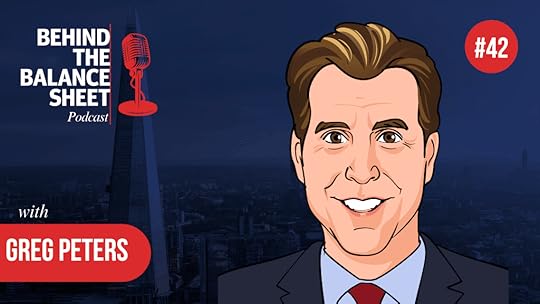 SUMMARY
When it comes to credit, few people have better credentials than Greg Peters, co-CIO of PGIM, with AUM of $700bn. In this fascinating conversation, we discuss the differences between investing in equities and credit, the legacy of the zero interest rate period, why PGIM uses scenario based forecasting in preference to single point estimates, why covenants have gone out of fashion and why that’s dangerous, ad much more. Listen to the end for an update on the outlook for markets in 2025.
/*! elementor - v3.22.0 - 24-06-2024 */.elementor-widget-image-box .elementor-image-box-content{width:100%}@media (min-width:768px){.elementor-widget-image-box.elementor-position-left .elementor-image-box-wrapper,.elementor-widget-image-box.elementor-position-right .elementor-image-box-wrapper{display:flex}.elementor-widget-image-box.elementor-position-right .elementor-image-box-wrapper{text-align:end;flex-direction:row-reverse}.elementor-widget-image-box.elementor-position-left .elementor-image-box-wrapper{text-align:start;flex-direction:row}.elementor-widget-image-box.elementor-position-top .elementor-image-box-img{margin:auto}.elementor-widget-image-box.elementor-vertical-align-top .elementor-image-box-wrapper{align-items:flex-start}.elementor-widget-image-box.elementor-vertical-align-middle .elementor-image-box-wrapper{align-items:center}.elementor-widget-image-box.elementor-vertical-align-bottom .elementor-image-box-wrapper{align-items:flex-end}}@media (max-width:767px){.elementor-widget-image-box .elementor-image-box-img{margin-left:auto!important;margin-right:auto!important;margin-bottom:15px}}.elementor-widget-image-box .elementor-image-box-img{display:inline-block}.elementor-widget-image-box .elementor-image-box-title a{color:inherit}.elementor-widget-image-box .elementor-image-box-wrapper{text-align:center}.elementor-widget-image-box .elementor-image-box-description{margin:0}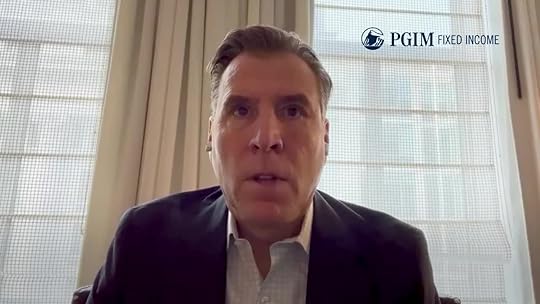 GETTING INTO INVESTING
Greg started out working for the US Treasury. He then moved to Salomon Smith Barney before joining Morgan Stanley where he was their Global Director of Fixed Income & Economic Research and Chief Global Cross Asset Strategist, responsible for the Firm's macro research and asset allocation strategy. He now is co-CIO of PGIM, a $700bn credit investment firm.
Some takeawaysEquities vs CreditGreg believes equities have done well because of fundamentals. It has been an earnings story not a multiple expansion story (which inherently create more risk).
Zero interest rates are behind us. The adjustment process has been painful for credit investors but they are now in a better place.
The hurdle rate for a credit investor is much lower than for an equities investor because of the way the benchmark indices are constructed. Hence more credit investors should outperform benchmarks.
Corporate Credit
Companies have loaded up with low cost debt and will ultimately have to refinance. Greg expects more distress and more defaults, and he thinks we are entering a new era of the credit cycle, one we haven’t seen for a long time. Zero interest rates allowed many companies to survive that probably shouldn’t have. He expects that there will be an elevated distress cycle for a period. A recession would pull that forward.
Scenario based forecasting
PGIM uses scenario-based forecasting. Greg believes that single point estimates give a false precision which are popular as the CNBC soundbite culture wants “Give me a Number”. Using scenarios forces you to tink of a company in multiple dimensions – what happens if inflations spikes, or growth rolls over, and monitoring those changes over time.
The team comes up with plausible paths and they deliberately spread the parameters as they don’t want to be centred around the mean or the analysis loses efficacy. The parameters change over time and the changes are often highly instructive.
The process gives them a calibration of upside and downside. If a recession is probable, as at the time of recording in mid-2024, the probability was elevated at c.3x normal, they look at credit spreads. And obviously if credits preds are tight and there is a higher chance of extreme loss, they want to then be more cautious.
Covenants
These have been set aside for the last 15-20 years. They used to be the hallmark of credit investing. But there has been too much capital chasing the opportunity set, so borrowers have been able to either offer no covenants or make them so complicated that they are difficult to enforce.
We haven’t had a credit cycle, so we shall see what happens when we do, but leverage can be twice its face value when pro-forma EBITDA is used. Often multiples are quite heroic, yet investors are happy to underwrite the credit.
High Yield MarketAlthough the macro aspect today is rich in high yield, there is a high level of dispersion, the widest in 15 years, which creates opportunity for credit investors. Greg feels there should be a more natural risk aversion trade today.
When interest rates were zero, investors were forced up the risk curve. There was a lot of unnatural risk-taking then, into things like crypto. There should be a natural shift away from that and Greg is surprised that it hasn’t happened to a greater extent given rate rises.
He attributes this to muscle memory, recency bias, and the fact that many younger investors don’t know any different environment – experience levels in the markets have dipped. Bankruptcies are increasing and bondholders are taking a more draconian stance so things are starting to change. But it takes time. A recession would accelerate the process. But investors are starting to recognise that covenants matter, as does where you are in the capital structure – these haven’t been issues for a long time, but they are growing in weight.
Government BondsUS Treasury funding has to be regular and predictable so the Government cannot suddenly change its issuance depending on what’s rich or cheap and it can therefore take a long time to alter the maturity profile. There is an argument that more long term bonds should have been issued but there was a concern that demand could have been crowded out – it’s a delicate balance.
In a more volatile world, geopolitically, defence spending will have to increase everywhere, not just in the US. Meanwhile, there is a double spend on energy, short term to deliver energy security and longer term to fund the green energy transition. And debt levels are high everywhere.
Greg expects higher inflation which will be one release valve. Companies are willing to spend a little more on supply chain control post Covid – that’s inflationary. As are defence spending and the energy transition. Greg is unsure about the calibration, but the inflation risk is to the upside.
In the last 15 years, there was a persistent undershooting of inflation and in the next 15 years there is likely to be greater risk on the upside. As a result, we shall have a world in which inflation is more volatile, growth will be more volatile and interest rates may also be more volatile.
In a more polarised political system, it creates more unorthodox policy and hence more volatility. Markets like visibility so they will be more volatile. That should manifest itself in higher risk premia. And higher inflation means higher bond yields.
Private Credit
There has been tremendous growth as a by-product and regulatory constructs. To stabilise the financial system they wanted to diffuse risk outside of the banking system. There is less systematic risk but much greater opacity. Regulators have less visibility and less control. It was also boosted by zero rates.
Currently, default and distress are higher on the private side than the public and that may continue. Greg thinks the market may be very different in 5 years – the public-private divide may be less applicable. There is a spectrum of credit and increasingly there will bene credit market.
Companies are increasingly using a combination of private and public credit. Greg thinks there may be one credit market going forward. It will be interesting to see what happens here when defaults pickup. There are already instances of lender on lender violence. The IMF have expressed concern and would like greater visibility and regulation.
FX and Global View
Greg is a long term dollar bull, based on his thesis of US dominance. They divide the world into DM/EM. Some frontier markets are over-extended. But he is happy about differentiation and there are more opportunities to invest across Emerging Markets.
EM is less indebted than DM. France is a great example – Spain is behaving better than Germany or France. And there is a parallel with EM vs DM.
The Fed Put
Central Banks are going to have less flexibility to cut rates as they have to continue to fight inflation. Greg cannot see interest rates getting close to zero again. The market still trades with a central bank put option to it and they have limited capacity to cut.
About Greg Peters
Gregory Peters is Co-Chief Investment Officer of PGIM Fixed Income. Mr. Peters is one of the co-heads on the Multi-Sector Team at PGIM Fixed Income. Prior to joining the Firm in 2014, Mr. Peters was Morgan Stanley’s Global Director of Fixed Income & Economic Research and Chief Global Cross Asset Strategist, responsible for the Firm’s macro research and asset allocation strategy. Earlier, he worked at Salomon Smith Barney and the Department of U.S. Treasury. He received a BA in Finance from The College of New Jersey and an MBA from Fordham University. Mr. Peters is a member of the Fixed Income Analyst Society and the Bond Market Association. Mr. Peters was named a 2018 and 2019 winner of the Pension and Investment Provider Award for Global Multi-Asset Credit

Greg loves books on financial history and thinks they contain important lessons. He recommended 4.
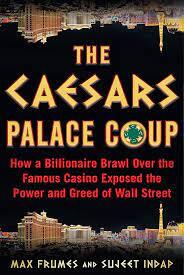
The Caesars Palace Coup: How a Billionaire Brawl Over the Famous Casino Exposed the Power and Greed of Wall Street
Max Frumes
This is a fascinating account of lender on lender violence in the bankruptcy of Caesar’s Palace. This is a cautionary tale as we enter a period of higher defaults.
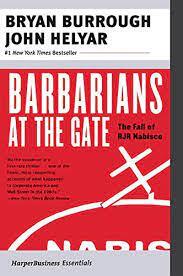
Barbarians at the Gate: The Fall of RJR Nabisco
Bryan Burrough
This talks about the consequences of debt in the private equity takeover of RJR Nabisco.
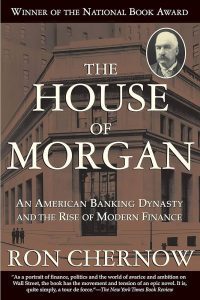
The House of Morgan: An American Banking Dynasty and the Rise of Modern Finance
Ron Chernow
Greg used to work at Morgan Stanley and enjoyed this account of the firm’s history.
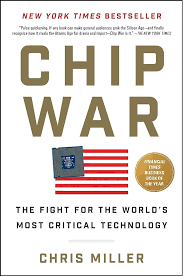
Chip War: The Fight for the World’s Most Critical Technology
Chris Miller
Greg thinks this is a must read.
 Buy on amazon.com Buy on amazon.co.UK
  Buy on amazon.com Buy on amazon.co.UK
  Buy on amazon.com Buy on amazon.co.UK
  Buy on amazon.com Buy on amazon.co.UK HOW STEVE KNOWS THE GUEST
Greg and Steve had a call a couple of months before recording in June, 2024 on Greg’s next visit to London. Thanks to Nina Jaksic and Nicole Haroutunian at PGIM who made it all happen.
ChaptersTranscript
Prev#41 – The Composer
The post #42 – The Credit Expert appeared first on Behind The Balance Sheet.