Confidence Comes from Competence
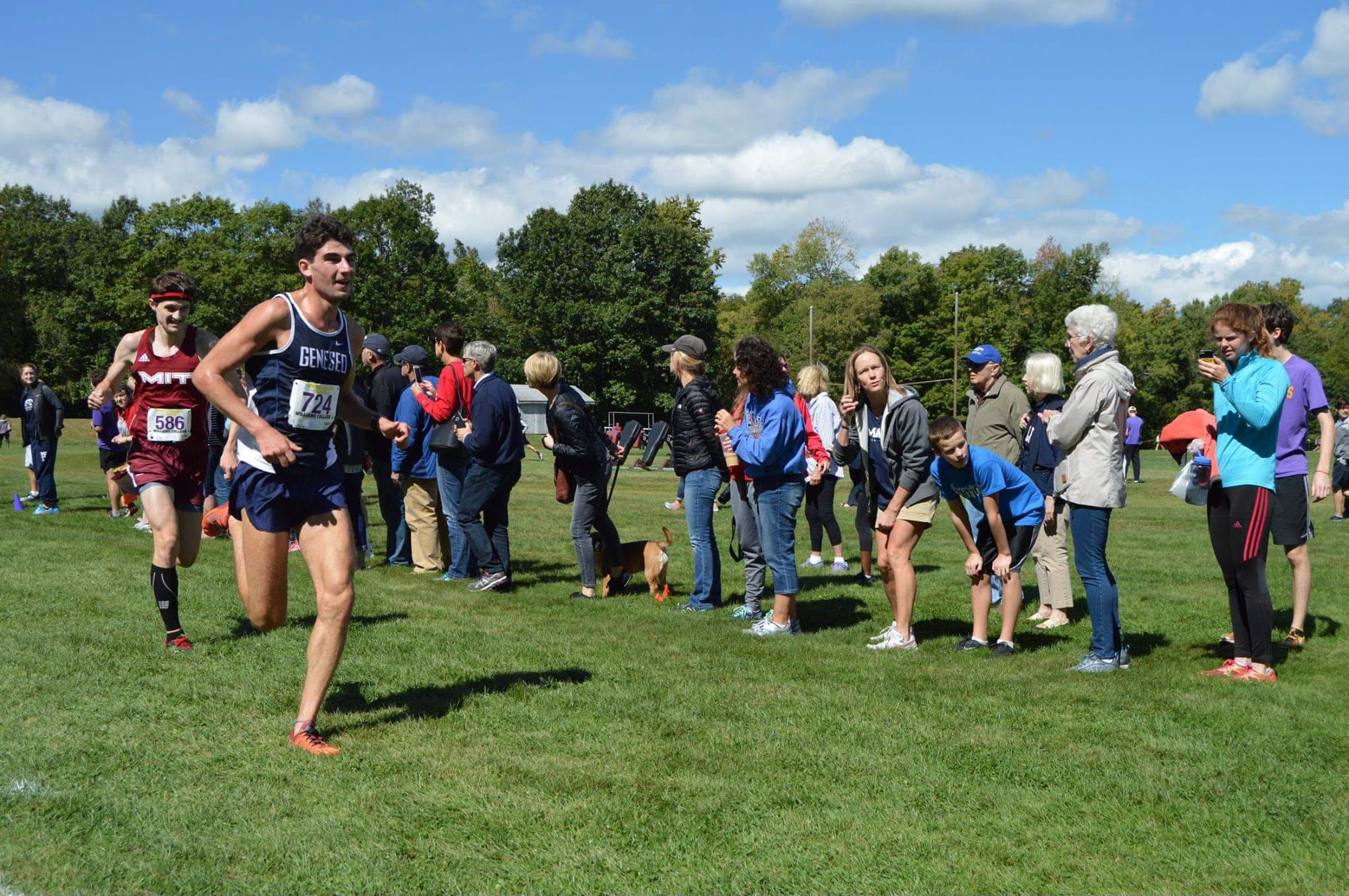 Your author showing a lot of “grit” and “determination” in his first college 8k
I played a lot of sports when I was younger. From about the age of 11 on, I was doing about nine to twelve hours of aerobic exercise a week1. Initially this was swimming, but I transitioned to running in high school, and then later took up cycling to complete the triathlon trifecta. I still do all three of these sports, am very glad that they were such a large part of my formative years, and frankly, I would like to get back to the kind of hours that I was putting in a few years ago: dedicating yourself to sport is one of the most meaningful things you can do in today’s society. These sports have taught me many things: patience, discipline, fortitude, and even kindness. They continue to cultivate these virtues even today, and will probably always be part of my life.
However not everything that sport inoculated in me was positive. Every coach I had, from middle school swim club onward, was drawn to a conception of mental toughness, or “grit” that made it difficult to understand where improvements came from, or to have a healthy relationship with competition in general. When races went poorly, poor training, physical conditions, or distractions were never at fault. Rather, I was made to feel that there was something defective in my brain or character. That I was, to quote Severus Snape, a weak person. Not only is this position a philosophically bankrupt form of the worst kind of Cartesian mind-body dualism, it also fails to offer any actual avenue to improvement. Willing yourself not to slow down doesn’t actually work when you’ve completely overshot your sustainable threshold pace ten minutes in to a thirty minute race.
So how does one actually improve mental toughness in racing? There are a couple strategies. The first is to simply not put yourself in a situation where you need to be mentally tough. This means starting out a more intelligent pace that will lead to a slower accumulation of exhaustion and allow you to finish the race without having to rely on mental toughness. This was the real issue for myself and many of my teammates in college: we overestimated our fitness, went out too fast and had to rely on “grit” and “toughness” which couldn’t make up for the extra accumulated muscle fatigue from overshooting our capacity.
The second solution is to recognize that mental toughness is trained in much the same way as physical toughness: by doing training sessions that are physiologically, and psychologically challenging, and progressing these over time. By targeted exposure to the kind of pain that you would be likely to experience in a race, that pain becomes both physically, and mentally easier to deal with. You can push yourself more because it “feels” easier to do so because you’ve practiced it. And that practice looks a lot like the kind of training you are already doing to prepare for the race physically.
However, the two things aren’t exactly identical, or there wouldn’t be such an “epidemic” of mental weakness on high school and college cross country teams. The key distinction, I think comes from how we would break up intense training sessions, or workouts, as they are colloquially referred to2.
In college, we ran an 8k (5 miles) on grass about every other weekend. Our weekly Tuesday night workout was about this same distance, but split up into intervals anywhere from 400m to 2 miles. The longer repeats tended to be much faster, but with more rest proportionally. We sometimes did even longer and slower intervals on non-race Saturdays, but these were never close to the 8k distance. Physically, these intervals made a lot of sense: they allowed us to get in the kind of stimulus (neuromuscular and metabolic) that was essential for improvement in the 8k but without the toll on the body that running a full 8k all-out every Tuesday would have required. Psychologically, it was a different story. My best 8k time was around 25 minutes, but the longest of these intervals was only around 10, providing very little opportunity to learn how to cope with the mentally taxing final 5 minutes of the race. There was also little opportunity for progression week to week: the total length of the workout didn’t get any longer from week to week, and neither did the average interval length.
Contrast this to how my current Tuesday workouts are structured. I would start the season with just a simple 10 minutes at my target half-marathon pace. The next week I would progress in total volume to 3 x 5 minutes, but compensate for the increased intensity by making the workout psychologically easier by splitting up the 15 minutes into intervals. But the next week I would progress psychologically by doing 2 x 7.5 minutes instead, as the longer intervals are harder mentally. And so on and so forth until I got to about an hour of continuous work at half-marathon pace, which would be sufficient mental preparation for that kind of race.
The real problem with our team at MIT was not lack of character, confidence, or belief in oneself, but poor training. Mental strength in racing does not come from some inner reservoir of “will” but from treating the brain as a muscle that needs to be developed in the same was as one’s body through the principles of overload and progression.
I think this has some implications for other areas of my life as well. If I'm giving a presentation at work about my research, I’m going to be much more confident in my work if I’ve spent the time to carefully collect data it and think through the details of the experimental design. If I doubt my own work, bullshitting can only conceal so much of that from the audience. With Spanish, conversations with natives and my reading ability get better when I spend time in the language. If I haven’t read all week, of course my speaking ability is going to suffer. There is no substitute for putting in the time, bro: this idea of willing things to be so through sheer “grit” and “determination” cannot die fast enough. Confidence comes from competence, there are no shortcuts.
I blog about language learning, biology, the science and art of learning, and many other things. If you feel inclined, please subscribe or consider buying me a coffee.
Josh
1I think the peak was either in eighth grade where I had 8 swim practices a week (5 weekdays+2 mornings+saturday morning), or the summer after my freshman year of college where I doubled 5 days a week, did a long run (17+ miles) and long ride (40+ miles) on the weekends.
2Every training session is a workout of sorts, but we would never refer to an easy run or spin by such a name