CHOPPIN’ FISH IN SIGLUFJOROUR
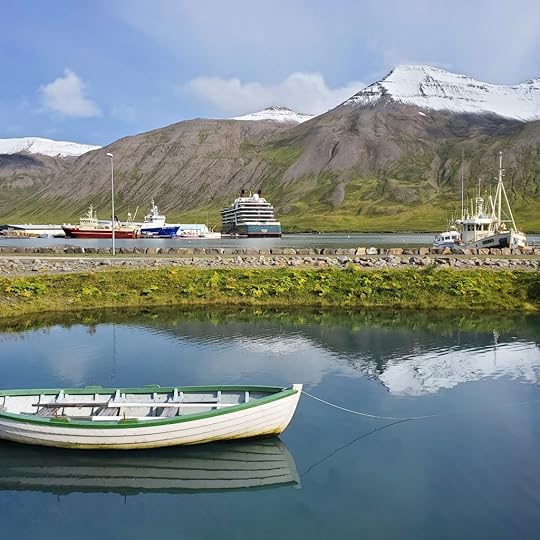
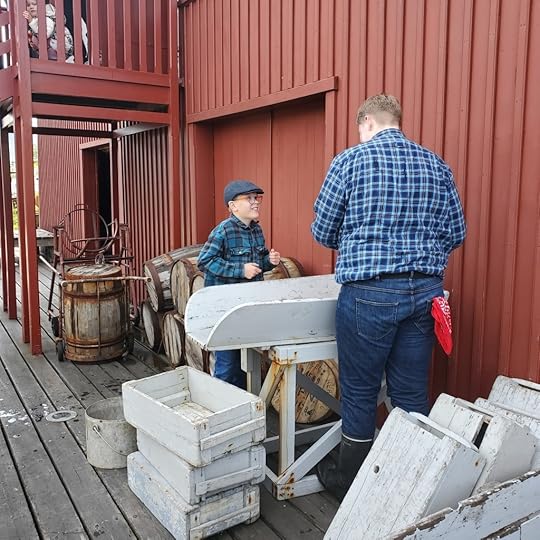
Stopping in a narrow fjord on the northern coast of Iceland, we tendered to this fishing village on a sunny morning in late August 2024. We landed at a small dock and walked into the village to see a demonstration and participate in chopping off heads of fish pulled from a ‘boatload’ of fish, salting them down, and throwing them into a barrel. But before rolling up our sleeves to chop fish, a family ran down from an upper floor of the house nearby and broke into a polka-type dance while one played the accordion. According to custom, an accordion was played back in the day while the ‘herring girls’ worked at their salting stations or on their breaks while they smoked a cigarette and gossiped about the handsome fishermen. When the music began, the family members grabbed partners from among the tourists and a few more joined in. Everyone laughed at the merry-making in the small space between barrels of fish and salting stations. It was so crowded I gave up on trying to get a decent picture. That happens when one is short in a crowd of Nordic and other tall people. 
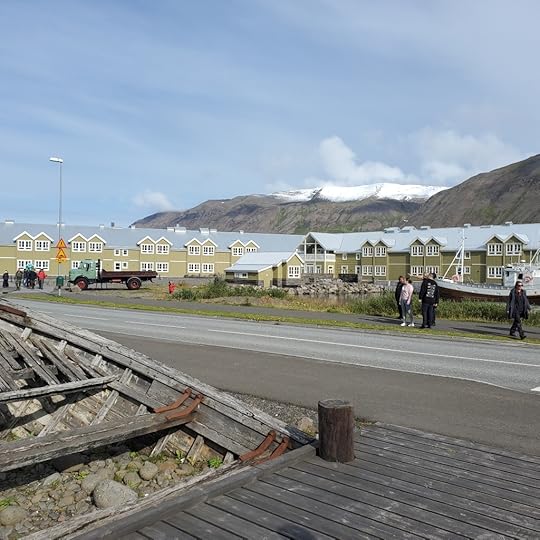
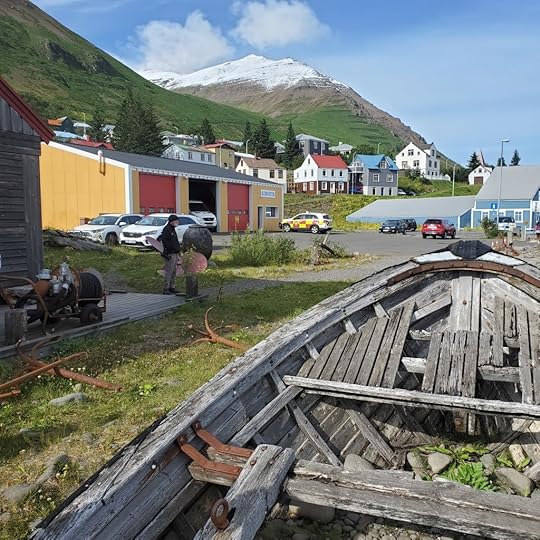
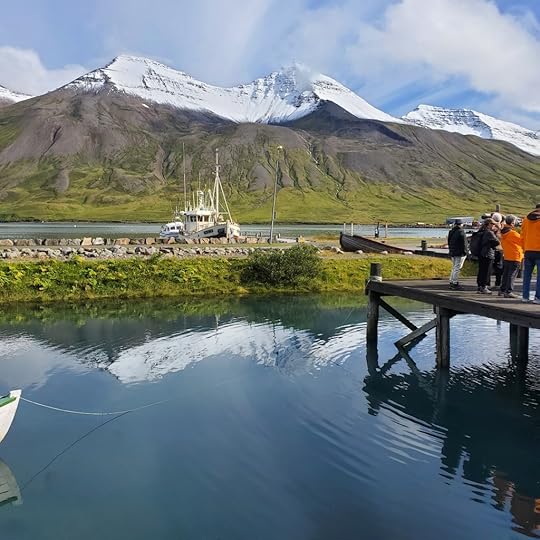
After the dancing, our host leaped to the sluice table and greeted the tourists, making us feel very welcome, indeed. He spoke about the fishing industry in Siglufjorour, a small village of about 1200 residents. It may be less than that, now. Their fishing industry peaked in the 1940s and 1950s when hundreds of shipping vessels lined the docks two and three deep. Herring were offloaded and processed around the clock. As you see from the pictures, that isn’t the case now. One lonely fishing vessel. This little village loves the cruise ships and the tourists. Why did the fishing industry dry up? There are a few factors. First, overfishing led to the collapse of herring stock in the 1960s. The village still relies on fishing, but it continues to decline. Iceland is trying to help the area by improving land transportation and promoting tourism. The dreaded phrase “Climate Change” is another factor in the industry’s decline. Herring do not thrive in the warming Arctic waters. That’s a fact. The above factors led to changes in the Arctic ecosystems that contributed to the decline in fish stocks.
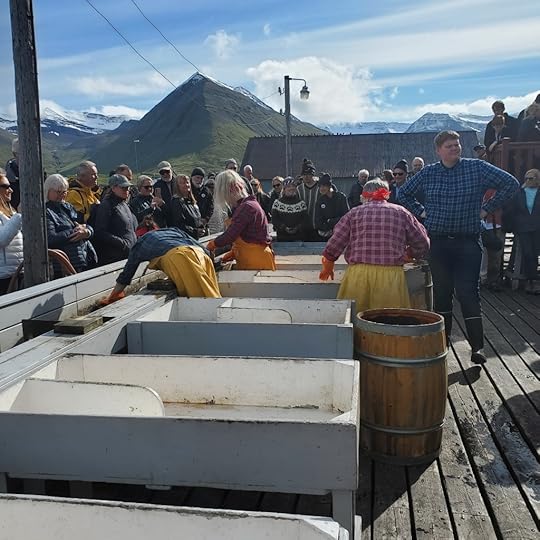
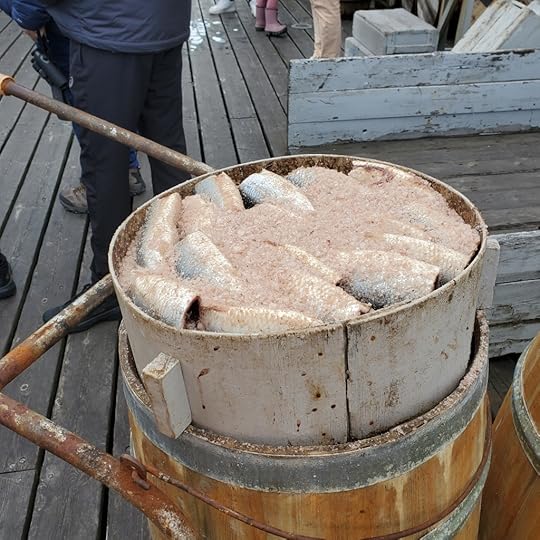
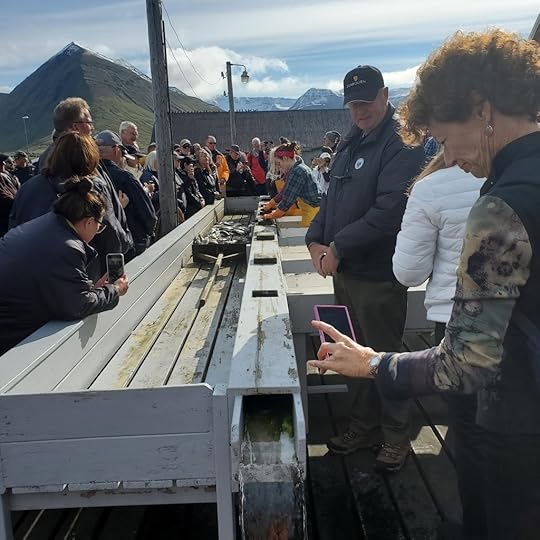
After learning about this little village, the fish choppin’ commenced. A teenage boy and girl demonstrated before stepping back to let the tourists try. There were a decent number of folks willing to dive in. The local family threw fish on a conveyor tray from which folks pulled out a fish, chopped off the head, and left it on the sluice where water washed it down into a large barrel at the end. The headless fish were salted in trays at the side of each worker and placed in a barrel. Maybe these newly trained people could be used in the cruise line’s kitchens to help out! Everyone seemed to have a lot of fun. I left them to it while I observed and took pictures.
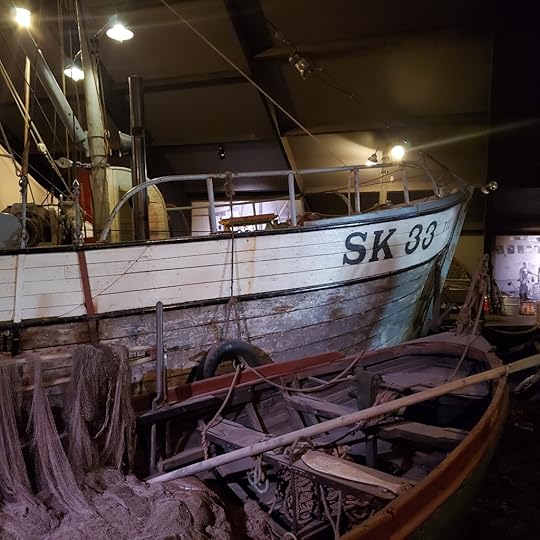
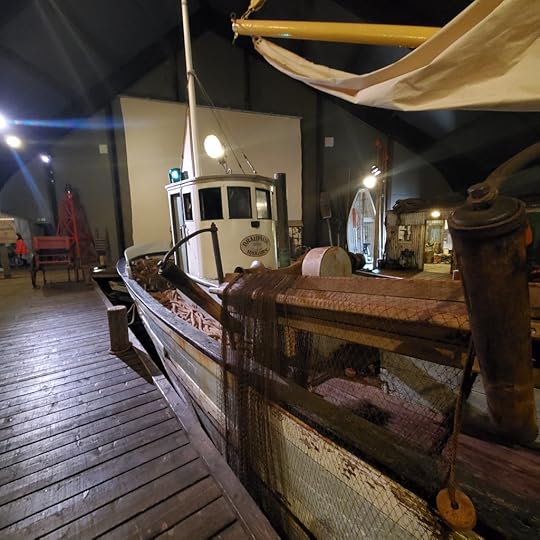
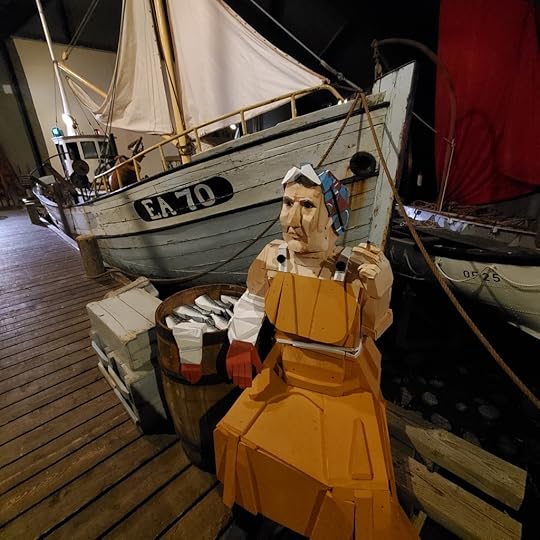
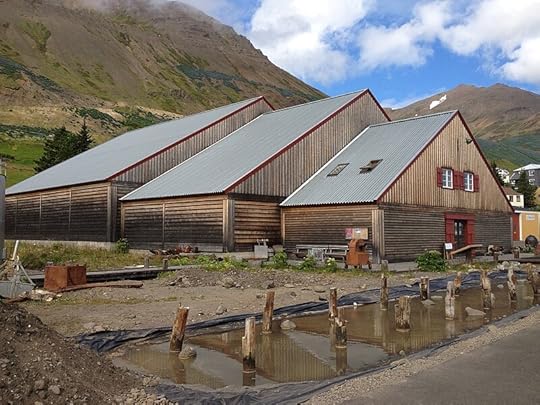
After experiencing the manual labor of fish processing, we walked down to the Herring Era Museum, Iceland’s largest maritime museum. This is quite a place. The villagers transformed the monster fish processing factory into this museum, adding additional buildings as it grew. Many of the tools and equipment are still preserved. Artifacts and photos reveal the significance of this industry to Siglufjorour and Iceland. The herring industry contributed over 44% of its total export income. Thousands of men and women arrived every season lured by the good pay. The women worked in the factory reducing the herring into meal and oil. The ‘herring girls’ were housed on the upper floor of the processing station. The most fascinating place to us was the intact fishing vessels inside The Boathouse. It contains ten boats that are ‘docked’ between piers and we walked around to view the different fishing vessels and ships. One can climb aboard the largest ship to explore. We heard the sounds of seagulls and waves breaking lending to a realistic atmosphere.
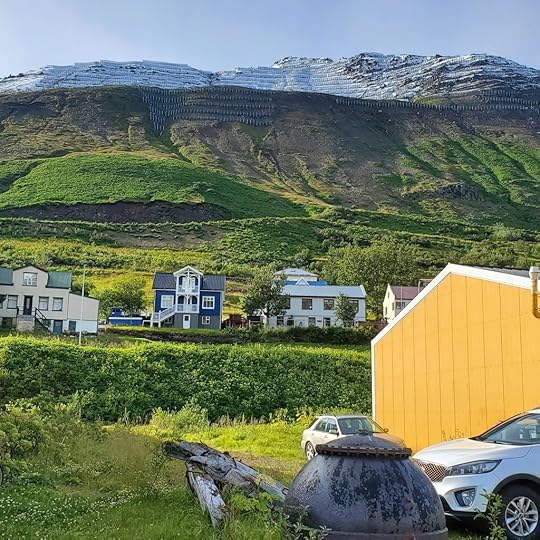
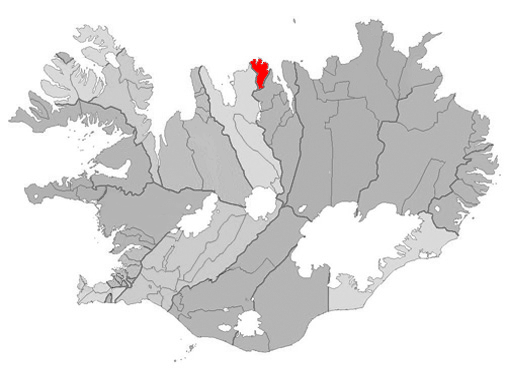
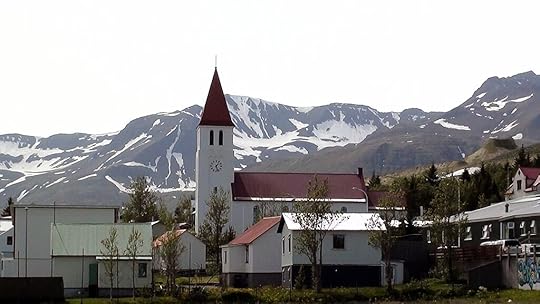
I don’t know about you, but as we walked around this little village, thinking about where we were was a surreal experience. To think this born and bred Arizona gal was walking around in Iceland of all places! I looked at the map but it didn’t sink in. We were in a fishing village located at the red squiggle on the map above. Incredible! We are forever grateful for our travel experiences. There is nothing like hitting the road to clear the head and remember the important things in life. It’s certainly not what’s on the news tonight. This earth of ours has been spinning for eons and I don’t think some crazies will change that. These people of Siglufjorour lost their livelihood but found a way to survive. Thanks to all of you who read my post today. I have more to tell you about Iceland and its many wonders. I’ll see you next time! Take a walk and stay sane!
If you liked my post, Like and leave a Comment. Visit my website for updates on my books and other adventures. https://vcwilliamsauthor.com/