
MMMD Week 13
First recording. I must have bumped my recorder because it cut off here by accident.
Silly me! I kept thinking I’d done a fairly decent job (3 volumes later) of uncovering lots of stuff in the book… boy was I wrong! In fact there is a new facet to Miss MacIntosh’s reciting of facts that points to the underlying message Young is giving readers. I have described it as levels and I’ll stick with it or come up with a better term since Involutions is already taken.
I now know that I’ll have to add either a master thesis or another volume explaining a more cohesive investigation of the novel. Also if you’re not following Involutions of the Seashell, please do! They have provided some great insights and Involutions (a rolling up or folding in upon itself) is exactly what this novel is about.
Again, I’m trying to cover new ground than what is in To All My Darlings so I go back and check sometimes if I’m rehashing things I’ve already explained there. I came across two sections of Miss MacIntosh’s rambling off facts to Vera after the sexual assault and was surprised I hadn’t looked up some of the things listed. Or I did and didn’t find anything at the time.
Which may mean AI is getting pretty damn good… And I remember at the time that I thought Young was referencing things that she thought would be common knowledge with these clues and so many years later it was not.
There are two time periods being dealt with: one paragraph is the 1800s and the other the early 1900s. The famine in China threw me off until I looked into the history of famines in China and realized, there’s a lot to choose from!
I now am leaning toward Miss MacIntosh being America. Vera is on the search for America. The ideals about America. The ones that are being ripped up and shat on right now by the oligarchy.
Young is LITERALLY showing the history that led us up to where we are and asking - is this what you want? are you sure this is what you chose?
So here’s all the links that I THINK reference what Miss MacIntosh is listing off in her “education” of Vera in those paragraphs. I missed a lot or I just got tired or I looked and didn’t find anything at the time. Which is why now that I’m looking, AI is doing a dang find job of scouring the entire Internet and giving me results.
I’m not saying to trust these results or not do any follow up. I am saying I’m only one person and this would take a lot to research a good 60 years after this was published. If anyone can add or give clarification, please add a comment!
List of rebellions and revolutions in Brazil
List of famines in China - this link is in the wrong place. I try to keep them sequential but I have a ton to list so… :-) Forgive me. Now that I have so much more information I might need to write another volume? *shudder*
Humans have known that gold exists in the ocean since at least 1872, when British chemist Edward Sonstadt discovered it. However, people have been captivated by the idea of extracting gold from the ocean for over 100 years.
Explanation
In the 1890s, English pastor Prescott Ford Jernegan claimed to have invented a device that could extract gold from seawater using mercury and electricity.
The ocean contains around 20 million tons of dissolved gold, but there is only about one gram of gold for every 110 million tons of ocean water.
There is also undissolved gold in and on the seafloor, often trapped underneath rock as far down as 35,000 feet.
Getting gold from seawater is very difficult, so it is not expected to happen anytime soon.
Scientists have also tracked the amount of gold in the ocean over the last 3.5 billion years.
1800s While white men were establishing boat clubs… Really good article I stumbled across looking up some information on “the lost regatta” and thought this went well with the topic Young was exploring.
Henley Royal Regatta - I included this because they did have a rule in the 1800s that manual laborers could not compete!
Deep History of Coconuts Decoded
Colonial Rule in the Pacific Islands
Economic History of the United Kingdom
Balkan Prince and Kings - just reading off the history of what happened to these people is telling in and of itself!
Java War - both successors were killed Hamengkubuwono IV (suspicious death maybe by poison) and Hamengkubuwono V (killed by his wife)
T Coronae Borealis may refer to the New Star that is seen every 80 years. Fun fact it is supposed to be visible in 2025! “It was first discovered in outburst in 1866 by John Birmingham, though it had been observed earlier as a 10th magnitude star. It may have been observed in 1217 and in 1787 as well. In February 1946 a 15-year-old schoolboy from Wales named Michael Woodman observed a flare up, subsequently writing to the Astronomer Royal and leading to the theory that the star flares each 80 years.”
The 8 day week and the alternate (older calendars) used by the Romans. Miss MacIntosh is obsessed with this and is furious that they have been changed and thrown people off balance. Young may be telling us that we are out of balance with nature, the seasons, a natural order. At first I thought it was paganism like Celtic origins which may be a part of it I don’t know. But she seems to be using Roman paganism. In one of the links about the Roman calendar it says that they followed the season more closely.
Roman Calendar and I found this blog post interesting Roman Pagan Calendar
How the other half lives by Jacob Riis. I strongly disagree with the conservative opinion included here. I consider conservatives to be people who wade into the ocean and scream at the waves to stop waving. Their ludicrous assumption that immigrants chose to live in slums as a stepping stone to living in America. Yeah, we need slums?! Any conservative minority has been paid to have that conservative opinion, in history up to the present. Also have a look at Riis’s autobiography. The nuance is that he may have had prejudices against certain ethnicities as racism has always been a thing, however, that doesn’t explain that slums are necessary.
Jacob Riis - “A particularly important effort by Riis was his exposure of the condition of New York's water supply. His five-column story "Some Things We Drink", in the August 21, 1891, edition of the New York Evening Sun, included six photographs (later lost). Riis wrote:
I took my camera and went up in the watershed photographing my evidence wherever I found it. Populous towns sewered directly into our drinking water. I went to the doctors and asked how many days a vigorous cholera bacillus may live and multiply in running water. About seven, said they. My case was made.
The story resulted in the purchase by New York City of areas around the New Croton Reservoir, and may well have saved New Yorkers from an epidemic of cholera.
Riis tried hard to have the slums around Five Points demolished and replaced with a park. His writings resulted in the Drexel Committee investigation of unsafe tenements; this resulted in the Small Park Act of 1887. Riis was not invited to the eventual opening of the park on June 15, 1897, but went all the same, together with Lincoln Steffens. In the last speech, the street cleaning commissioner credited Riis for the park and led the public in giving him three cheers of "Hooray, Jacob Riis!" Other parks also were created, and Riis was popularly credited with them as well.”
Women in Baseball
Young sent me down a wormhole of women’s history in baseball! It was fascinating and A League of Their Own is not where it began!
The History of Women in Baseball
Young mentioned the St. Louis Cardinals and the Cardinals/Dodgers rivalry and I found out that it is through the lens of racism. I wondered if during these trying times when minorities and women are being erased from the public record because Nazis that doing this read along is the right thing to do during this time.
Island of Blessing and Island of the Dead
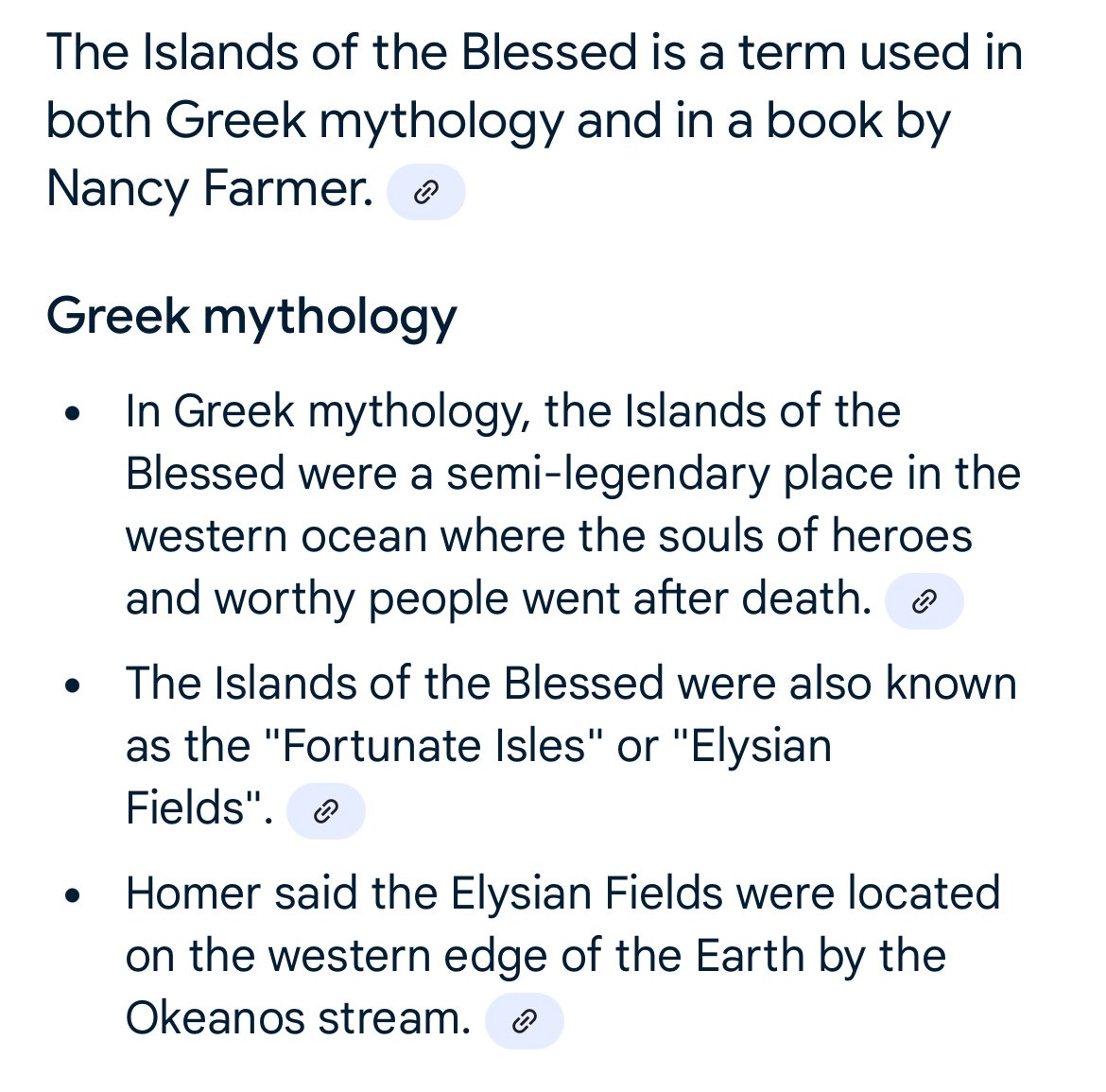
Fredrich Nietzsche Time is a Flat Circle and Eternal Recurrence
Homo Homini Lupus - Man is man’s wolf
Young cleverly starts with real events…
…and then works in what she is really trying to say after that.
“Pericles marked a whole era and inspired conflicting judgments about his significant decisions. The fact that he was at the same time a vigorous statesman, general and orator only tends to make an objective assessment of his actions more difficult.”
Pericles' most visible legacy can be found in the literary and artistic works of the Golden Age, much of which survive to this day. The Acropolis, though in ruins, still stands and is a symbol of modern Athens. Paparrigopoulos wrote that these masterpieces are "sufficient to render the name of Greece immortal in our world".
In politics, Victor L. Ehrenberg argues that a basic element of Pericles' legacy is Athenian imperialism, which denies true democracy and freedom to the people of all but the ruling state. The promotion of such an arrogant imperialism is said to have ruined Athens. Pericles and his "expansionary" policies have been at the center of arguments promoting democracy in oppressed countries.
Other analysts maintain an Athenian humanism illustrated in the Golden Age. The freedom of expression is regarded as the lasting legacy deriving from this period. Pericles is lauded as "the ideal type of the perfect statesman in ancient Greece" and his Funeral Oration is nowadays synonymous with the struggle for participatory democracy and civic pride.
Funeral Oration and especially this part - “Our form of government does not enter into rivalry with the institutions of others. Our government does not copy our neighbors', but is an example to them. It is true that we are called a democracy, for the administration is in the hands of the many and not of the few. But while there exists equal justice to all and alike in their private disputes, the claim of excellence is also recognized; and when a citizen is in any way distinguished, he is preferred to the public service, not as a matter of privilege, but as the reward of merit. Neither is poverty an obstacle, but a man may benefit his country whatever the obscurity of his condition.”
Thine and Mine racehorse but when you flip the words… !!!!!!!! There are two famous poems with the title and both are relevant. I highlighted Coates version because it was stated that the first stanza is the only part of the poem that was published at first. So I’m not sure when the full poem was published.
Mine and Thine (1889)
Two words about the world we see,
And nought but Mine and Thine they be.
Ah! might we drive them forth and wide
With us should rest and peace abide;
All free, nought owned of goods and gear,
By men and women though it were
Common to all all wheat and wine
Over the seas and up the Rhine.
No manslayer then the wide world o'er
When Mine and Thine are known no more.
Yea, God, well counselled for our health,
Gave all this fleeting earthly wealth
A common heritage to all,
That men might feed them therewithal,
And clothe their limbs and shoe their feet
And live a simple life and sweet.
But now so rageth greediness
That each desireth nothing less
Than all the world, and all his own,
And all for him and him alone.
Florence Van Leer Earle Coates
Mine and Thine (1904)
Our single lives are circled round
By an embracing sea;
Are joined to all that has been, bound
To all that is to be:
The past and future meet and cross,
And in life's ocean is no loss.
The music of the summer dawn,
The silence of the midnight sky,
The stars, in azure deeps withdrawn,
Reveal a single mystery:
And blent with these, the whisperings
Of spirit find each shy retreat,
And link the soul with viewless things,
In union close and sweet.
Failure itself may count as gain
In aspiration; paved with fire
May be the path that leads from pain;
And unfulfilled desire
May kindle that pure flame above
Whose earthly name is love!
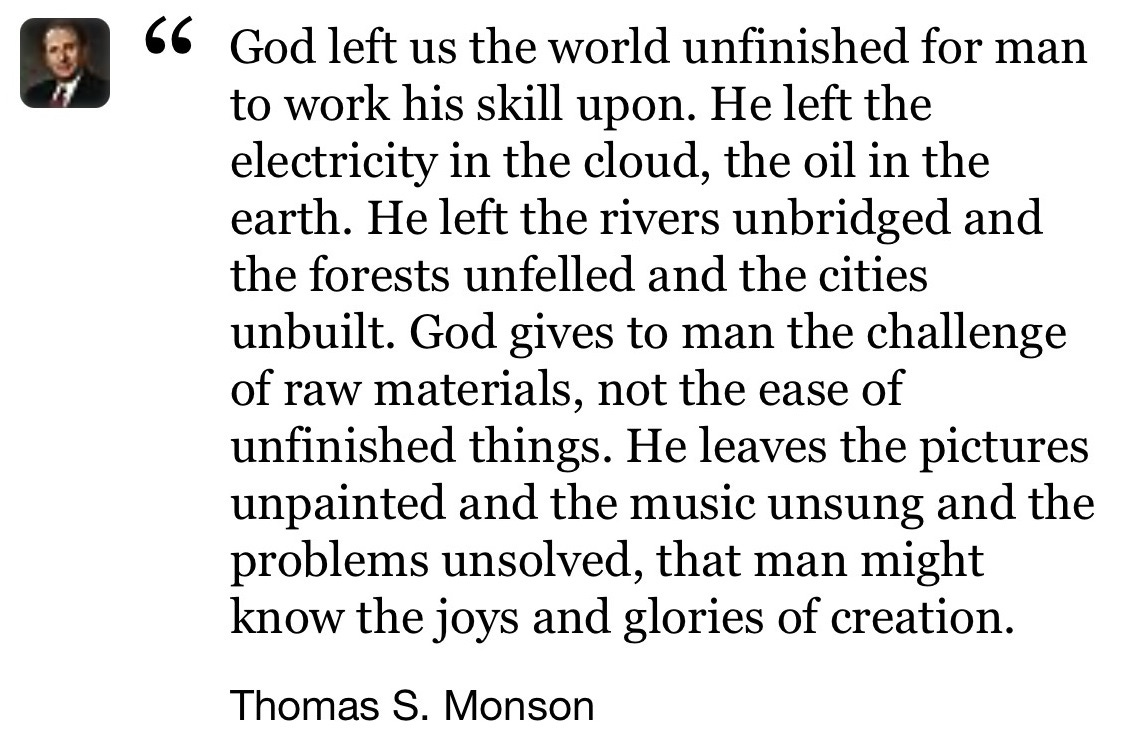
Here are pics of information I found relevant. They go with the above text.
This person was published after the release of Miss MacIntosh, My Darling but was also from The Church of the Latter Day Saints which Young mentioned and it seems to answer the question of what God left uncreated/unfinished which I found interesting.
A History of Paper Collars and the Men who Wore Them
“Where is the angel of death?” - Miss MacIntosh
Azrael - commonly referred to as the angel of death and where we get the imagery of the hood and sickle.
Turns out there are paintings and a poem by Jean Delville.
“Whose dog did not bark in the night?” - Miss MacIntosh
Young said in an interview how much she loved murder mysteries. This is either a tip to Sherlock Holmes are a hint as to who killed whom? Is she talking about her own “death”? Or someone else’s?”
These are links to things I believe were mentioned in the book.
Bill Klem - may be the most hated umpire
Marquess of Queensbury Rules - boxing rules for British and American boxers
Elegy Written in a Church Courtyard by Thomas Gray
"Elegy Written in a Country Churchyard" by Thomas Gray is a contemplative poem that meditates on the universality of death, particularly focusing on the lives and deaths of ordinary people buried in a rural churchyard, highlighting the idea that even those without fame or wealth deserve remembrance and that death ultimately equalizes all individuals, regardless of social status; the poem explores themes of mortality, social inequality, and the value of commemorating the lives of the forgotten through a melancholic and reflective tone.
Jeremiah inspired the French noun jérémiade, and subsequently the English jeremiad, meaning "a lamentation; mournful complaint," or further, "a cautionary or angry harangue."
Jeremiah has periodically been a popular first name in the United States, beginning with the early Puritan settlers, who often took the names of biblical prophets and apostles. Jeremiah was substituted for the Irish Diarmuid/Diarmaid (also anglicised as Dermot), with which it has no etymological connection, when Gaelic names were frowned upon in official records. The name Jeremy also derives from Jeremiah.
Sohrab Sepehri, an Iranian poet and painter, has mentioned Jeremiah in his work as "The weeping prophet".
The midrashic Book of Jasher portrays Issachar as somewhat pragmatic, due to his strong effort in being more learned, less involved with other matters which led him to such actions like taking a feeble part in military campaigns involving his brothers, and generally residing in strongly fortified cities and, depending on his brother Zebulun's financial support in return for a share in the spiritual reward he gains.
The Talmud argues that Issachar's description in the Blessing of Jacob - Issachar is a strong ass lying down between two burdens: and he saw that settled life was good, and the land was pleasant; and bowed his shoulder to bear, and became a servant unto tribute - is a reference to the religious scholarship of the tribe of Issachar, though scholars feel that it may more simply be a literal interpretation of Issachar's name.
The rabbis particularly praise the brotherly sentiment between Aaron and Moses. When Moses was appointed ruler and Aaron high priest, neither betrayed any jealousy; instead they rejoiced in each other's greatness. When Moses at first declined to go to Pharaoh, saying: "O my Lord, send, I pray, by the hand of him whom you will send", he was unwilling to deprive Aaron of the high position the latter had held for so many years; but the Lord reassured him, saying: "Behold, when he sees you, he will be glad in his heart." Indeed, Aaron was to find his reward, says Shimon bar Yochai; for that heart which had leaped with joy over his younger brother's rise to glory greater than his was decorated with the Urim and Thummim, which were to "be upon Aaron's heart when he goeth in before the Lord". Moses and Aaron met in gladness of heart, kissing each other as true brothers, and of them it is written: "Behold how good and how pleasant [it is] for brethren to dwell together in unity!" Of them it is said: "Mercy and truth are met together; righteousness and peace have kissed [each other]"; for Moses stood for righteousness and Aaron for peace. Again, mercy was personified in Aaron, according to Deuteronomy 33:8, and truth in Moses, according to Numbers 12:7.
“He was a prince who could had almost anything. The only things he wanted were things he could not have. He lusted after his sister and his father's throne. Wealth is not determined by possessions but by mindset. In his mind, Absalom was a pauper. He only looked at what he did not have.”
Absalom had erected a monument near Jerusalem to perpetuate his name:
Now Absalom in his lifetime had taken and reared up for himself a pillar, which is in the king's dale: for he said, I have no son to keep my name in remembrance: and he called the pillar after his own name: and it is called unto this day, Absalom's place.
— 2 Sam 18:18
“is a figure in the Generations of Noah in the Book of Genesis that represents the peoples known to the Hebrews. Togarmah is among the descendants of Japheth and is thought to represent some people located in Anatolia. Medieval sources claimed that Togarmah was the legendary ancestor of several ethnic groups in the Caucasus, including Armenians and Georgians.”
He was believed to have 10 sons.


Coral Russell's Blog

- Coral Russell's profile
- 1589 followers

