
MMMD Week 14
These are links that were not added in To All My Darlings Volume 1 that I felt deserved a looky loo…
The Analysis of Knowledge - What does it take to know something?
I was looking for something that felt like a line to a poem and came across this poem. Although I don’t think it fits anything in MMMD, it is still a wonderful poem by Shelley The Witch of Atlas and an example of the wonderful wormholes and wild goose chases one can go through reading the book.
Seneca regards philosophy as a balm for the wounds of life. The destructive passions, especially anger and grief, must be uprooted, or moderated according to reason. He discusses the relative merits of the contemplative life and the active life, and he considers it important to confront one's own mortality and be able to face death. One must be willing to practice poverty and use wealth properly, and he writes about favors, clemency, the importance of friendship, and the need to benefit others. The universe is governed for the best by a rational providence, and this must be reconciled with acceptance of adversity.
Since Miss MacIntosh talks about and prides herself on having common sense - It was at the beginning of the 18th century that this old philosophical term first acquired its modern English meaning: "Those plain, self-evident truths or conventional wisdom that one needed no sophistication to grasp and no proof to accept precisely because they accorded so well with the basic (common sense) intellectual capacities and experiences of the whole social body." This began with Descartes's criticism of it, and what came to be known as the dispute between "rationalism" and "empiricism". In the opening line of one of his most famous books, Discourse on Method, Descartes established the most common modern meaning, and its controversies, when he stated that everyone has a similar and sufficient amount of common sense (bon sens), but it is rarely used well. Therefore, a skeptical logical method described by Descartes needs to be followed and common sense should not be overly relied upon. In the ensuing 18th century Enlightenment, common sense came to be seen more positively as the basis for empiricist modern thinking. It was contrasted to metaphysics, which was, like Cartesianism, associated with the Ancien Régime. Thomas Paine's polemical pamphlet Common Sense (1776) has been described as the most influential political pamphlet of the 18th century, affecting both the American and French revolutions. Today, the concept of common sense, and how it should best be used, remains linked to many of the most perennial topics in epistemology and ethics, with special focus often directed at the philosophy of the modern social sciences.
Common sense works as such: If all men observe an item and believe the same qualities about that item, then the knowledge of that item is universally true. It is common knowledge, which without explanation is held true by other people; so, what is universally seen is universally believed. "The real, then, is that which, sooner or later, information and reasoning would finally result in, and which is therefore independent of the vagaries of me and you. Thus, the very origin of the conception of reality shows that this conception essentially involves the notion of a community, without definite limits, and capable of a definite increase of knowledge," (Reid, 155). The combination of the same ideas, of a thing, by multiple people, is what confirms the reality of an object. Reid also believes that the philosophers of his time exaggerated what is truly real. Where most philosophers believe that what we see is not fully what that thing is, for example, Descartes, Reid counters this argument simply by stating that "such a hypothesis is no more likely to be true than the common-sensical belief that the world is much the way we perceive it to be," (Nichols, Ryan, Yaffe, and Gideon, Thomas Reid). Reality is what we make it out to be, nothing more.
Nous - is a concept from classical philosophy, sometimes equated to intellect or intelligence, for the faculty of the human mind necessary for understanding what is true or real.
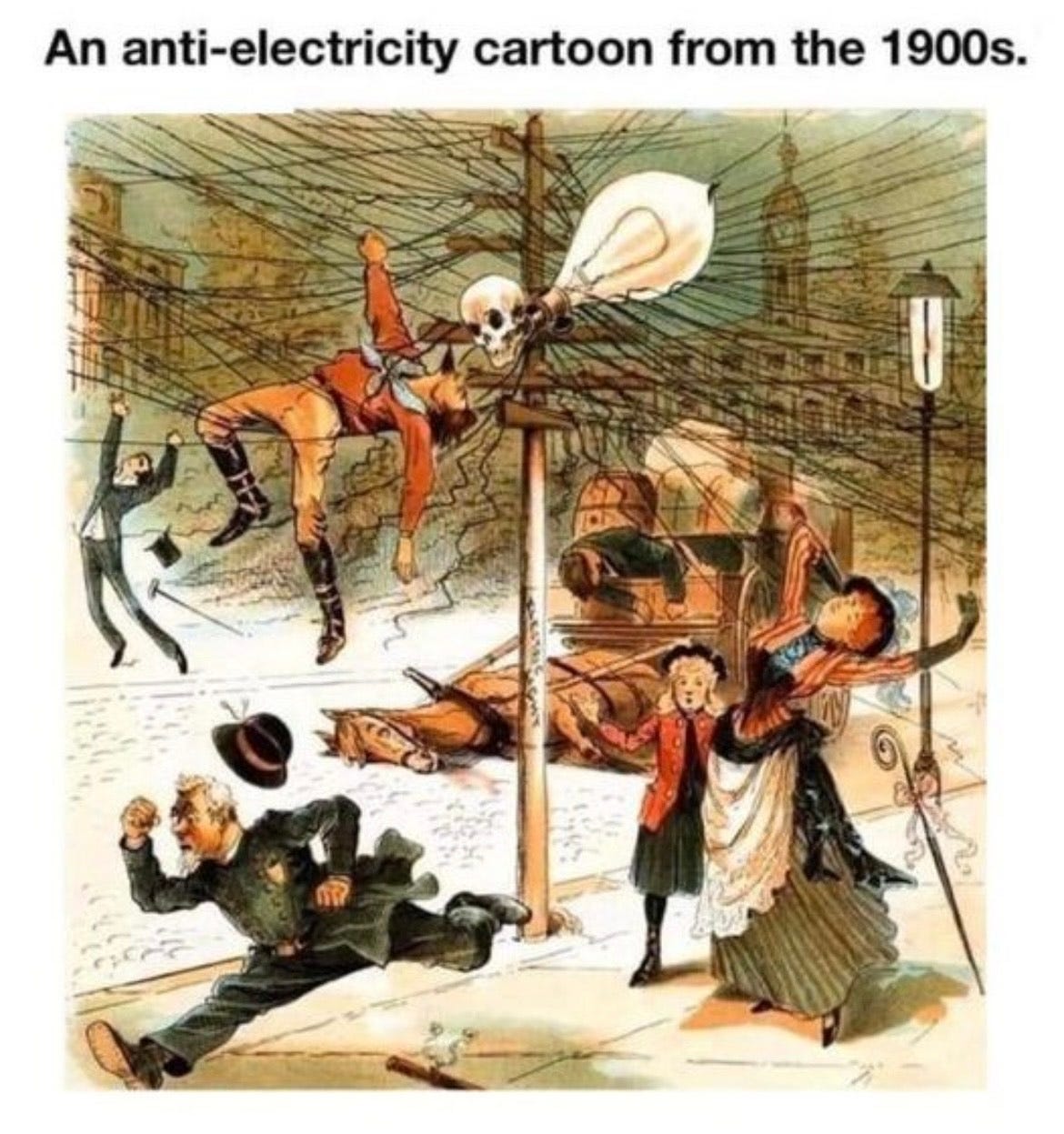
So there was a War of the Currents (Edison and Westinghouse) in the US about what to use AC or DC and that may be what is referred to in MMMD.
The war of the currents was a series of events surrounding the introduction of competing electric power transmission systems in the late 1880s and early 1890s. It grew out of two lighting systems developed in the late 1870s and early 1880s: arc lamp street lighting running on high-voltage alternating current (AC), and large-scale low-voltage direct current (DC) indoor incandescent lighting being marketed by Thomas Edison's company. In 1886, the Edison system was faced with new competition: an alternating current system initially introduced by George Westinghouse's company that used transformers to step down from a high voltage so AC could be used for indoor lighting. Using high voltage allowed an AC system to transmit power over longer distances from more efficient large central generating stations. As the use of AC spread rapidly with other companies deploying their own systems, the Edison Electric Light Company claimed in early 1888 that high voltages used in an alternating current system were hazardous, and that the design was inferior to, and infringed on the patents behind, their direct current system.
In the spring of 1888, a media furor arose over electrical fatalities caused by pole-mounted high-voltage AC lines, attributed to the greed and callousness of the arc lighting companies that operated them. In June of that year Harold P. Brown, a New York electrical engineer, claimed the AC-based lighting companies were putting the public at risk using high-voltage systems installed in a slipshod manner. Brown also claimed that alternating current was more dangerous than direct current and tried to prove this by publicly killing animals with both currents, with technical assistance from Edison Electric. The Edison company and Brown colluded further in their parallel goals to limit the use of AC with attempts to push through legislation to severely limit AC installations and voltages. Both also colluded with Westinghouse's chief AC rival, the Thomson-Houston Electric Company, to make sure the first electric chair was powered by a Westinghouse AC generator.
By the early 1890s, the war was winding down. Further deaths caused by AC lines in New York City forced electric companies to fix safety problems. Thomas Edison no longer controlled Edison Electric, and subsidiary companies were beginning to add AC to the systems they were building. Mergers reduced competition between companies, including the merger of Edison Electric with their largest competitor, Thomson-Houston, forming General Electric in 1892. Edison Electric's merger with their chief alternating current rival brought an end to the war of the currents and created a new company that now controlled three quarters of the US electrical business. Westinghouse won the bid to supply electrical power for the World's Columbian Exposition in 1893 and won the major part of the contract to build Niagara Falls hydroelectric project later that year (partially splitting the contract with General Electric). DC commercial power distribution systems declined rapidly in numbers throughout the 20th century; the last DC utility in New York City was shut down in 2007.
Ralph Waldo Emerson and Worship - when trying to make sense of Miss MacIntosh’s insistence that darkness equals privacy and was the natural order. Even to the point that married couples never really saw each other before the invention of electric lights. I came across this by Emerson.
This is he, who, felled by foes,
Sprung harmless up, refreshed by blows:
He to captivity was sold,
But him no prison-bars would hold:
Though they sealed him in a rock,
Mountain chains he can unlock:
Thrown to lions for their meat,
The crouching lion kissed his feet:
Bound to the stake, no flames appalled,
But arched o'er him an honoring vault.
This is he men miscall Fate,
Threading dark ways, arriving late,
But ever coming in time to crown
The truth, and hurl wrongdoers down.
He is the oldest, and best known,
More near than aught thou call'st thy own,
Yet, greeted in another's eyes,
Disconcerts with glad surprise.
This is Jove, who, deaf to prayers,
Floods with blessings unawares.
Draw, if thou canst, the mystic line,
Severing rightly his from thine,
Which is human, which divine.
THERE WERE WOMANLESS MARRIAGES staged as community events and fund raisers! It is a "most unique and attractive entertainment," the Houston Post reported on May 27, 1917. "Some of the most prominent men in the city will be in it. It is filled with fun from beginning to end and every city or town in which it has been given there have been record breaking audiences, even standing room being at a premium."
On The Sterility of Philosophers - “What, therefore, can we conclude from such a universal chastity? That wisdom is virgin? That Athena is a jealous mistress? That, as previously noted, truth is sterile? Perhaps. Or that the underlying conceit of philosophy is directed toward something other than life?
In his tale of the immortal, Borges maintains, "There is no more complex pleasure than thought." Having indulged in such enjoyments myself for the last several years, I am one to believe him. I, however, being a minor sort of thinker—a man of no genius, little reach, and less time—am often called back to earth, forced to witness the shames and labours of the day. For men of much greater esteem than I—that is, true geniuses—the pleasure of thought and philosophizing must become insurmountable, the world irredeemable. This the reason they always seek to make it anew—not from any utopian ideals, but because they cannot find adequate pleasure within this measly physical realm.
With this thesis in hand, we might say they turn to the mind to forget the world—a misanthropic retreat into the intellect with the tangible offering no solace. Swift hinted as much. Idealism? Nihilism? Existentialism? Realism? Materialism? Pah! To these and any other such isms floating in the spirit sphere. They are followers of Epicureanism, plain and simple; they merely refuse to admit it, lying to us and themselves with their transcendental faiths. Simply put, a child would be a thief of those precious reflective pleasures, i.e. how can one think through a baby's scream?
Whatever their truths and the desires behind them, one is left only to wonder at such gall and insincerity: to seek to remake the world—in their image, no less—and yet so unwilling to have their scions suffer such. This alone should disqualify their ideas. These improvers of men. How can one take them seriously? That they failed in their own most primal and foundational biological impulse—that they failed at life—should disbar them also. The proof is in the pudding, and yet the oven is bare, very bare indeed.
Philosophy as anti-life...
I love Montaigne. A true skeptic—six daughters he loved sincerely, cared for deeply, talked of, readily reflected on—he passed through the house of philosophy and came out the other side. This is real skepticism: the skepticism that finally grows skeptical of itself and returns to the true reason that screams in the cells of all life. Life? Love? Call it what you will.”
So I am leaning towards Castor and Pollux being the inspiration for the Spitzer twins.
After comparing Schopenhauer’s Will to Live and Nietzsche’s Will to Power I believe Young is using Schopenhauer’s Will to Live for Mr. Spitzer. I posted videos to the YouTube list and will dive into Will to Live more to pull out some other connections.
“In psychology, the will to live is the drive for self-preservation, usually coupled with expectations for future improvement in one's state in life. The will to live is an important concept when attempting to understand and comprehend why we do what we do in order to stay alive, and for as long as we can. This can be related to either one's push for survival on the brink of death, or someone who is just trying to find a meaning to continuing their life. Some researchers say that people who have a reason or purpose in life during such dreadful and horrific experiences will often appear to fare better than those that may find such experiences overwhelming. Every day, people undergo countless types of negative experiences, some of which may be demoralizing, hurtful, or tragic. An ongoing question continues to be what keeps the will to live in these situations. People who claim to have had experiences involving the will to live have different explanations behind it.”
SPOILER - this goes a long way to rationalizing why Jock, the Black Coachman, Joachim, and Peron all are Mr. Spitzer and why Peron took over identities to keep living.
I decided to revisit “silent music” to figure out where this might have come from and what it could mean and found there are quiet a few artists that used “silent music” to expand on a thought, concept, form of protest or as a part of Dada.
List of silent musical compositions
This push and pull between silent music and the music of the spheres or harmonious music form much of Mr. Spitzer’s tale. Particularly how Schopenhauer considers music the highest form of art.
Sound familiar - “On a journey to Tuscany with her young friend and travelling companion Caroline Abbott, widowed Lilia Herriton falls in love with Gino, a handsome Italian man much younger than herself, and decides to stay. Furious, her dead husband's family send Lilia's brother-in-law Philip to Italy to prevent a misalliance, but he arrives too late. Lilia has already married Gino and becomes pregnant again. She gives birth to a son, but dies in childbirth. Caroline decides to go to Tuscany again to save the child from what she perceives will be a difficult life. Not to be outdone, the Herritons send Philip again to Italy, this time accompanied by his sister Harriet, to save the family's reputation. In the public eye, they make it known that it is both their right and their duty to travel to Italy to obtain custody of the infant so that he can be raised as an Englishman. Secretly, though, they have no regard for the child, only public appearances.
Philip and Harriet meet Caroline in Monteriano. Both Philip and Caroline eventually fall under the charm of Italy, which causes them to waver in their original purpose. They further learn that Gino is fiercely devoted to his and Lilia's infant son. As they admit defeat in their mission however, Harriet kidnaps the baby, but the baby is accidentally killed when the carriage he is in overturns. Gino, hearing the news, attacks Phillip, but the two are reconciled after Caroline's mediation. Gino's physical outburst toward Philip in response to the news makes Philip realise what it is like to truly be alive. The guilt felt by Harriet causes her to lose her mind. Finally, as Philip and Caroline return to England, he realises that he is in love with Caroline but that he can never be with her, because she admits, dramatically, to being in love with Gino.
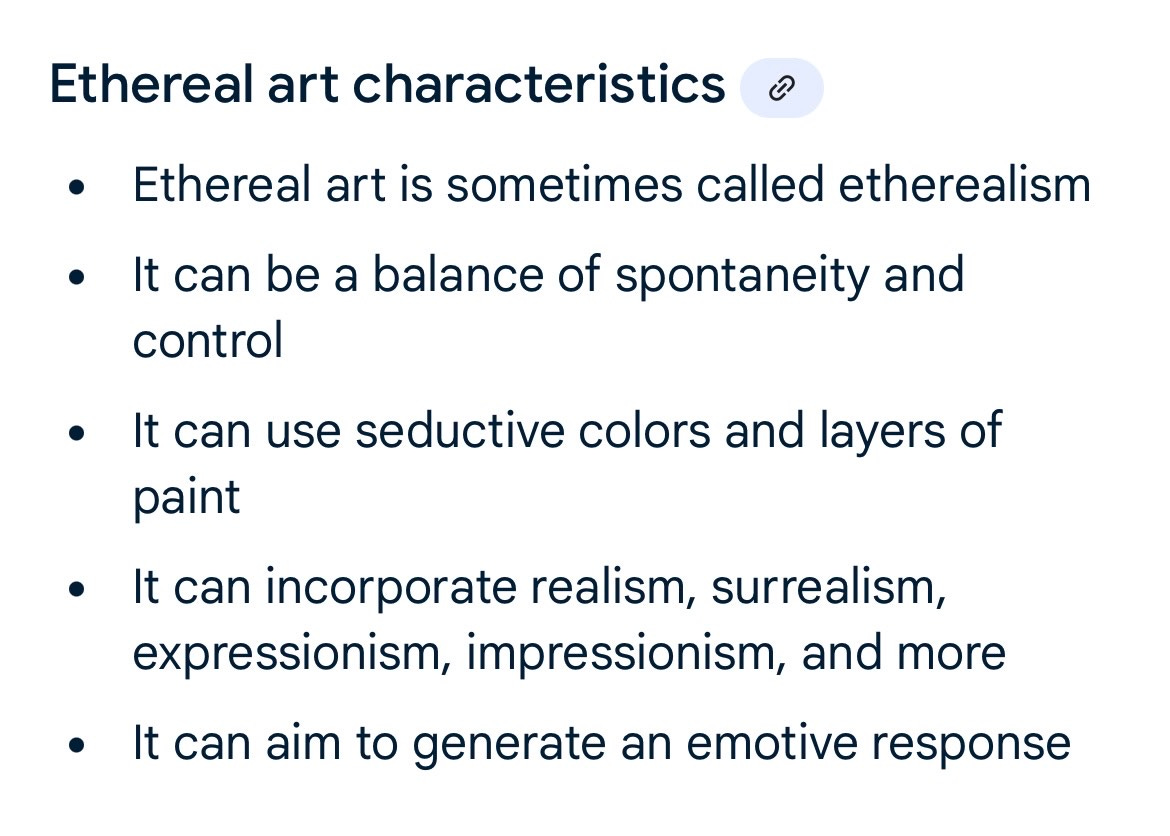
Catherine and the servants made me think of Audre Lorde who talked about how you cannot dismantle the master’s house using the master’s tools. Here is another expansion on that thought.
Mr. Spitzer is the lawyer for heirs and basically settling of personal property. He is the lawyer for Catherine and Cousin Hannah. Which got me thinking about the history of inheritance and private property so I’m adding a couple of links.
Historical inheritance systems
And of course since we are looking at two women lets recap the history of a women’s right to own property or more accurately when she was allowed to own property
“Women's property rights have expanded over time in the United States, but they have been restricted by gender stereotypes and laws.
Early history
In medieval times, married women's land became their husbands' property.
In 1718, Pennsylvania allowed married women to manage their homes while their husbands were away.
In 1848, New York passed the Married Women's Property Act, which allowed women to keep their property when they married.
Mid-1800s to 1900
Other states passed similar laws in the 1850s.
By 1900, most states recognized women's property rights.
However, women of color were not included in these rights.
1960s to 1970s
Women faced barriers to accessing credit and mortgages without a male co-signer.
In 1974, the Equal Credit Opportunity Act was passed, which helped to address these barriers.
Today
Women can apply for home loans and take out lines of credit, which has made it easier for them to become homeowners.
Gender stereotypes and ideologies have historically been barriers to women's property rights.”
This is just interesting history wise for legal rights for women in history. Keeping it in the family: female inheritance, inmarriage, and the status of women.
Recent development in the UK - “The Succession to the Crown Act of 2013 made the British line of succession gender neutral. This means that the first-born child of the monarch will become the successor, regardless of gender. This change applies to people born after October 28, 2011.”
The “elegiac song” is a funeral song and that is the music that Mr. Spitzer plays or writes or listens to. I thought it was some different so wanted to include a video. Elegiac Song by Beethoven
“An elegiac song is a sad or mournful song that expresses sorrow, often for someone who has died. The word "elegiac" is an adjective that means "mournful" or "sad".
Examples of elegiac songs:
"Elegy, Op. 58" by Edward Elgar
"Candle In The Wind" by Elton John
"Elegy Written in a Country Churchyard" by Thomas Gray
"O Captain! My Captain!" by Walt Whitman
Other uses of "elegiac":
To describe a book, movie, or other work of art that has a sorrowful tone
To describe a poem or prose that is sad or mournful, especially when remembering someone who has died
To describe a musical composition that is sad or mournful
Etymology
The word "elegy" comes from the Greek word elegos, which means "song of mourning".
Related terms
Synonyms of "elegiac" include lamenting, sad, melancholy, and nostalgic.”
AND! last but not least Dante with ALL THE LEVELS of everything, holy shrimp, I didn’t realize he made up so much stuff for hell, purgatory, and heaven but it seems heaven gets the least amount of levels… for most I could find pictures but this one was an article - The 7 Levels of Purgatory
Addition - I have not been keeping up with Shaviro’s notes and will be doing that in the next couple of posts but noticed a couple of things he picked up on, a possible reference to Keats poem Ode on a Grecian Urn and a Nietzsche reference to the abyss.


Coral Russell's Blog

- Coral Russell's profile
- 1586 followers

