Reframing steampunk
I’ve been calling my new series (yes, a series) steampunk adjacent. I’ve been calling it this because while I’m using an alternative power source to steam, the vibe trends very similar.
Which has brought up an interesting question for me, particularly in the context of marketing: What exactly is steampunk? And, depending on my answer, can I even call my series that?
Back in the day, the classic example was to show Abraham Lincoln wearing a steam-powered jetpack and say that’s steampunk. AKA, a genre full of alternate-Victorian-era histories where steam remained the dominant power source, making way for a bevy of very cool inventions, vehicles, and cool dudes/dudettes with goggles, mechanical body parts, and an unseemly amount of cogs on their clothes.
And while that is a fantastic aesthetic that I am very much into, there’s always been a particular cog stuck in my proverbial craw about it: all too often, the aesthetic has felt like window dressing. The most common example of this is in costumes. Look up “steampunk hat” and you’ll see countless top hats with gears, clocks, chains, bones, feathers, and more slapped onto them like someone’s craft box is using them as their final life rafts. And while there are some excellent cosplayers or steampunk enthusiasts who temper this into something that seems more practical at the very least (metal arms, gadgets that feel in line with a character, etc.), I’ve often felt a certain dissatisfaction with how illogically some of the look is applied. This is even more frustrating when this happens in a book format, where the world feels like it’s going out of its way to include a vibe, technology, or costume that doesn’t make any practical sense. Worse still if the world paints the steampunk elements into the picture and doesn’t use them at all.
And then, of course, there are those books which feel like they should be steampunk when–at least by the above definition–they aren’t. Books like Retribution Falls, where airships run on aerium and propane rather than steam; or The League of Extraordinary Gentleman, which doesn’t really center around steam at all. Neither, I should note, has unnecessary cogs on clothing.
Enter the need for more research. Some of this has included steeping in more steampunk media (Retribution Falls among the brew), but there was also a brief trip to google to confirm the difference between steampunk and gaslamp fiction, which brought me to this Reddit page. Specifically, this response.
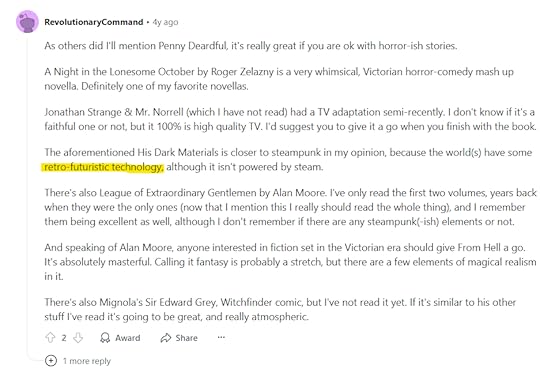 A post by RevolutionaryCommand which highlights retro-futuristic technology as a key marker of the genre.
As you can see from my highlight, there was one particular phrase which caught my eye: retro-futuristic technology. And let me tell you, that phrase has blown this puppy wide open for me. After all, many of the suggestions provided on the original post don’t follow the strictly steam-powered, cog-covered stereotype. And yet, of the ones I recognize from the list, most of them do have that certain steampunk je ne sais quoi about them. Sometimes even specific devices from a non-steampunk series have the feel (the Farnsworths and Teslas from Warehouse 13 being a prime example). Looking at the below pictures (featuring left to right, Mortal Engines, Steamboy, Warehouse 13, and Leviathan), you can begin to see what I mean.
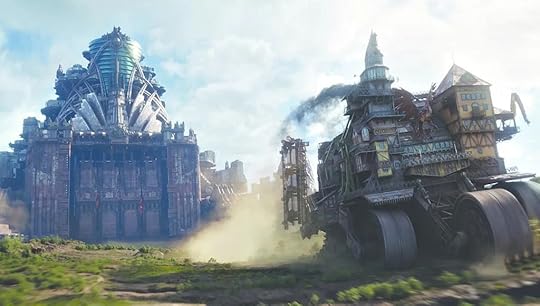
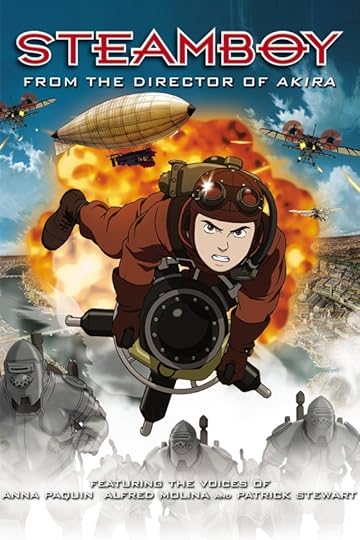
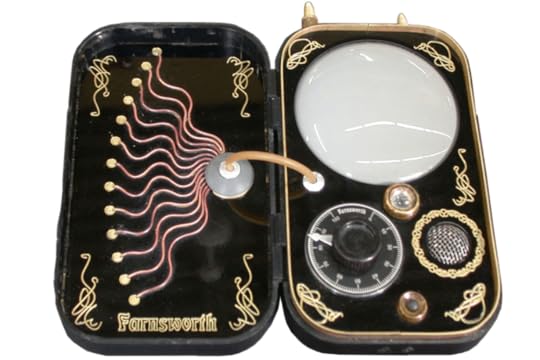
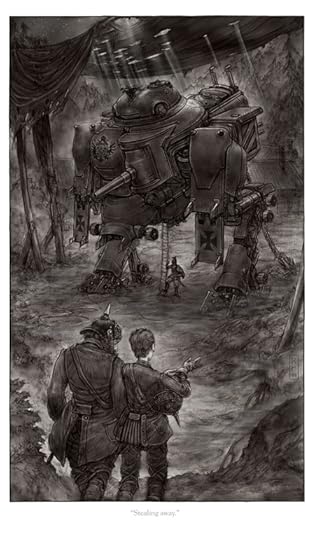
In all of these, you see that retro-futuristic style. Older architectural styles hoisted high on caterpillar treads, vehicles and mechs paired with fashions from decades (or longer) ago, even a cell phone dressed up in an older style. All of these, even if they aren’t specifically powered by steam, feel steampunk to me.
Which brings us back to my original question: Should I market my new series as steampunk?
Based on this, I think so.
Your turn: What do you think makes something steampunk? Would you agree with the above or no? What are your favorite steampunk tales? Let me know in the comments, and make sure to sign up to my newsletter in the sidebar to get the alert when my series is ready.