Sweet
Sweet is my life, for I have always craved and fulfilled my sugary pleasures. There has been almost an instinctive relationship with it all my life. And so I have never looked beyond the simple joy of building my body with sweetness. But as always, there are stories, and I have been such a simp for them all my life, too.
Although sweets are a matter of personal taste and intimate experiences, they also carry a rich cultural, religious, and regional heritage. Each sweet has its own history and a place in the present. Today, I share some of them and their presence in my life.
One of my fondest childhood memories is sitting beside my grandma in her village home as she directed my grandpa and others in making sweets and snacks for her children and grandchildren. She has exquisite skills, but her fingers had given up long ago due to rheumatism. And so the grandparent team planned meticulously and worked together to ensure their homemade delicacies reached their offspring every few months for as long as possible.

The eagerness while waiting for the Mysore pak confection to be poured out, cut into pieces, and cooled down, or for the group to roll out the sweet boondi mixture in the large bowl into round laddoos, is my first untamed longing in life. These and other sweets, such as ariselu, garjalu and palli patti, along with numerous savouries to accompany them, are a hallmark of our family celebrations. Preparations for our major local festivals, such as Dussehra or Sankranti, or important events like weddings, typically begin with making these. And the entire festivities are marked by distributing and enjoying them together.
The process of making ghee or any of the other steps in creating these sweets was a ritual, passed down through generations, connecting us to a lineage of sweet-making. These weren’t just sweets; they were edible heirlooms, embodying the spirit of togetherness and the continuity of our heritage.
But not every occasion called for such an elaborate production. For the quiet solace of a small family gathering, a simple puja, or an intimate festival, we create quick yet equally cherished delights. Paramannam, Semiya Payasam, and Rava Kesari are a variety of puddings that offer a comforting blend of rice, vermicelli, or semolina, milk, and sugar or jaggery, adorned with almonds, cashews, and raisins, and often offered as prasadam. These are a testament to simplicity and devotion. There are some sweets made with a bit of help from outside, such as fruit custard and gulab jamun, and they are the anchors of spontaneous celebrations, providing comfort and joy without the grand fanfare.

When it’s time for larger feasts, the sweet course often takes on a different, more regal character. This is where the unique culinary legacy of Telangana truly shines, offering confections such as Double Ka Meetha and Qubani Ka Meetha. They are a testament to indulgence, yet they provide a delicate balance that speaks to sophisticated palates. These sweets bear the indelible mark of the royals, evident in the rich ingredients and intricate preparations; yet, they are undeniably rooted in the local flavours and traditions of our region.
And then, there were the times when the craving struck, or when we simply sought a different flavour profile, leading us to the vibrant sweet shops of the city. Here, we’d find the perfectly flaky layers of a Baadhusha, its crisp exterior giving way to a tender, syrup-soaked interior, or the intricate, spiral design of a Jhangri, its orange hue and syrupy sweetness a delightful burst of flavour. These and more store-bought treats, such as Palakova or Kalakand, offered a different kind of joy — the pleasure of instant gratification, the discovery of a master artisan’s touch, and a connection to the broader tapestry of Indian sweets.
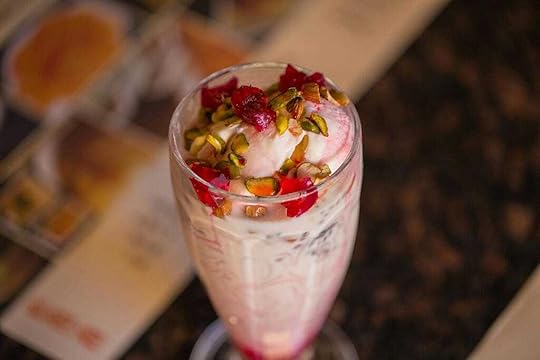
The story of sweets is incomplete without a mention of the delicious drinks that put up a strong fight against rice and fruits like mangoes, custard apples and the like for their time and place. The rasnas and sharbaths of our childhood summers, the goli sodas and sugarcane juices from the streets, or the badam milk and faloodas with their rich tastes, offering up their content to calm our tropical bodies and filling us with their honeyed melodies are woven into the very fabric of life.
I have many sweet memories. From the little Parle Kismi caramels, to the little leftover pepperments my parents got from their schools, to the 1 rupee red-coloured coconut sweets found in tiny cigarette stores, to the time we looked forward the bell of peechu mithai (soan papdi or cotton candy) and milk-icecream sellers, to the first time I made my grandpa buy me an orange bombay halwa piece at a bus station, or to the first time I bought a dharwad pedha packet for my family because the train I took after my college semester to go home passed by that place. With the fast access and mainstreamification of them, it is easy to lose their charm in our lives. So, sweets, too, require a little effort, allowing us to build magic or create a memory around them and be mindful.
In today’s world, life is not considered sweet. Or so it is for some people. For others, sugar is a vice, a dangerous addiction. But for most of us, those who are privileged in their own way, life can be sweet, if only we take the time now and then to appreciate it.
[image error]