10 Surprising Things Kids Learn Just by Playing Outside — From Babies to Big Kids
In a world packed with screens and schedules, it’s easy to forget that one of the richest learning environments is right outside our front door. Whether it’s a stroll through a city park, digging in backyard dirt, or hiking a wooded trail, outdoor play offers powerful, natural opportunities for growth and development — especially for children from birth through age six. Here are ten surprising (and research-backed) ways kids learn while engaging with nature, broken down by age group so you can better support your little learner, whether they’re just beginning to crawl or already chasing butterflies.
1. Vocabulary ExpansionBirth to 3 Years:
Even before they can talk, babies and toddlers absorb language from everything around them. Outdoors, they encounter new words tied to real-life objects — “leaf,” “bird,” “sky,” “wind.” This context-rich vocabulary builds stronger language foundations than screen-based learning.
Ages 3 to 6 Years:
Preschoolers become chatterboxes outdoors. They learn descriptive and action words like “slippery,” “splash,” or “climb.” Observing bugs or clouds also sparks questions, encouraging back-and-forth conversations that grow both expressive and receptive language.
Birth to 3 Years:
Infants feel the chill of winter air or the warmth of the sun and begin to recognize sensory patterns. Gentle exposure to weather (with proper gear!) teaches cause and effect — cold means mittens, rain means boots.
Ages 3 to 6 Years:
Preschoolers can identify clouds before rain, differentiate seasons by changing leaves, and learn concepts like temperature, wind, and light. This early science education often happens naturally during play — like noticing puddles evaporate or frost sparkle in the morning.
 3. Gross Motor Skills Development
Birth to 3 Years:
Nature challenges young bodies. Crawling over grass, toddling uneven paths, and cruising on tree roots build balance and coordination. These movements are crucial for developing strength, agility, and body awareness.
Ages 3 to 6 Years:
Climbing trees, jumping off logs, and running up hills build stamina and confidence. These activities promote spatial awareness and physical resilience — all while having fun.
Birth to 3 Years:
Picking up rocks, feeling sand, or clutching sticks refines hand-eye coordination. Even something as simple as squeezing mud or holding a dandelion stem supports fine motor development.
Ages 3 to 6 Years:
Older children might dig holes, build fairy houses, or thread leaves onto twigs — all of which strengthen the muscles needed for writing, self-care, and tool use.
Birth to 3 Years:
Nature is the ultimate sensory playground. Babies hear birds, touch cool grass, and smell fresh rain. These multi-sensory inputs are essential for brain development and help infants understand their environment.
Ages 3 to 6 Years:
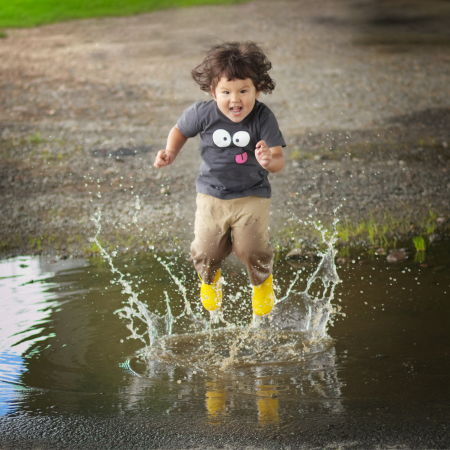
Preschoolers seek out sensory-rich play. Mud pies, splashing water, and barefoot walks across different surfaces stimulate sensory systems, encouraging emotional regulation and focus.
Birth to 3 Years:
Calm outdoor environments often help babies regulate emotions. A walk under trees or lying on a blanket watching clouds can reduce stress and build a sense of security.
Ages 3 to 6 Years:
When kids face challenges outdoors (like a wobbly log or unexpected bug), they learn to manage frustration, problem-solve, and persevere — all key elements of emotional intelligence.
Birth to 3 Years:
Even a baby’s gaze up at a fluttering leaf is a form of scientific observation. Toddlers naturally experiment, poke, drop, and splash to see how the world works.
Ages 3 to 6 Years:
Preschoolers ask “why?” constantly — and nature provides endless fuel for inquiry. How do ants carry food? Why do flowers close at night? Outdoor experiences become early lessons in biology, physics, and ecology.
Birth to 3 Years:
Younger children may play alongside peers in a sandbox or follow others on a trail. This “parallel play” fosters observation and early social learning.
Ages 3 to 6 Years:
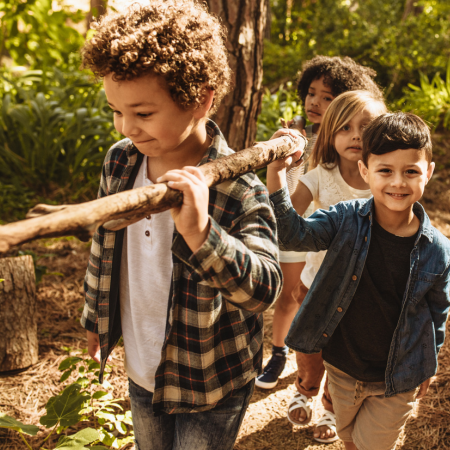
Group play outdoors — like building forts or playing tag — requires cooperation, negotiation, and shared goals. These interactions help children develop empathy and teamwork.
Birth to 3 Years:
With natural objects as their “toys,” babies and toddlers begin to imagine — a leaf becomes a hat, or a stick becomes a spoon. This open-ended play builds neural flexibility and imagination.
Ages 3 to 6 Years:
Outdoor environments invite storytelling. A log becomes a pirate ship, a hill, a castle. This kind of dramatic play supports cognitive flexibility and narrative skills, which are essential for future reading and writing.
Birth to 3 Years:
Simply spending time outdoors builds a deep-rooted connection to nature. Repeated exposure nurtures comfort, curiosity, and love for the earth.
Ages 3 to 6 Years:
Preschoolers can begin to grasp concepts of stewardship — picking up litter, planting seeds, or watching bees pollinate. These early lessons can foster lifelong environmental awareness and responsibility.
Final Thoughts:
You don’t need special toys, fancy equipment, or structured lessons to teach your child — nature does the heavy lifting. From their earliest days through the preschool years, children learn with their whole bodies and all five senses when they’re outside. So grab a hat, step out the door, and let the wild world do its magic. Every rock, breeze, and puddle is a potential teacher.
The post 10 Surprising Things Kids Learn Just by Playing Outside — From Babies to Big Kids appeared first on Book Chatter Press.