Infinitely Stranger: Book Review
Paula Hammond’s latest collection, The Infinitely Stranger Cases of Sherlock Holmes, is a terrific read. Our intrepid detective is challenged by all manner of apparently supernatural problems, from djinns and mummies to witches and dodgy mediums. It’s hardly a spoiler to reveal that Holmes finds explanations for everything.
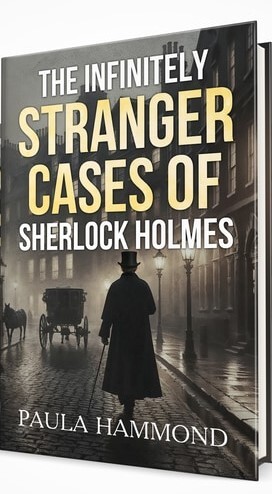
Incidentally, it always amuses me that Holmes, that most rational of men, was created by the credulous Conan Doyle, in later life, a champion of the Spiritualist movement and one who was utterly taken in by the Cottingley Fairies hoax.
While, of course, Holmes is the detective doing the solving here, for Ms Hammond Doctor Watson is far from being his stooge. In each story she shows us what Watson brings to the case in question, having fleshed him out from the hints and details dropped through the Canon. In the story, The Covent Garden Medium, for instance, Watson wants so much to be put in touch with his beloved dead wife, Mary, that, attending a séance, he is almost fooled, the familiar scent of her perfume luring him in. Still, he becomes suspicious when the supposed spirit mutters “Sad” when asked about the significance of that particular day for her – Watson’s birthday, which was always full of fun and laughter. Subsequently, of course, Holmes unravels the whole scam.
The stories here are cunningly plotted and a delight to read, but I was equally taken with the notes after each. Ms Hammond clearly revels in her research (which, happily, lies lightly within the tales themselves).
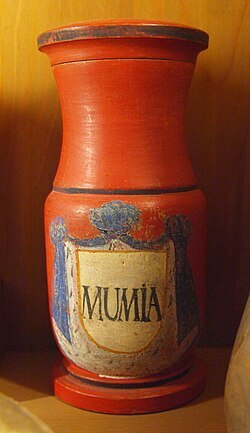
Among so many other enthralling details – did you know in Victorian times there were up to twelve postal deliveries a day in big cities? – we learn that from 1700, mummia, originally a type of resin using in Ancient Egypt in the embalming process and later a word referring to whole or powdered mummy flesh, was eaten and even prescribed as a cure-all up to 1924!
Real people make appearances, such as Lieutenant Thomas Rice Henn, a supposed colleague of Watson’s when he served as an army surgeon during the Second Anglo-Afghan war. Later, as the notes inform us, Henn was killed making a brave stand with ten others in an action known as “The Stand of the Last Eleven”, immortalised in Rudyard Kipling’s poem “That Day”.
The author often sets her stories in real places, too. For instance, she herself lives in north Wales and, from the end of her street, can see the Bryniau tower that features in her story of the same name. (Paula, left, at the tower).
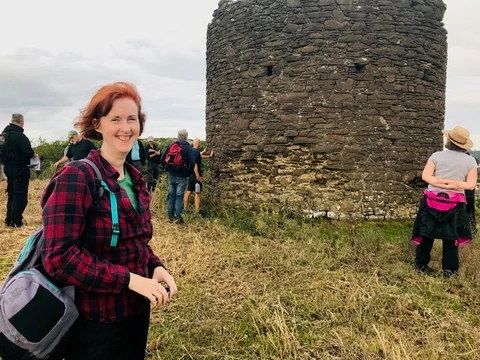
Probably built in the 17th century as a watch tower, it was also associated with witches who in Wales, we are told, were largely well-regarded for their charms and herbal remedies, unless they caused harm.
The infinitely stranger cases here are certainly worth a read. If I have any criticism, it is that the book is too short. More stories, please Paula.
NB The book to be published soon by MX and available to prebook. See also Kickstarter where it has been named as #ProjectWeLove [https://bit.ly/400uGWR]