How to Teach Kids About Hope with the Hope Meter™
Did you know that hope isn’t a feeling? It is a skill that we can all learn, practice, and grow. As a therapist, I have spoken with many kids and adults lately who feel overwhelmed, stressed and anxious. Some are struggling with things going on in their own lives. Others are struggling with events taking place in the world around them. For some, it’s a combination of both.
Although we can’t make these challenges go away, we can equip ourselves, and our kids, with tools for overcoming adversity. Hope is truly the most valuable tool I’ve found. Being able to find the bright side and develop an optimistic outlook is a key life skill. Here’s how to teach kids about hope and a few tools for cultivating hope in everyday life.
Why Hope MattersWe all face challenges. We can choose to let those challenges knock us down and keep us stuck or we can view them as little speed bumps on our journey. When we know how to keep a hopeful mindset, we can see beyond the hard moments, toward a brighter future. Hope empowers us to keep moving forward, adapt to change, and believe that better days are possible.
How to Explain Hope to Young PeopleAlthough hope is a powerful tool, it can feel a bit abstract to kids. It will be easier for your kids to develop a hopeful mindset if you are able to explain hope to them in a way that makes sense to their growing minds. Here’s how to break hope down for different age groups:
Preschoolers (Ages 3-5): Hope as Simple OptimismFor preschoolers, hope can be introduced as the idea of looking forward to something good. Use simple, tangible examples they can relate to. For example, you might say, “Hope is like when you plant a seed and believe it will grow into a flower.” You can also connect it to their daily experiences: “Remember when it was rainy and you believed the sun would come out soon? That’s hope!”
Activities like drawing pictures of things they’re excited about or making a “hope jar” where they place notes of things they’re looking forward to are great ideas to help children practice their “hoping skills“.
Elementary Age (Ages 6-11): Hope as a Belief in What Could BeElementary-aged kids can start to understand hope as a combination of wanting something and working toward it. You could say, “Hope is when you believe something good can happen, and you do your best to make it real.” For example, “If you hope to get an A on your spelling test, you have to study the words and believe you’ll be able to learn them all.”
Encourage kids to set small, achievable goals and talk about how hope helps them stay motivated. A fun activity could be creating a “hope tree,” where each branch represents a goal they’re working toward. You could even add leaves as they make progress.
Middle and High Schoolers (Ages 12-18): Hope as Resilience and VisionTeenagers can handle a more nuanced understanding of hope, seeing it as a mindset that helps them navigate challenges and work toward a better future. You might explain, “Hope is believing that even when things are tough, they can get better. Hope reminds you that you’re never truly stuck. You have the power to make a difference.” Use relatable examples, like hoping to make the soccer team and practicing every day, or hoping for a better world and volunteering each week at a local organization.
The Connection Between Hope and GoalsHope and goals are connected, like two sides of the same coin. Hope is the belief that a better future is possible. Goals, on the other hand, are the specific milestones we set to make that future a reality. Without hope, goals can feel meaningless or unattainable. Without goals, hope can feel aimless and abstract. When combined, they create a powerful roadmap for progress.
If you or your child are feeling overwhelmed by negative thoughts, the first step in cultivating hope is to define what you are hoping for and what you can do to make it happen. If the situation that has you feeling hopeless is out of your control, find a way to make a difference, no matter how small. Teach kids to recognize the ways they can impact the world around them. Being able to do something helps us feel hopeful in hard times.
Ways to Grow HopeThere are truly hundreds of ways to grow hope but they all boil down to two things:
1) Search for the good.
2) Take action to make things better.
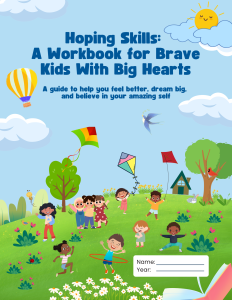
If you are looking for fun activities to help kids recognize hope and their own ability to make good things happen, this free activity book is full of fun ways to help kids grow their hoping skills. Kids and parents alike will have fun writing, creating and playing together as they explore hope as a family.
Teach Kids to Measure HopeOnce kids know what hope is, and how to grow it, you can use this fun tool I call the Hope Meter™ to check in on their hope levels and respond with intention.
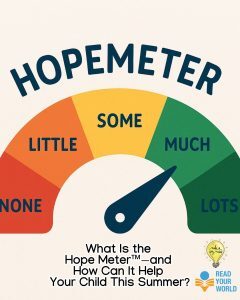
The Hope Meter™ is a visual scale—from empty to full—that helps children:
Recognize when they’re feeling low on hopeName what’s contributing to that feelingTake action to refill their meterView hope as a skill they can strengthen over timeThe Hope Meter™ is not about forcing a positive attitude no matter what. It’s about learning how to spot the signs of despair before they grow into something bigger. This tool helps us recognize our power to change situations. It helps kids build emotional awareness while reminding them that hope isn’t something you either have or don’t. It’s something you can work on and strengthen, like a muscle.
How to Use the Hope Meter™ at HomeTry this simple check-in once a day (or a few times a week) with your child:
Ask Your Child:
“Where is your hope meter today? Empty, low, halfway, or full?”
“What do you think brought it to that level?”
“What could help fill it back up?”
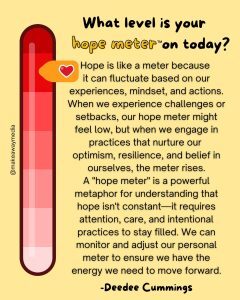
Then, brainstorm ideas to boost their hope levels if needed. Hope refills don’t have to be big.
A hope refill could be:
A walk outside to search for beauty in natureDrawing or journaling about your dreamsReading hopeful storiesHelping someone elseGetting a good night’s sleepSaying something kind to themselvesThese small activities reinforce the reality that hope is a skill we can all develop, just like learning to ride a bike or tie our shoes. By regularly checking their hope meter, kids learn that their feelings are valid and that they have the power to influence those feelings. We aren’t victims to our circumstances. We all have the power to create change.
Hopeful Stories to Read This SummerThe Hope Meter™ and hoping skills are valuable tools we all need. You can see the power of hoping skills in action in my upcoming book, Hope In the Nick of Time, the third book in the In the Nick of Time series.
In this heartwarming new story, young Nick’s day isn’t going as planned. A few unlikely interactions remind him that he doesn’t have to wait for things to get better. He can become the kind of person who knows how to find the light, even in dark places.
Hope is one of the best gifts we can give our children. The Hope Meter™ reminds them of their power to check in with their hearts and refill their hope levels anytime it’s running low. When we know how to monitor and grow our hope, we will never let it run out.
Get your free hoping skills workbook today to teach your kids that they’ll always have a way to find the light, no matter how cloudy the day.
You can find more helpful blog posts like this one on the Read Your World blog. Together we are doing a summer series all about how to grow your kids’ hope and empathy through diverse books.
The post How to Teach Kids About Hope with the Hope Meter™ appeared first on Make A Way Media.