THE CRAFT OF WRITING FANTASY – AUGUST 2025
Welcome back to another episode of great writing advice on the CRAFT OF WRITING blog. This year we’re focusing on Genres. We’ll be looking at approaches to writing thrillers, mysteries, romances, and more. Each month I interview an accomplished author who writes in a particular genre, so get ready to learn from the experts!
Today’s guest is my friend and colleague, Beth Alvarez, who gives us insight into the craft of writing fantasy novels. Beth and I are members of the same writing group in Collierville, TN, so I’m familiar with her and her award-winning work. She’s published over twenty fantasy novels, so you’re in for a treat today.
Here’s one of her books. Click the image to go to the Amazon book page.
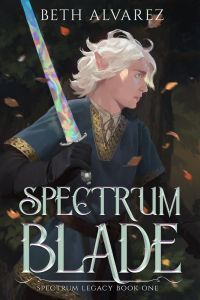
The name of each person who enters a comment on today’s blog will be put into the drawing for a copy of Spectrum Blade. So join the conversation and earn a chance to win. I’ll post the name of the winner after 9 PM Central Time tonight, and Beth has agreed to provide a copy of the book to the winner. (Either ebook or paperback, whichever the winner would prefer.)
The Craft of Writing Fantasy Novels with Beth Alvarez
Share on X
* * *
Welcome, Beth, and thank you for being on the Craft of Writing blog!
What is your definition of a fantasy story?
Fantasy is one of the broadest categories under the speculative fiction umbrella, but to me, the defining characteristics of fantasy are that it includes elements that simply aren’t possible in the real world. Be it magic or fantastical creatures like dragons and unicorns, a fantasy story contains at least one element of make-believe that means a scenario could never truly happen.
How are fantasies different from science fiction?
There’s actually a lot of overlap between fantasy and science fiction, to the point the two are often confused and hotly debated! But while both fantasy and science fiction revolve around telling a “what if?” sort of story, science fiction speculates on what could be possible with the correct technological advancements. We probably won’t ever find a unicorn outside of books and art—at least, not anymore—but space travel? Robotic enhancements? Well, we’re already doing some of that! Sci-fi just stretches the imagination beyond what we can already do.
What’s the most important aspect of a fantasy?
I believe the main component of what makes fantasy the genre it has become is a lack of plausibility. This ties into the differences between it and science fiction, too. We can’t ride dragons or attend an academy to learn magic, and we probably never will. There are many different subcategories of fantasy, though, and they all have their own rules for what makes the genre tick. Magical realism, for example, is a less-common subgenre of fantasy defined by a story being set in a very realistic world, often our own, with a single magical element added that doesn’t change the way the whole world functions.
My personal favorite is high fantasy, where the author is tasked with creating an entire new world from the ground up, which means establishing new rules for how that world works! Most of my books are high fantasy, and the majority of them are epic fantasy, where I first create a new world… then my story’s heroes have to save it.
Why did you decide to write in the fantasy genre?
Honestly, I’m not sure I had a choice. My mother had a bit of a whimsical side and I spent my childhood surrounded by paintings, statues, and stuffed animal unicorns that belonged to her, while she read me Narnia books at bedtime and taught me all about The Lord of the Rings. Fantasy was such an innate part of my life from my earliest days that I always believed adding your own stories to this library of fantastical creations was something you just did when you grew up. My earliest fantasy stories were written when I was four or five. You know, around the time you start being able to write sentences. It was as natural as breathing and I don’t think I ever considered any other genres.
Can you give us a brief outline of the process—from concept to completion—that you use to write a fantasy?
Concepts are the easy part, they just spring out of nowhere and I have more of them than I’ll ever have time to write. I try to focus on the ones I’m most excited about, or I’d never get anywhere.
I’m big on outlining, and I think my favorite method for planning any story is when I scrawl out a one- or two-sentence description of a story idea and then outline it with index cards. I believe you do something similar with sticky notes, where you frame out the overall structure and pacing of the story and then use individual index cards or notes to explain the major events that need to happen for each character.
Once I have a solid outline and everything is in the right order, I sit the stack of index cards on my desk and spend the next few months writing. I am a linear writer, so I start at page one and end at the last word of the book every time. Whenever I finish a chapter, I pass it off to my husband to see if he can poke holes in my plot or if I’ve explained my new magical or fantasy world concepts well enough. I cannot overstate how valuable that feedback is to me as I write, because it gives me a chance to correct or clarify things immediately and set myself up for success as I go.
After the whole book is done, it goes straight to my amazing team of beta readers to see if they have any thoughts. I usually send it to my editor at the same time. Yes, the first draft goes straight to edits! I write pretty clean drafts, so there’s rarely much revision to do, since all my problem solving happened during the outlining and planning stage. If my betas do turn up any issues, my editor is an incredible resource for helping me iron them out.
My books usually get 4 editing passes before they’re complete. When that very last editing pass is done, that’s my favorite part, because my husband always celebrates my hard work by delivering a pint of my favorite mango sorbet.
What advice would you give an author who decides to write a fantasy?
Make a lot of time for daydreaming. My best ideas and strongest inspiration always come when I have time to just sit and look at the clouds, or when I can let my mind wander while doing mundane things. Doing dishes, pulling weeds in the garden, folding laundry—any time I can keep my hands busy and my mind bored is perfect for dreaming up new possibilities. Those ideas are what will fuel your creativity more than anything else, so lean into it!
Besides your own books, what fantasies would you recommend?
I think the last series that swept me up and consumed me was The Emperor’s Edge by Lindsay Buroker. But lately it’s been hard to find time for long epics like that, so I have really enjoyed exploring a lot of shorter, sweeter fantasies and fairy tale stories. Frey and the Icy Orchard by Scarlett Luna Strange is one I’m enjoying now. Another is Love, Ships & Sea Serpents by Elaine Canyon.
Are you working on a book now?
Yes! I told myself I’d take a break after finishing my epic fantasy series Spectrum Legacy, but I only made it a few days before I started a new project. The Cinders and the Crown is my second fairy tale retelling, although I use the term “retelling” loosely. It’s a Cinderella story, except instead of her carriage turning into a pumpkin, the prince is transformed into a dragon at the stroke of midnight and it becomes her job to rescue the kingdom… and save him from his curse. I hope for it to be released by the end of the year.
Where can we find out more about you and your writing?
My home base is my website at https://www.ithilear.com and share lots of extras about my stories, characters, and fantasy worlds on Instagram as @authorbethalvarez – I’d love to see you there!
Thank you, Beth, for being with us today!
The Craft of Writing Fantasy Novels with Beth Alvarez
Share on X
***
Meet Beth Alvarez
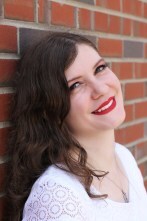 Beth Alvarez is an Illinois-born author living in Memphis, Tennessee, along with her husband, daughter, and a very mean cat. A visual arts major, she worked previously as a freelance graphic designer. Against all advice, she makes her own book covers.
Reading The Hobbit led Beth to fall in love with fantasy at age 8. She later developed a love for vampires and the supernatural, which is unsurprising, given she never outgrew the goth phase.
In her free time, Beth enjoys drawing, hitting the road in her beloved Mustang, sipping tea, sewing for her Asian ball-jointed dolls, and making her prior-Marine husband spar in the kitchen for sake of writing more convincing combat scenes.
She can be contacted via her website, where you can find her personal blog, and also sign up for bonus content and advance notification of new and upcoming titles: http://www.ithilear.com/newsletter.html
***
Another Side of Sunshine
ON SALE NOW 99¢
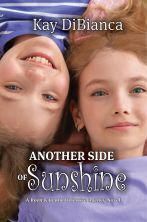
A Middle Grade Mystery featuring those two irrepressible detectives, spunky 10-year-old Reen and her shy 9-year-old cousin Joanie.
“The story excels at honoring the emotional realities of childhood without veering into sentimentality. It’s a smart, well-constructed mystery that values relationships over rivalry, process over prizes, and growth over glory.” —Prairie Book Reviews
Click the image to go to the Amazon book page.
The post THE CRAFT OF WRITING FANTASY – AUGUST 2025 appeared first on Kay DiBianca.