The Secret War Beneath Paris: WWII and the Shadowed Legacy of the Catacombs
Beneath the City of Light, a World of Shadows
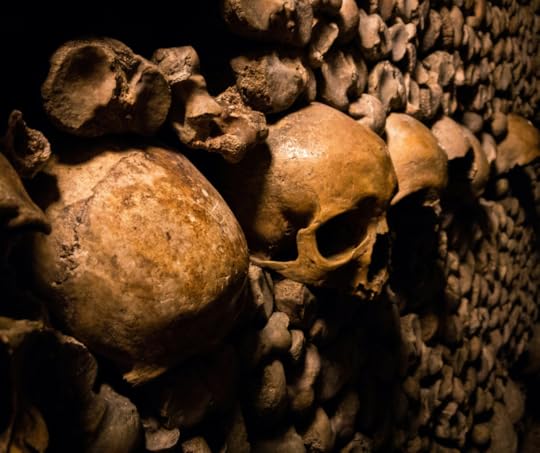
Beneath the picturesque boulevards and charming cafés of Paris lies a darker, more mysterious world: over 200 miles of catacombs, quarries, and ossuaries. While the Paris Catacombs are best known for their macabre walls of human bones, they also played a lesser-known but dramatic role during World War II. Today, the wartime history of the catacombs remains a subject of fascination, speculation, and secrecy—blurred by time, myth, and fiction.
I was inspired to write a novel featuring these mysterious tunnels after reading a historical fiction book by Gayle Ferrer/Yves Fey (Floats the Dark Shadow), where the heroine is taken to a concert held in one of the Ossuary chambers. The spooky atmosphere described in the novel led me down a rabbit hole of research, and the inspiration for my characters to use the tunnels for their work in the shadowy world of the French Resistance and the black market during WW2 was born.
A Labyrinth with a Past
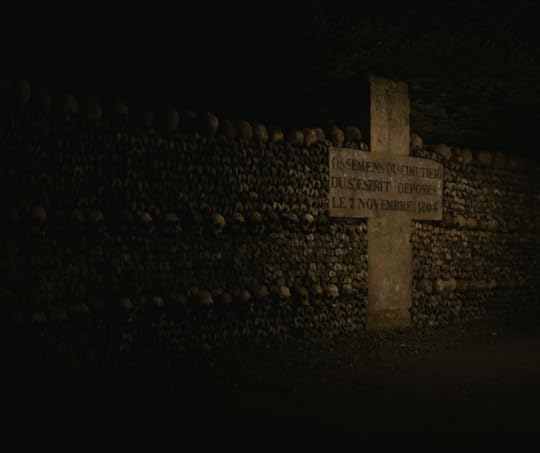
Originally limestone quarries, the Paris catacombs began their transformation in the late 18th century when the city, overwhelmed by overflowing cemeteries, relocated the bones of millions into the underground tunnels. By WWII, the catacombs had become a sprawling and partially mapped maze—one that few Parisians dared to enter.
But for those fighting a secret war—the French Resistance and, later, the Nazi occupiers—the catacombs offered both refuge and danger.
The Catacombs During WWII
The German occupation of Paris began in June 1940, and the Gestapo wasted little time in establishing control over the city’s infrastructure. Though official records are scarce, there is credible evidence that sections of the catacombs were used by the Nazis as hidden bunkers and storage areas. Some accounts suggest that a secret Nazi base existed beneath the 6th arrondissement, accessible via a bricked-up entrance. The exact details remain elusive, in part due to postwar destruction and a lack of reliable documentation.
At the same time, the French Resistance saw the catacombs as an ideal place to hide from German patrols, coordinate attacks, and move discreetly between districts. However, navigating the dark, unmapped tunnels was perilous, even for those who knew the city well. Many Resistance members reportedly used the catacombs in coordination with the Parisian cataphiles—urban explorers who had long mapped and memorized the labyrinthine underground.
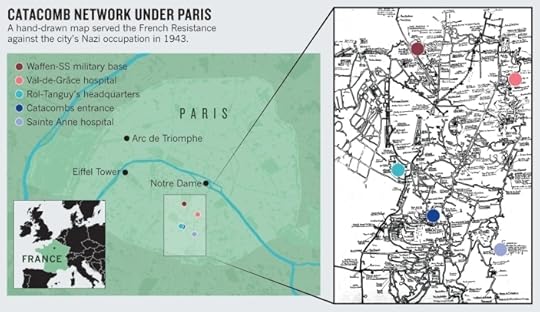
One dramatic example occurred in 1944, just weeks before the liberation of Paris: a Nazi bunker hidden in the catacombs was reportedly discovered and infiltrated by Resistance fighters. Though rarely mentioned in official wartime histories, this episode has become part of underground legend.
Why Researching This Is So Difficult
There are several reasons why the wartime history of the catacombs remains murky:
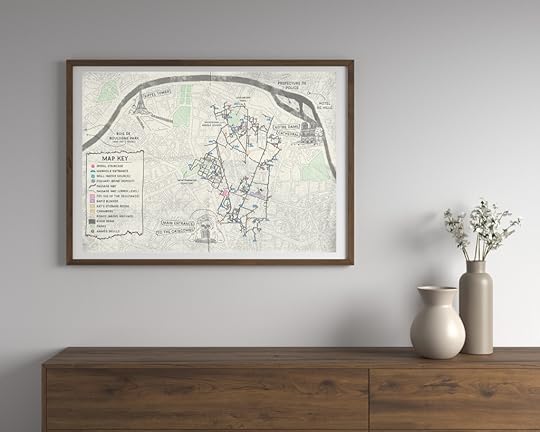
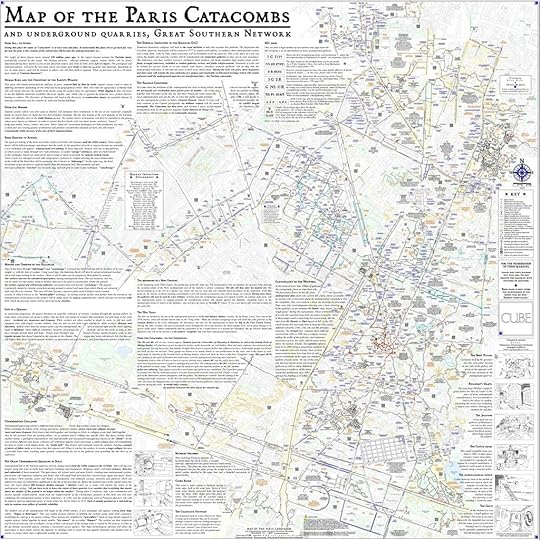
Lack of Official Documentation: Many Resistance cells operated with extreme secrecy, avoiding written records that could be captured by the Gestapo. Similarly, Nazi activities underground were compartmentalized and rarely documented.Physical Inaccessibility: Most of the catacombs are closed to the public and monitored by the Inspection Générale des Carrières (IGC). Unauthorized exploration is illegal and dangerous.Post-War Modifications: After the war, many entrances and pathways were sealed for safety. In some cases, Nazi installations or Resistance hideouts may have been deliberately destroyed or buried.Urban Legends vs. Reality: Over the decades, stories have grown—some rooted in truth, others exaggerated or imagined. Sorting fact from fiction requires painstaking research, interviews with aging witnesses, and sometimes a bit of luck.For my research, I found the most amazing map – compiled from many other maps, which showed me clearly where the streets were in relation to the tunnels. This map formed the basis of the tunnel map which Freddie, the hero of the forthcoming middle grade novel, ‘Boy, Resisting’ draws as a result of his explorations.
Together with my co-author and illustrator, James Warwood, we highlighted where the bunkers we used in the storyline of this novel, and it’s companion, Sewing Resistance, to bring to life the dangerous routes which Freddie, Hannah, Kat and of course, the FFI and Nazis used during the Occupation. I find it fascinating that one of the main bases for the FFI’s plans to re-take Paris was co-ordinated from a bunker so close (under a mile!) to the Nazi shelter.
The Legacy Lives On
Today, Paris’s cataphiles continue to explore the forbidden underworld, some of them mapping undocumented tunnels or preserving graffiti and artifacts from WWII. But the deeper truths of what occurred beneath Paris during the war—collaborations, resistance, espionage—are largely still shrouded in darkness, waiting for discovery.
As interest in urban exploration and alternative history grows, so too does the curiosity about what lies hidden in Paris’s depths. The catacombs remain a place where the boundary between history and legend is as porous as the limestone walls themselves.
Fiction Inspired by the Catacombs
The Paris catacombs have inspired numerous works of fiction that blend history and myth:
“The Devil’s Cave” (2012) by Martin Walker – While set in rural France, the series frequently touches on Resistance themes and secret wartime hideouts. “Down in the Catacombs” by Thomas Greanias (short story) – Blending speculative fiction with wartime intrigue, it imagines lost Nazi technology hidden beneath the streets of Paris.“Catacomb” (2014) – A horror-thriller film (also known as As Above, So Below) uses the catacombs as a setting for psychological terror, rooted in the area’s real-life history of death and mystery.“All the Light We Cannot See” by Anthony Doerr – Though not set in Paris or the catacombs, its focus on hidden resistance networks and secret wartime locations resonates with the mystique of the catacombs.Even video games like Call of Duty: WWII and Medal of Honor: Underground have toyed with the idea of Resistance fighters and Nazi bunkers hidden in Paris’s underworld.
Further Reading and Resources
“Parisians: An Adventure History of Paris” by Graham Robb – Offers insights into Paris’s underground world, including WWII anecdotes.“The Catacombs of Paris” by Félix Nadar – A historical look at the tunnels, from one of the first to photograph them.Urban Exploration Websites and Cataphile Reports – Many modern explorers have posted maps, findings, and theories about the catacombs’ WWII past.Great article about the history Paris Catacombs by Yves FeyYouTube has lots of videos of explorers taking on the challenge of the underworld!
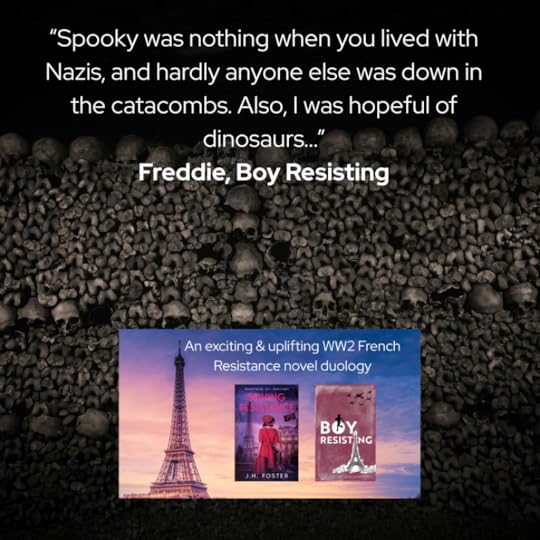
If you are interested in reading Freddie and Hannah’s experiences in the Catacombs, where Kat deals on the black market, and danger lurks around every corner, why not follow the Kickstarter or read the books (available from Winter 2025). The Kickstarter also offers a reward of a printed copy of James’s original illustration of the map of the Catacombs which Freddie draws.