Why Do This?
August 31, 2025, Sunday
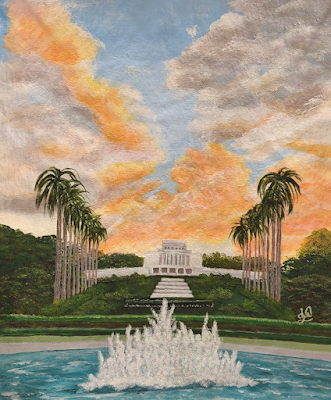 Lā‛ie Hawai‛iTemple, painted August 2025
Five months left. Time is going sofast now. Friends are starting to leave as they complete their missions, and we’regetting to be among the old timers whose time is short.
Not a lot has changed in our dailywork. Dennis is working hard to finish the projects he’s been immersed inbefore we leave. Debbi keeps plugging away, writing. So I guess the only thingthat would be of interest to talk about here would be a spiritual experience ofsome kind.
Our new mission presidency seemsto be pretty great. On July 15 they did a “meet us” devotional. President Mo‛o (acounselor) works at BYUH as Senior Manager of Strategic Enrollment. He travelsall over the Pacific Rim in that work and showed us what our work here reallymeans.
The reason the Polynesian CulturalCenter exists is to help students—mostly from island nations and the PacificRim—get college educations. This would not be remotely possible for most ofthem without this program. Many of them grow up in humble circumstances. Theycouldn’t even afford a trip to Hawai‛i, let alone a 4-year stay while theyearn degrees. Many also need help learning to navigate the world—they’ve never beenoff their island homes, or at least not out of their nations unless they haveserved missions elsewhere.
When they come here, they learn togo to school in a structured environment. They also have to work, though those who arein the I-work program (most of the students) cannot work more than 19 hours per week (so that theyhave time and strength for school). Some of the jobs are really fun, and someare pretty mundane. But as I interview the students for our employee newsletter,I often hear how grateful they are for the opportunity to earn; for the chanceto be in an environment where their cultures are valued; for the ability to dothings they would normally do anyway (dance, demonstrate skills, help people,etc.) as a means of earning their degrees. The goal is for them to leave schooldebt-free, and I believe that is a regular achievement.
What missionaries do here issupport the students by doing some of the jobs so the PCC can keep running. Asa nonprofit organization, the Center would not be able to function if it had topay all the people who volunteer here. We also interact with the students, oftentemporarily feeling like parents or grandparents to them. This helps them keepgoing—because this is pretty tough for them. Being away from family when you’remaking some of the most crucial decisions of your life is stressful.
Also in the plan for most of themis to go back to their homes after graduation to help build the infrastructure ofthose places. They take with them skills to build new and better services, feedindustry, grow tourism, open restaurants, and act as counsellors, accountants,and teachers. They also become leaders in the Church at home.
President Mo‛oshowed us pictures from his travels—photo after photo of branch, ward, district,and stake officers who are BYUH grads. They are strengthening the Kingdom wherethey stand; and because they love and understand their native lands, they cando it better than anyone else. He said, “This is the plan, and it is working.” Whenyou look at serving here in that way, our work here is an amazing thing.