Croydon Cat Killer: Mystery Solved!
A maniac is stalking the streets of Croydon, killing and dismembering cats and leaving the remains in a gruesome display to maximise the shock and horror when the corpse is discovered by owners.[i] Over 500 cats have so far fallen victim to the maniac, and the killer is likely a psychopath who will sooner or later start taking human life.
Newspapers and local TV stations interviewed distraught owners and showed photos of the unfortunate pets. At the same time, tabloids found puns impossible to resist. The Sun referred to the Croydon Cat Killer as ‘Jack the Ri-purr’ and the Purrminator’.
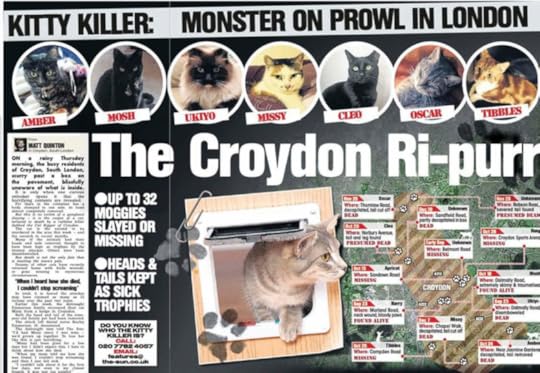 The Sun 11 December 2015
I researched and wrote about the history of pet killing panics, including the one in Croydon in the book I co-wrote with Robert Bartholomew, Social Panics and Phantom Attackers, so I’ve spent a lot of time examining this and similar episodes.
So, let’s solve the mystery of the Croydon Cat Killer…
The Croydon Cat Killer
First, the good news. There is no Croydon cat killer, despite the unquestioning media reports, social media posts, podcasts and animal charity campaigns. The Croydon Cat Killer doesn’t exist.
A 2022 study published in the journal Veterinary Pathology examined the corpses of 32 ‘victims’ of the Croydon Cat Killer. The postmortems revealed that fox DNA was present in all cases, though only ten kittens had actually been killed by foxes. Eight of the cats had died of heart failure, six had been hit by traffic and the others had died from liver failure or from ingesting poison. Foxes had mangled all of the corpses. There was no human involvement.
Expert in fox behaviour Stephen Harris came to similar conclusions. Foxes will often chew off heads and limbs from roadkill, leaving the carcass looking as if it had been deliberately displayed.
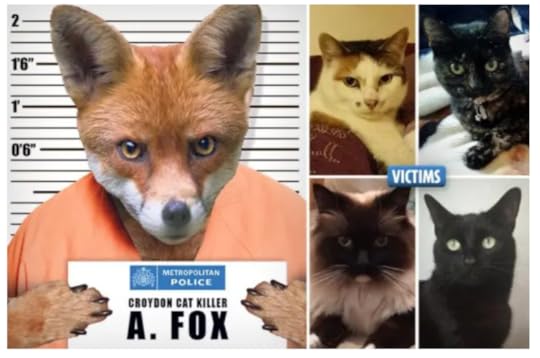 The Sun 28 September 2018
Pet killer panics have been happening for over a century and tend to follow a pattern. First there is a cluster of mysterious pet deaths. These are reported in the media (or social media). A figure of authority – usually a vet or someone from an animal charity – states that the deaths were deliberately caused by humans. More and more cases are reported, police investigate but find nothing. An individual or small group (what sociologists might call ‘moral entrepreneurs’) then task themselves with catching the killer, seeing themselves as intrepid detectives on the hunt for an evil pet killing maniac. They spread the word through media campaigns and the fear of the mythical pet killer spreads. Finally, it all blows over, only to reappear some time later in another town.
The Croydon panic began in 2014 when a number of mutilated cats were reported. Many concluded that there must be a cat-hating serial killer on the loose – why else would the cats be mutilated and left for the devastated owners to find? The catalysts in the Croydon panic were founder members of animal charity SNARL, Boudicca Rising and Tony Jenkins, and they made it their mission to put a stop to the killings. After a cat was found mutilated, Boudicca and Tony would arrive at the grisly scene like Moulder and Scully from the X-Files investigating a mystery.
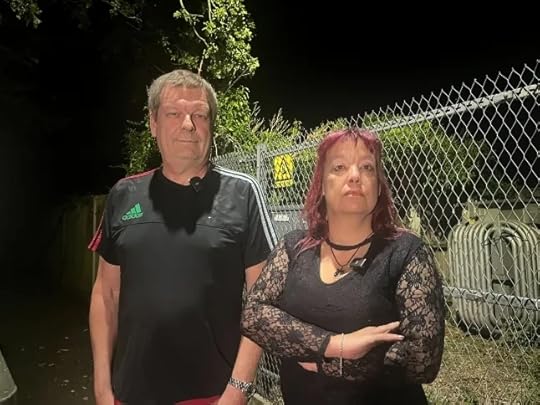 Tony Jenkins and Boudicca Rising (Metro 28 August 2025)
They’d interview distraught owners, take photos of the remains and search for clues. Tony’s freezer was stuffed with the dismembered corpses of cats so they could get postmortems done. When the postmortems showed no human DNA on the cats, Boudicca and Tony concluded that the killer must be forensically aware.
When you’re in the grip of a phantom attacker panic, you don’t believe what you see, you see what you believe, and that was what was happening to Boudicca and Tony. Tony would claim that the cuts made in the cat carcasses examined were ‘too clean’ to have possibly been caused by foxes scavenging, echoing the claims made by UFO believers that cattle mutilations were too clean to have been done by scavengers so must have been done with an alien laser. However, corpses bloat and burst, giving the impression of a surgical incision, and this likely explains the apparently clean cuts found in some of the cats.
Nevertheless, and despite regular debunking of the Croydon Cat Killer myth, Boudicca Rising and Tony Jenkins continue their campaign to catch a non-existent maniac. Newspapers, podcasts and radio and TV documentaries continue to follow them and give their campaigns publicity. Their new charity, SLAIN (South London Animal Investigation Network), is again popping up in news reports with eager journalists lining up to go out with them on night patrol hunting for the killer.
Satanic Cat Killers
Strangely, a very similar cat killing panic occurred in the Croydon area in the 1990s. This time, when mutilated cats were found, rumours spread that Satanists were using the pets in depraved rituals. Stephen Harris, the fox expert referred to above, described how police delivered a sack of headless cats to him and asked him to investigate. He concluded that most of the cats had been run over and then scavenged by foxes, whose weak jaws mean they often gnaw heads, tails or limbs off roadkill they find. The police had spent 13 months hunting for a coven of cat killing Satanists that didn’t exist.
Epilogue: The Dog Question and the Cat Question
Pet killing panics tend to reflect the concerns and anxieties of the time. In Weird Calderdale, I wrote about the Halifax Dog Poisoner episode of 1899 when a number of prize hounds were found apparently poisoned. A vet, the appropriately named Mr Walker, told the press that he was sure that there must be a maniac with a hatred of dogs at large in Halifax, though in the end the poisonings seemed to stop. It was more likely that dogs were dying of natural causes or had ingested some arsenic probably intended for rats. In any case, just like Boudicca Rising and Tony Jenkins in the Croydon episode, Mr Walker is the expert who really gets the panic going.
The Halifax Dog Poisoning panic spread in the context of what was called ‘the Dog Question’ – should dogs be allowed to roam free in the streets? Should they be muzzled in case they attack a child? What about the dangers of rabies? There was intense public debate and concern about dog ownership at the time, especially as raising prize-winning animals and entering them into competitions (‘dog-fancying’ or ‘the Fancy’ as it was called) was particularly popular in Halifax and other northern industrial towns at the time.
In recent years, though, the Cat Question has emerged. Should cats be kept as house pets, or should they be allowed to freely roam, knowing that they will likely hunt and kill birds and other wildlife? Outdoor cats are also more likely to become ill, be run over, get lost or decide to adopt another owner in another house. The average lifespan of an indoor cat is 12-15 years. The average lifespan for a cat allowed to go outside is 2-5 years.[ii]
And it’s not psychopathic kitty killers that are responsible for this. As we argued in Social Panics and Phantom Attackers: ‘Allowing the death of one’s cat to be projected onto a depraved cat slayer may reflect anxiety and guilt about the cat’s role as predator and the pet owner’s responsibility for their own cat.’[iii]
Of course, people are capable of great cruelty to animals and it’s well-known that some psychopathic serial killers started on animals before moving on to humans. There are some real cases of sadistic cat killers. But the Croydon Cat Killer has all the signs of being a phantom attacker panic, a kind of hysteria where the community fears an imaginary monster lurking in the shadows – a bogeyman that reflects their own fears and anxieties.
Two things are clear from my research on pet killing panics. The first is that charismatic, well-meaning and dedicated animal charity volunteers are very often central to the spread. They collect ‘evidence’, organise online campaigns and get media coverage, but one can doubt their expertise in forensics. As I said, during phantom attacker panics, people see what they believe rather than believe what they see.
The second is that panics like these come and go and lessons are never learned. The Croydon Cat Killer will have another day in the sun as a number of podcasts and a BBC radio documentary come out. But the bubble will burst and it will all blow over – until the next time. As the Purrminator said: I’ll be back!
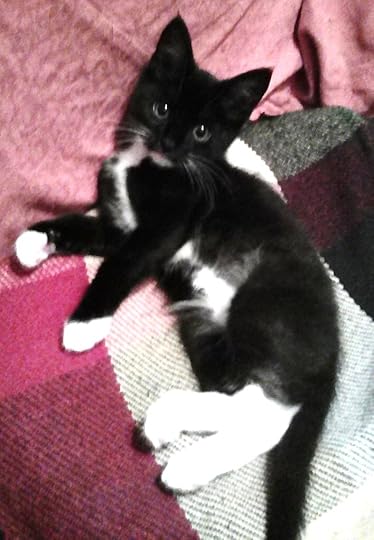 Ozzy my new kitten
[i] Brooke Davies, ‘Is the Croydon cat killer back? Gruesome incidents hint “he never went away”’, Metro, 28 August 2025. Available at: https://metro.co.uk/2025/08/28/croydon-cat-killer-back-data-shows-never-left-23914052/
[ii] https://vetexplainspets.com/indoor-vs-outdoor-cat-lifespan/
[iii] Robert Bartholomew and Paul Weatherhead, Social Panics and Phantom Attackers (Palgrave Macmillan: 2024), p.270