Laboring
This week in the U.S., we observed Labor Day.
It got me thinking, how often do humans in this modern day and age truly labor? I also contemplated the multiple meanings of the word “labor” whether as a verb, noun, or adjective. Ironically, the day I wrote this was a bit on the lazier side. My labor consisted of laundry, cooking, reading a book for review, and precious little else. But it could be also that my view of labor is skewed. Unless the work involves pain and sweat, it’s not labor, it’s just work.
As far as my interpretation of the verb goes, I have “labored” relatively few times in my life. In the military there were times when I performed work in a way that could be called laboring in that it taxed my strength, energy, and/or endurance.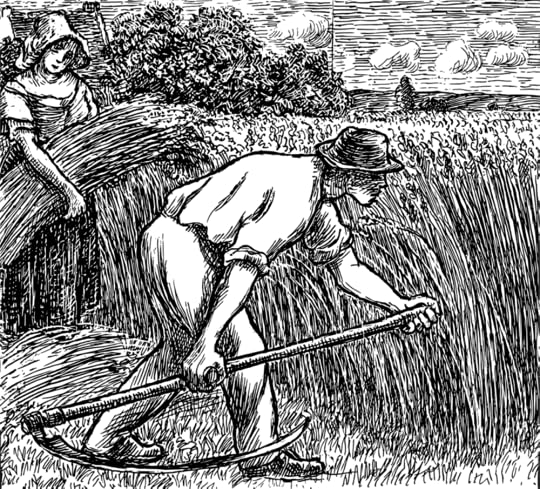 In order to achieve my first black belt, I labored. Or, simply by being a mother, I labored twice. Thanks to endorphins and natural hormones, I remember precious little of those occasions other than it was painful. (Because medications and I have a bad track record, I opted for no medical intervention both times.)
A labor, as in the noun, can be an act or trial that costs something. A labor may be performed as a penalty, like the labors of Hercules, or it may be a passion that uses up our energy and resources.
As an adjective, someone can be part of a labor organization or labor movement. In other words, a group or activity that acts on behalf of those who labor.
The Bible talks a lot about labor. From the issuing of the curse onward, humans have been told that the ground will only yield food if we labor.
When Lamech had lived 182 years, he had a son. He named him Noah and said, “He will comfort us in the labor and painful toil of our hands caused by the ground the Lord has cursed.” Genesis 5:28-29, NIV
We’re also told in the commandments to labor only six days and rest on the seventh. Six days you shall labor and do all your work. Exodus 20:9, NIV The implication being, with that text, that we will use those six days for profitable labor. Such labor helps those around us and makes life livable for those we love.
The Old Testament also speaks of the harsh labor whenever Israel and/or Judah were enslaved or enslaved others. Such labor is always called hard, pressed, or forced. It is labor that doesn’t benefit the laborer. Reasonable labor, according to Scripture, always has fruits for the laborer.
And yes, many OT references have to do with a woman in labor—whether real or metaphorical.
But when we get to the New Testament, the focus changes. Rather than the labor that helps day to day life, Jesus calls for labor that builds the kingdom of God.
Lately, when I hear the word, I think of a line from a song that paraphrases the gospel of Matthew: send for the laborers.
It goes on to sing about the harvest being few and begging for laborers that will do what Jesus needs doing.
I don’t know why I don’t think of witnessing and ministering to fellow believers as labor. Can it be hard? Yes. But does it involve lots of sweat and endurance? Only occasionally. Yet Jesus calls it labor and us laborers if we go into all the world as he told us to and share the good news. He calls us laborers if we see the people around us with the same compassion that he had and has.
But when He saw the multitudes, He was moved with compassion for them, because they were weary and scattered, like sheep having no shepherd. Then He said to His disciples, “The harvest truly is plentiful, but the laborers are few. Therefore pray the Lord of the harvest to send out laborers into His harvest.” Matthew 9:36-38, NKJV
Whether it involves sweat or not, living compassionately costs us something. Whether our share is easy or heavy, Jesus shoulders most of the burden, yoked with us. When labor for the kingdom is intense, for many Christians now and historically, such labor has cost them everything.
But then again, everything was the price the Lord paid, too.