How to Future-Proof Your AI Career: The No-BS Guide to Thriving (Not Just Surviving) in 2025
Let’s talk about your AI career.
You know that sinking feeling when you see another headline about AI “replacing jobs”?
I get it. But here’s what those clickbait articles won’t tell you: while AI is reshaping the job market, it’s creating incredible opportunities for those who know how to position themselves correctly.
The Brutal Truth About an AI Career?Stanford’s Digital Economy Lab just dropped some eye-opening data: employment for entry-level workers (ages 22-25) in AI-exposed roles has plummeted 13% since late 2022. Meanwhile, overall employment stayed steady. Translation: AI isn’t killing all jobs—it’s being incredibly selective about which ones disappear.
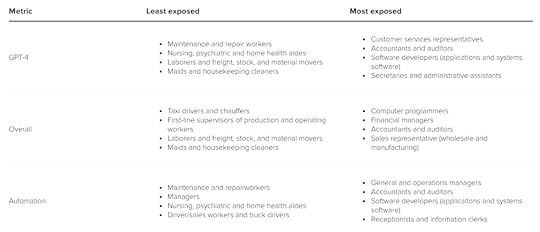
But here’s the plot twist that should get you excited: young professionals with AI skills are commanding salaries between $190K-$260K according to the Wall Street Journal. Entry-level AI roles saw a 12% salary bump from 2024 to 2025 alone.
The message is crystal clear: AI literacy has become career currency. The Washington Post reports that employers now actively hunt for “AI literacy” in both technical and non-technical roles. It’s not about having a computer science degree—it’s about adaptability, curiosity, and knowing how to leverage AI tools.
So here’s my question for you: Are you going to be part of the 13% watching from the sidelines, or the elite group cashing in on the AI boom?
The Great AI Career Divide: Which Side Are You On?Let’s cut through the noise and look at what’s actually happening in the job market.
The Reality Check: Some Jobs Are Disappearing FastStanford’s research isn’t just academic—it’s a warning shot. Entry-level positions that involve repetitive tasks, basic data processing, or simple customer service interactions are vanishing. But notice what’s NOT disappearing: jobs that require human judgment, creativity, and strategic thinking.
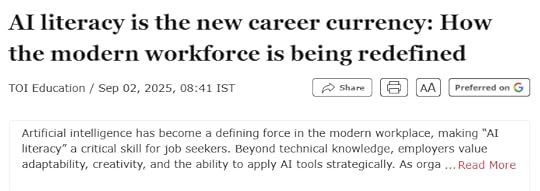
AI Literacy = Your New SuperpowerThe Times of India nailed it in their September 2025 headline: “AI literacy is the new career currency.” This isn’t about becoming a machine learning engineer (though that’s great if you want to). It’s about understanding how to use AI tools to amplify your existing skills.
Think about it: Would you rather be the marketing professional who manually creates content, or the one who uses AI to generate initial drafts, then applies human creativity to refine and strategize? The second person is 5x more productive and infinitely more valuable.
The Skills-Based Hiring RevolutionHere’s something that should excite everyone reading this: companies have stopped caring about your degree and started obsessing over what you can actually do. Your GitHub portfolio, case studies, and demonstrated problem-solving abilities now matter more than where you went to school.
This levels the playing field in ways we’ve never seen before.
The Four Pillars of an AI-Proof CareerPillar 1: Master AI Tools (But Stay Human-Centered)Start with the basics everyone can learn:
ChatGPT and Claude for writing, research, and problem-solvingMidjourney or DALL-E for visual contentNotion AI or Jasper for productivityGitHub Copilot for code assistance (even if you’re not a programmer)Then level up based on your field:
Marketers: Learn Canva AI, Copy.ai, or PersadoDesigners: Master Figma AI plugins or Adobe FireflyAnalysts: Explore AutoML platforms or Tableau AIThe goal isn’t to replace your skills—it’s to supercharge them.
Pillar 2: Double Down on Uniquely Human StrengthsThe World Economic Forum’s latest data shows something fascinating: while AI skill adoption on LinkedIn soared 177%, hiring managers still prioritize candidates who combine AI fluency with strong human skills.
Your human advantages:
Creative problem-solving: AI generates options; humans choose the right oneEmotional intelligence: Leading teams through AI transformation requires serious people skillsStrategic thinking: Understanding when and how to apply AI solutionsEthical judgment: Knowing when AI recommendations might be biased or inappropriatePillar 3: Become a Bridge BuilderThe most valuable professionals in 2025 are those who can translate between AI capabilities and business needs. This means:
Understanding your industry deeply AND knowing how AI can transform itBeing able to explain AI concepts to non-technical stakeholdersIdentifying opportunities where AI can solve real problems (not just cool demos)Managing AI implementation projects from concept to completionPillar 4: Build Your “Show, Don’t Tell” PortfolioSkills-based hiring means you need proof, not promises. Here’s how to build undeniable credibility:
For Everyone:
Document AI projects on LinkedIn (even small ones)Share before/after examples of AI-enhanced workWrite case studies about problems you’ve solvedCreate content that teaches others what you’ve learnedFor Technical Folks:
Maintain an active GitHub with clear README filesContribute to open-source AI projectsParticipate in Kaggle competitionsBuild and deploy actual applications people can useYour 90-Day AI Career SprintFeeling overwhelmed? Don’t be. Here’s how to start building your AI-proof career in the next three months:
Month 1: AI Literacy BootcampWeek 1: Master ChatGPT or Claude for your specific roleWeek 2: Learn one AI tool relevant to your industryWeek 3: Complete your first AI-assisted projectWeek 4: Share your results and lessons learned publiclyMonth 2: Skill BuildingWeek 5-6: Take a focused course (I recommend First Movers AI Comms Course, found inside First Movers R&D AI Labs) Week 7-8: Build a more complex project that showcases your growing skillsMonth 3: Network and ShowcaseWeek 9-10: Join AI communities and engage with other professionalsWeek 11-12: Create content about your AI journey and career insightsThe Mistakes That’ll Kill Your AI Career (Avoid These!)Mistake #1: Thinking AI is just for techies. Every role will be AI-enhanced within five years. Marketing, sales, HR, finance—if you work with information, you need AI literacy.
Mistake #2: Ignoring the human element. Pure technical skills aren’t enough. The professionals commanding those $200K+ salaries combine AI expertise with business acumen and leadership abilities.
Mistake #3: Waiting for permission. Your company might not have an AI strategy yet, but that doesn’t mean you can’t start learning. The professionals getting promoted are those who bring AI solutions to their current roles.
Mistake #4: Focusing only on tools. Tools change constantly. Focus on understanding AI principles, staying curious, and developing the ability to quickly learn new platforms.
The Bottom Line: Your AI Career Action PlanThe AI revolution isn’t slowing down. In fact, it’s accelerating. The question isn’t whether your career will be impacted—it’s whether you’ll be displaced or empowered.
Here’s what you need to do this week:
Pick one AI tool relevant to your current role and spend 30 minutes learning it.Identify one task you do regularly that could be enhanced with AI.Complete that task using AI assistance and document the process.Share your experience on LinkedIn with the hashtag #AICareer.Remember this: The professionals who thrive in the AI age aren’t necessarily the smartest or most technical. They’re the most adaptable, curious, and willing to learn.
The window of opportunity is wide open right now. In five years, AI literacy will be table stakes—everyone will have it. But today? Today, it’s your competitive advantage.
So, what are you waiting for? Your AI-proof career starts with the next decision you make.
Are you ready to future-proof your career, or are you going to let AI reshape it without you?
The choice is yours. But choose quickly—because while you’re thinking, someone else is already building their AI-powered future.
Need help?
We’ve built a whole community around AI literacy, skills, and implementation.
That’s First Movers R&D AI Labs.