Healing
Ever since I learned on Monday that my sister had fallen and broken her kneecap, this topic has been percolating through my thoughts. Perhaps I could use it as the springboard for this week’s blog?
As I kept returning to it again and again, obviously in part because I want to see my sister healed from the pain of her injury, I also thought of the many levels of healing that we individually and corporately need.
We are broken people living in a broken world.
One of the things our Lord was most known for when he walked on the Earth, was healing. At the onset of his ministry, he quoted from Isaiah to describe his mission:
“The Spirit of the Lord is upon Me,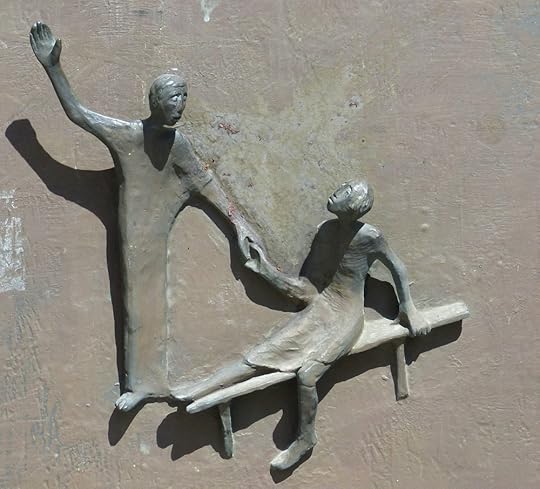
Because He has anointed Me
To preach the gospel to the poor;
He has sent Me to heal the brokenhearted,
To proclaim liberty to the captives
And recovery of sight to the blind,
To set at liberty those who are oppressed;
19 To proclaim the acceptable year of the Lord.” (Luke 4:18-19, quoting Isaiah 61:1-2a)
While it may use many different verbs, every aspect of that mission is healing.
First off, the gospel heals our separation from God caused by the sin that floods every aspect of our beings. We are all poor without God. Without accepting Jesus’ sacrifice on our behalf, we are poor because we are lifeless. Without the healing that message gives, we are all doomed to walk from this groaning world into eternal death.
Next, our hearts need healing. Once again, this is related to sin. But in this case, our hearts are generally broken from the outside. The nature of the fallen world can cause disasters that break our hearts. People who have their own selfish desires or evil inclinations can do things that break our hearts. Healing the brokenhearted can mean many things on many levels. What I like to latch onto is when he calls us into eternal living with Him, we’re given new desires for the kingdom. And while our hearts may still feel fragile in the here and now, the purposes and mission place a new, spirit-filled heart within us. And that heart, the heart of flesh promised back in Ezekiel, pumps eternity through us.
I read the next portion and sigh. We are all captives on so many levels. But where I want this liberty the most is from my own thoughts. They condemn me even when I’ve done nothing wrong like Job’s counselors. They listen to the lies of the enemy and broadcast them with volume and exaggerations until I feel worthless. It is only when I cling to God’s words about me, words of blessing and promise, cling so tightly that my fingernails bend, that I feel my captivity disappear. Others have their own prisons. They could be bound in memories, addictions, toxic relationships, or paths of sin that have trapped them until they can’t find a way of escape.
In the gospels, Jesus offered the Pharisees healing from their blindness. But they insisted, time and again, that they could see. They knew the Law, they reasoned, so they could clearly see what God wanted. But as Jesus had instructed Nicodemus, one of their own, God’s plan was bigger, deeper, and wider than knowledge of the Law. It involved starting over from the beginning and letting God remake them—beginning with their eyes to see truth. Jesus said to them, “If you were blind, you would have no sin; but now you say, ‘We see.’ Therefore your sin remains.” (John 9:41) Even as Christians, we have blindspots. Traditions are good at creating barriers we cannot see beyond, for instance.
The last healing mentioned in this Scripture that Christ claimed for himself is healing from oppression. I think the apostle Paul, who had been an oppressor before he lived with oppression, expresses that healing best: We are hard-pressed on every side, yet not crushed; we are perplexed, but not in despair; persecuted, but not forsaken; struck down, but not destroyed— (2 Cor. 4:8-9)
Heal me, O Lord, and I shall be healed! (Jeremiah 17:4a)