
No More Unbelievers
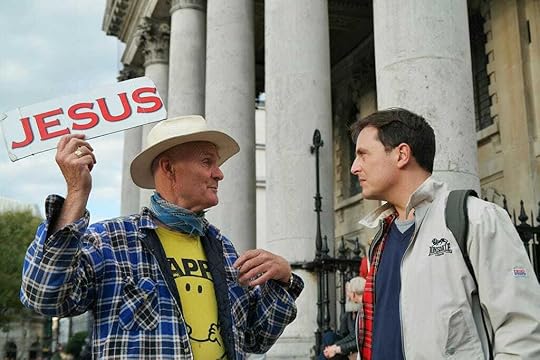 The Skeptic — Photo by Malcolm Lightbody on Unsplash
Perhaps your neighbor is an unbeliever.
My parents were believers.
Will your kids grow up to be believers?
Can you date an unbeliever?
Can you be friends with a believer — one who believes differently than you?
I want to challenge these categories. In fact, I want to suggest that we stop using them altogether. No more unbelievers! Everyone believes something. Everyone is on a journey. Our categories are flawed and need to be reconsidered.
Where Did They Come From?I assume my Christian tradition has a lot to do with this — and I can understand why. Jesus talks about the necessity of believing in him. Yet he says this to people who already believed in the God of Abraham. His disciples went on to say the same to those who believed in the gods their priests and politicians tried to appease, and to those who believed that “Caesar is lord.”
These were not unbelievers; they were people who needed to transfer their belief — to place it in the one who could fulfill what their former objects of faith could not, both within themselves and in their world.
I also assume that our modern Western culture has reinforced these labels. Step by step, we’ve moved toward the assumption that faith is a personal choice rather than a human characteristic. We think that when we stop believing one thing in a certain way, we stop believing altogether. We tell ourselves that trusting our perception and instincts is not belief but unbelief. We imagine we can free ourselves from faith — that we are capable of trusting only ourselves.
But what is trust if not faith? And what is a god, if not the object of our worthship? Could our belief in ourselves mean we are believers, just like those who believe in spirits?
Why Do We Use Them?In religious communities, these labels help us identify who is “in” and who is “out.” Of course, as we all know, belief alone is never enough. We must believe right, so we create even more labels to describe what real believing is.
But is the label “unbeliever” actually helpful? Do we ever ask what we imply about our neighbors when we use it? Did Jesus or Paul assume general unbelief among those they engaged with?
In our broader culture, we often scoff at “believers,” as if they are naïve for assuming that reality is layered and deeper than what we can see. Instead of the “who’s in vs. who’s out” mindset of religion, we adopt an “us vs. them” mentality. There are those people who believe silly things, and then there’s us — the ones who supposedly avoid the pitfalls of those beliefs and remain “neutral.”
The question we fail to ask is: what beliefs lie behind our supposed neutrality?
My Humble SuggestionI do believe in Jesus, and I take his command to believe seriously. My argument is that he — and those he sent (the apostles) — didn’t categorize the people they engaged as unbelievers. Their starting point seems to be that their audience already believed many things, but that God’s kingdom coming in Jesus was also something to be believed in.
In other words, they invited people to believe more — or to believe in a different Savior or Lord — rather than to believe for the first time.
I think this matters because it acknowledges that both the religious and the irreligious stand on the same playing field. All must ask what it means to believe — and what it means to believe in Jesus. As a longtime Christian, it is good for me to ask whether I could believe in Jesus more deeply, to trust God through him more fully. And I would invite us to consider that our friend or neighbor, who believes other things, might be invited to do the same.
We could all benefit from asking:
What do I believe in most ultimately?Could I believe more by embracing Jesus?Perhaps this way of thinking would also be more respectful toward those outside our systems.
So What Do We Call People?I get it. We need categories. We need to be able to describe and distinguish between different kinds of people.
But I’d like to suggest that we describe each person uniquely.
Perhaps the person you went on a date with considers themselves spiritual but feels uncomfortable with organized religion because of past experiences. How about you say that? The word unbeliever doesn’t capture that story.
Maybe you have a friend who has held onto the Mormonism of their family to stay connected, but in private conversation admits they’re open to many other faiths. How do you say that? The word believer doesn’t quite do their story justice either.
It takes a little more work to describe a person in all their complexity, but I suggest we try. It honors them — and it helps us more accurately portray their beliefs to one another.
Watch What You Say About ChurchWhat Ships Are For[image error]No More Unbelievers was originally published in Dispatches from the Outpost on Medium, where people are continuing the conversation by highlighting and responding to this story.


Shorts by Andy Littleton

- Andy Littleton's profile
- 13 followers

