A Prayer is not a Promise
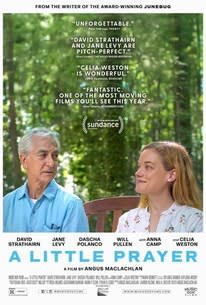
Life nowadays just seems to hang by a thread, but maybe it’s always been that way. They say they never promised us a rose garden, but what if it all seems to be going down the toilet? They didn’t promise us that either.
Just saw a movie, A Liitle Prayer, 2023 , that examines a life lived according to the rules that goes off the rails anyway, and how that impacts a family, especially older parents of adult children struggling with emotional roadblocks.
The Truth Now is a reader-supported publication. To receive new posts and support my work, consider becoming a free or paid subscriber.
It’s a movie about ordinary people that doesn’t descend to maudlin platitudes, despite its suggestion that simplicity of heart and honesty of intention may be a sufficient bulwark against the snares of chaos that seem to be descending on our civilization.
The acting is great. Especially resonant are David Strathairn and Jane Levy as a Southern small town patriarch and his daughter in law who discover they are, in her words, “kindred spirits.”
It’;s about faith without ever mentioning religion, although we hear gospel music and church bells literally ringing through the whole movie. It’s also unselfconsciously about race and class in the way Southern culture is as a whole, steeped in hierarchies that mold people’s lives. It’s definitely worth a watch, one of those quiet gems that is so finely crafted it deserves a wider audience.
Speaking of a wider audience, it’s only 24 more days unitl the launch of my book, Alias Tomorrow. It got a great review recently in Review Tales Magazine, which I will shamelessly replay for you.
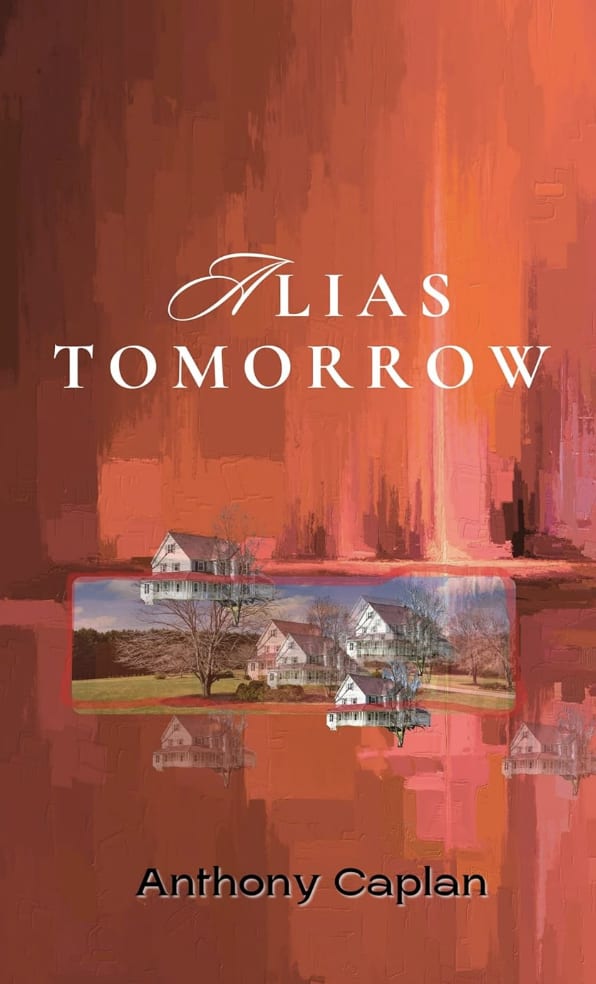
Anthony Caplan’s Alias Tomorrow is a genre-blending novel that challenges narrative conventions, weaving together domestic realism and speculative science fiction to explore the fractured yet hopeful nature of human connection. With its dual structure and philosophical depth, Caplan delivers a profound meditation on the bonds of family, the burden of memory, and the unsettling tension between technology and truth.
At the heart of the story is William Morrow, a once-prominent author wrestling with the quiet collapse of his personal and professional life. As the holiday season brings his adult children back under one roof, emotional rifts and unresolved traumas resurface. Beneath the festive pretense lies a yearning for reconciliation—and a struggle to redefine love, purpose, and identity within a modern world that often isolates more than it unites.
But this isn’t merely a family drama. William is writing a novel—set on Mars in the year 2148—about Antioch, a former Earth dissident turned reluctant analyst for a totalitarian OneWorld regime. Antioch is exiled from the home planet he once fought for, navigating a fragile sense of purpose while shackled by systems designed to suppress dissent and erase identity. His story is compelling in its own right, rich with sociopolitical commentary and a haunting examination of loyalty, resistance, and the human cost of assimilation.
As the narrative unfolds, the boundary between William’s reality and Antioch’s imagined world begins to dissolve. The result is not confusion, but revelation. Caplan skillfully parallels the two arcs, drawing out emotional resonance and thematic depth. We begin to see Antioch as more than fiction—he is a mirror, a projection, a warning. Through this interplay, Alias Tomorrow asks timeless questions: Who do we become when our stories fail us? How do we write new ones in the shadow of our regrets?
Caplan’s prose is both grounded and evocative, shifting smoothly between the intimate tensions of family life and the distant, cold landscape of a colonized Mars. The writing is reflective but never indulgent, offering sharp insights into the way we build walls—around nations, relationships, and our own inner worlds.
Ultimately, Alias Tomorrow is a quiet triumph. It’s not simply about the future, but about how we live today—fragmented, searching, and trying, against all odds, to connect. The novel invites readers to sit with discomfort, to reflect on the meaning of freedom and forgiveness, and to consider how the stories we tell—both real and imagined—shape our identities and our destinies.
I found the book to be a genre-busting, emotionally intelligent novel that blends family, futurism, and philosophical inquiry into a deeply resonant experience. Anthony Caplan delivers a powerful reflection on the human condition, wrapped in the gripping duality of a fractured present and an uncertain future. Alias Tomorrow is both intellectually stimulating and quietly devastating—a must-read for literary and sci-fi readers alike.
Jeyran Main, Editor-in-Chief
That’s a heck of a review and well written, too.
So be on the watch for the release of Alias Tomorrow on 11/3. Give A Little Prayer a watch. And go ahead and make yourself a paid-up subscriber on here to The Truth Now, if you like these weekly posts.
The Truth Now is a reader-supported publication. To receive new posts and support my work, consider becoming a free or paid subscriber.