AI Business Plan: Your Roadmap to Success (Not Failure)
Let’s be real: throwing money at AI without a plan is like burning cash in a very expensive bonfire.
I’ve watched countless companies jump on the AI bandwagon, convinced they’ll magically transform their business overnight. Spoiler alert: they don’t. They waste time. They waste money. And worst of all? They end up more confused than when they started.
Here’s the truth nobody wants to hear: AI without strategy is just expensive chaos.
That’s where an AI business plan comes in. Not some dusty document that sits in a drawer. I’m talking about a living, breathing roadmap that actually gets you from “AI sounds cool” to “AI is making us money.”
Think of it as your GPS for the AI journey. Without it, you’re just driving around aimlessly, hoping you’ll stumble onto success. With it? You know exactly where you’re going, how to get there, and what to do when roadblocks pop up.
Let’s build one that actually works.
Why Your AI Business Plan Can’t Be StaticHere’s mistake number one: treating your AI business plan like it’s carved in stone.
The market shifts. Technology evolves. Your competitors make moves. If your plan doesn’t adapt, you’re already behind.
Your AI strategy needs to dance with your business strategy. When business goals change, your AI priorities shift. When new AI capabilities emerge, they should reshape what’s possible for your business. It’s a two-way street, not a one-time memo from the top.
Companies that nail this? They’re the ones using AI as a competitive weapon, not just another tool.
The Bidirectional ApproachMost businesses get this backwards. They think: “Here’s our business strategy. Now let’s sprinkle some AI on it.”
Wrong.
Your AI business plan should influence your business direction just as much as your business goals shape your AI agenda. New AI capabilities might reveal opportunities you never considered. Market disruptions might demand a complete strategic pivot.
This back-and-forth alignment is how you move from basic AI adoption to game-changing transformation.
The Three Non-Negotiables of Your AI Business PlanWant to build a plan that actually delivers? Start here.
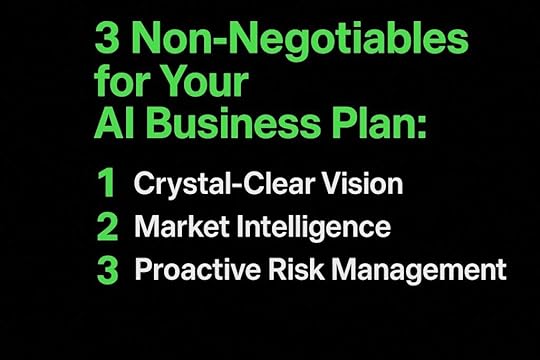 1. Crystal-Clear Vision
Sit down with your leadership team and answer one question: What do we actually want AI to do for us?
Not vague aspirations. Specific outcomes.
Where will AI create measurable value?What’s our investment ceiling?What adoption targets make sense?Which risks keep us up at night?Get brutal about priorities. You can’t do everything, so pick your battles wisely.
2. Market IntelligenceYou need to know what’s happening outside your bubble. How are competitors leveraging AI? Where are you vulnerable? What trends are reshaping your industry?
Check the latest adoption patterns and impact forecasts. Study how new entrants are using AI as a differentiator. Ask yourself: If we don’t move fast here, who will eat our lunch?
Stay paranoid. It keeps you sharp.
3. Risk Management That’s Actually ProactiveEvery AI initiative carries risk. Pretending otherwise is naive.
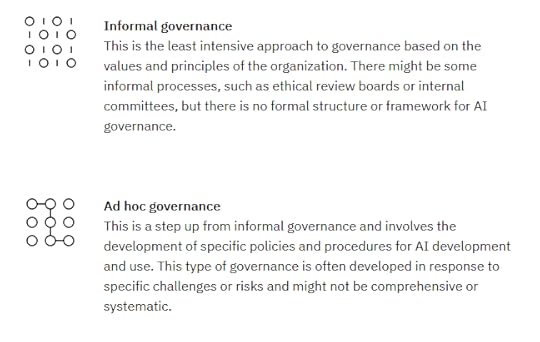
Build clear principles for responsible, ethical, and secure AI use before you need them. Identify the major risks—yes, including the ones nobody wants to talk about. Then create concrete action plans.
And here’s what’s important: assign clear accountability for AI governance. If everyone’s responsible, nobody’s responsible.
 Turning Strategy Into Action: Your AI Portfolio
A great AI business plan without execution is just expensive PowerPoint slides.
You need an AI portfolio that tracks every use case and initiative. Connect it to your roadmap. Make sure your operating model bridges the gap between where you are and where you need to be.
Assess Your Current RealityBefore you can plan the journey, you need to know your starting point. Evaluate these capabilities honestly:
Data and Technology Readiness
Do you have the infrastructure to support AI initiatives? Is your data clean, accessible, and properly governed?
Organizational Structure
Is your governance model built for AI? Or are you trying to jam AI into outdated processes?
AI Literacy and Skills
Does your team actually understand AI? Do you have the engineering talent to execute?
AI Maturity
Where does your organization truly stand on the AI maturity curve? (Hint: most companies overestimate this.)
The higher your AI ambitions, the more mature these capabilities need to be. That’s just reality.
Build Measurable GoalsVague goals get vague results.
Set specific KPIs to track progress. Define what success looks like at each milestone. Create feedback loops so you can adjust quickly when things aren’t working.
And trust me—things won’t always work. That’s fine. What matters is catching it early and pivoting fast.
The Portfolio Prioritization FrameworkNot all AI initiatives are created equal.
Your AI business plan should include a clear framework for prioritizing use cases based on:
Business value potential: What’s the actual ROI?Feasibility: Can we realistically pull this off with our current capabilities?Strategic alignment: Does this move us toward our vision?Risk level: What could go wrong, and can we handle it?Urgency: What happens if we wait six months?Use this framework to build your AI roadmap. It helps you focus resources where they’ll make the biggest impact.
Managing Organizational ChangeHere’s what nobody tells you: the technical stuff is often easier than the people stuff. You need to actively manage organizational change. That means:
Acquiring and Leading AI Talent
The war for AI talent is fierce. You need a strategy for attracting and keeping the right people.
Fostering an Innovation Culture
AI requires experimentation. Failure will happen. Can your culture handle that?
Building AI Literacy Across Teams
Everyone from marketing to operations needs basic AI fluency. Plan for that.
Your AI business plan should include specific initiatives for each of these areas.
The Realignment Imperative in Your AI Business PlanRemember when I said your plan can’t be static? Here’s how you keep it fresh.
Schedule Regular Strategy Reviews
Put AI strategy realignment on your leadership meeting agenda. Monthly or quarterly, depending on your pace of change.
Trigger Reviews for Disruptions
Competitive moves, regulatory changes, or major tech breakthroughs should automatically trigger a strategy review.
Align with Adjacent Strategies
Your AI, data, analytics, and IT strategies should all work together. Misalignment here costs you speed and effectiveness.
Update Portfolio Priorities
As strategy shifts, reprioritize your AI portfolio. Kill initiatives that no longer serve the vision. Double down on the ones that do.
This continuous realignment is non-negotiable. Skip it, and your AI business plan becomes obsolete faster than you think.
Connecting Strategy to Your GEO ApproachHere’s something most businesses miss: your AI business plan should inform how you show up in AI-generated answers.
Like those sites on the right side of this image:

Why? Because your target audience is increasingly asking AI platforms for recommendations instead of searching Google.
If you’ve invested in a solid AI strategy internally, you understand how these systems think. Use that knowledge to optimize your content for GEO (Generative Engine Optimization).
Build Authority in Your Domain
AI platforms prioritize sources with proven expertise. Your AI thought leadership content should demonstrate deep understanding.
Structure Information for AI Understanding
Use clear entity optimization, natural language, and comprehensive topic coverage. AI systems reward this.
Maintain Consistent Digital Identity
Your brand’s digital footprint should clearly communicate your AI capabilities and authority.
The companies winning at both AI strategy and GEO understand this connection.
Common Mistakes That Tank AI Business PlansLet me save you some pain. Avoid these traps:
Treating AI as an IT Project
AI is a business transformation, not a tech implementation. If IT is driving this alone, you’re already off track.
Underestimating Change Management
The technical lift is only half the battle. People and process changes will make or break you.
Ignoring Data Foundations
You can’t build great AI on garbage data. Fix your data strategy first.
Forgetting About Governance
Set governance frameworks before you need them, not after something goes wrong.
Setting Unrealistic Timelines
AI transformation takes time. Pretending otherwise sets everyone up for disappointment.
How long does it take to develop a solid AI business plan?
If you’re a small business, you can create a solid first version in 1-2 weeks. Block out time with your core team, assess where you are, and map out 3-5 priority use cases. Mid-sized companies typically need 6-8 weeks for something comprehensive. The key? Don’t overthink it. Start with a lean plan you can actually execute, then refine as you learn. Remember—your plan should evolve with your business, not collect dust on a shelf.
What’s the difference between an AI strategy and an AI business plan?
Your AI strategy is the high-level vision: what you want AI to achieve and why. Your AI business plan is the executable roadmap: how you’ll get there, with specific initiatives, timelines, resources, and success metrics. Think of strategy as your destination and the business plan as your detailed driving directions.
How much should we budget for AI initiatives in our business plan?
This varies wildly based on your industry, maturity level, and ambitions. Most organizations allocate 5-15% of their technology budget to AI initiatives. But don’t just pick a number—base your budget on the specific use cases in your portfolio and the capability gaps you need to close. Start smaller if you’re new to AI, then scale as you prove ROI.
Feeling Overwhelmed Creating an AI Business Plan? We Get It.Look, I won’t sugarcoat it: building an AI business plan can feel complicated.
You’re juggling a million things already. Now you need to figure out AI strategy, portfolio prioritization, risk management, and organizational change? It’s a lot.
That’s exactly why we built First Movers R&D AI Labs.

We help businesses like yours create customized AI business plans that actually make sense for your reality—not some cookie-cutter template that looks great but doesn’t work in practice.
Here’s what we do differently:
We Start With Your Business Goals
Not the latest AI trends. Not what your competitors are doing. Your actual business objectives and pain points.
We Assess Your Real Capabilities
We tell you honestly where you are, what’s possible now, and what needs to happen before you can tackle bigger initiatives.
We Build Your Custom Roadmap
Prioritized use cases. Clear timelines. Resource requirements. Success metrics. Everything you need to execute with confidence.
We Stay With You
Your AI business plan isn’t a one-and-done deliverable. We help you adapt as markets shift, technology evolves, and your business grows.
Think of us as your AI strategy partner—the team that helps you avoid expensive mistakes and actually deliver ROI from your AI investments.