
Even if We’re Broken by A.M. Weald
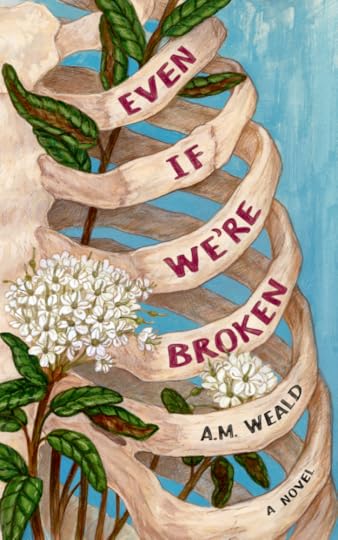 Blurb
BlurbLove, like archaeology, is a lot of trowel and error.
Still reeling from being ghosted by her girlfriend, bioarchaeologist Kate Roth agrees to join an estranged colleague to teach at his field school at a Viking-age archaeology site in the wilds of Newfoundland. While welcoming the escape from Colorado where she’s been medicating resurfaced anxieties with wine and angry rock music, she’s wary of three important facts: 1) she’s had a crush on Viking Cowboy Ben for half her life, 2) Ben is a family man who lives in Norway, and 3) all her romantic relationships, and most friendships, seem to have an expiration date.
For archaeologist Esben “Ben” Veholt, inviting the woman he’s been in love with since digging alongside her 23 years ago was, of course, the worst possible thing he could have done for himself. This summer was supposed to be his escape from reality: a love life in ruins, worsening body image issues, and a teenage daughter who suddenly wants nothing to do with him. When Kate accepts his offer, he intends to retain a professional relationship with her. A woman like Kate could never love him anyway—not with how much he’s changed inside and out.
All seems fine on the surface as Kate and Esben’s friendship rebuilds, but as they dig deeper, they realize just how broken they both are. To heal from their painful pasts and reclaim their crumbling presents, they each need a friend who accepts them, mess and all. But summer won’t last forever, and a third chance at romance threatens to drift across the ocean yet again.
Even If We’re Broken is an own-voice debut novel—an emotional, slow-burn friends-to-lovers open-door romance about self-acceptance, mental health, and the scars we carry.
I got this as part of an itch-io bundle I grabbed, and it has been sitting on my kindle for a while now, because I saw contemporary romance and neither of those are genres I prefer to read.
How wrong I was, at least when it comes to this book. This is a book I loved so much I finished it in one go. What is more, this is a book I’ll recommend to EVERYONE.
It’s less about the romance than about mental health and healing from trauma, about living with chronic pain, about neurodivergents fitting in, about the forms of domestic abuse, and yet, all these heavy themes are interlaced so skilfully into the narrative that it doesn’t feel heavy while lessening none of their impact. It’s masterful storytelling.
The story revolves around Kate, a bisexual, neurodivergent professor of anthropology, who has just been dumped by her girlfriend of many years and ghosted by her. The other side of the love story has Esteben or Ben as he is called, a Norwegian professor of archaeology with a bad back, chronic pain, and a failed marriage with his daughter drifting away from him.
Ben and Kate had met each other previously, once when they were both students and once, years later, when Ben was still married, and Kate had a partner as well. Though there was an attraction on both sides, and a friendship, neither of them had taken the first step.
When Kate is invited to be part of a field camp Ben is organising, it’s a chance for them to reconnect, but both of them are dealing with too much baggage from their past relationships. Are they ready to take a chance on each other risking their hearts and the friendship that means a lot to both of them?
I loved Kate and Ben’s characterisation in this. They’re both real people with real issues, with generational trauma, trauma from failed relationships, emotional and verbal abuse by former partners, and in Ben’s case, a rejection by his daughter as well. Adding to this is the inability of Ben’s family to properly understand and support him and Kate’s trauma over the sudden demise of both her parents in an accident. Real world problems happening to real world people.
They’re both coping in not very healthy ways but finding each other and falling in love doesn’t miraculously heal them. The end of the book has them still healing, going to therapy, firmly on the road, but still not completely healed. But they’re together, and they’re supporting each other’s healing journey.
And this is not even touching on the details of the field camp, and the author’s obvious expertise in archaeology, of which there’s just enough to keep the two protagonists’ mastery evident without shifting the focus from their issues and how they cope.
Healing is never linear, and this book is a journey into the minds and hearts of two people who think themselves broken, but even if they are, it’s okay to be, and it’s okay to want help and to seek it.
Highly recommended. Seriously, I can’t get over just how good this is. This is the kind of book that can save lives, and everyone should read it.


