Wormwood
I have ridden the highs and lows of liberal fortunes since the 1960's. However, I have never been as driven, angry, and obsessed as I am now during these dragon-ridden days of Donald Trump — criminal, rapist, traitor, murderer, and vandal.
William Butler Yeats reflected on this matter when he observed acquaintances altered by their commitment to Irish independence in 1916. Countess Marciewicz (nee Gore-Booth), a friend of Yeats’ from their youth in County Sligo, was an officer during the Easter 1916 rebellion. Abandoning her aristocratic privilege, she became consumed by the cause of Irish independence. Like others who took to arms, she changed. In Yeats’ words, she became “a bitter and an abstract thing;” her heart “enchanted to a stone.”
Certainly Trump’s demolition of democracy in this country enrages many of us who fear that our country is being shattered by a fascist dictator. What effect will this festering rage have on those of us who feel frustrated daily by our inability to stop his insanity and hold him to account?
On a Political PrisonerBy William Butler YeatsText within this block will maintain its original spacing when publishedShe that but little patience knewFrom childhood on, had now so muchA grey gull lost its fear and flewDown to her cell and there alit,And there endured her fingers’ touchAnd from her fingers ate its bit.Did she in touching that lone wingRecall the years before her mindBecame a bitter, an abstract thing,Her thought some popular enmity:Blind and leader of the blindDrinking the foul ditch where they lie?When long ago I saw her rideUnder Ben Bulben to the meet,The beauty of her countrysideWith all youth’s lonely wildness stirred,She seemed to have grown clean and sweetLike any rock-bred, sea-borne bird:Sea-borne, or balanced in the airWhen first it sprang out of the nestUpon some lofty rock to stareUpon the cloudy canopy,While under its storm-beaten breastCried out the hollows of the sea.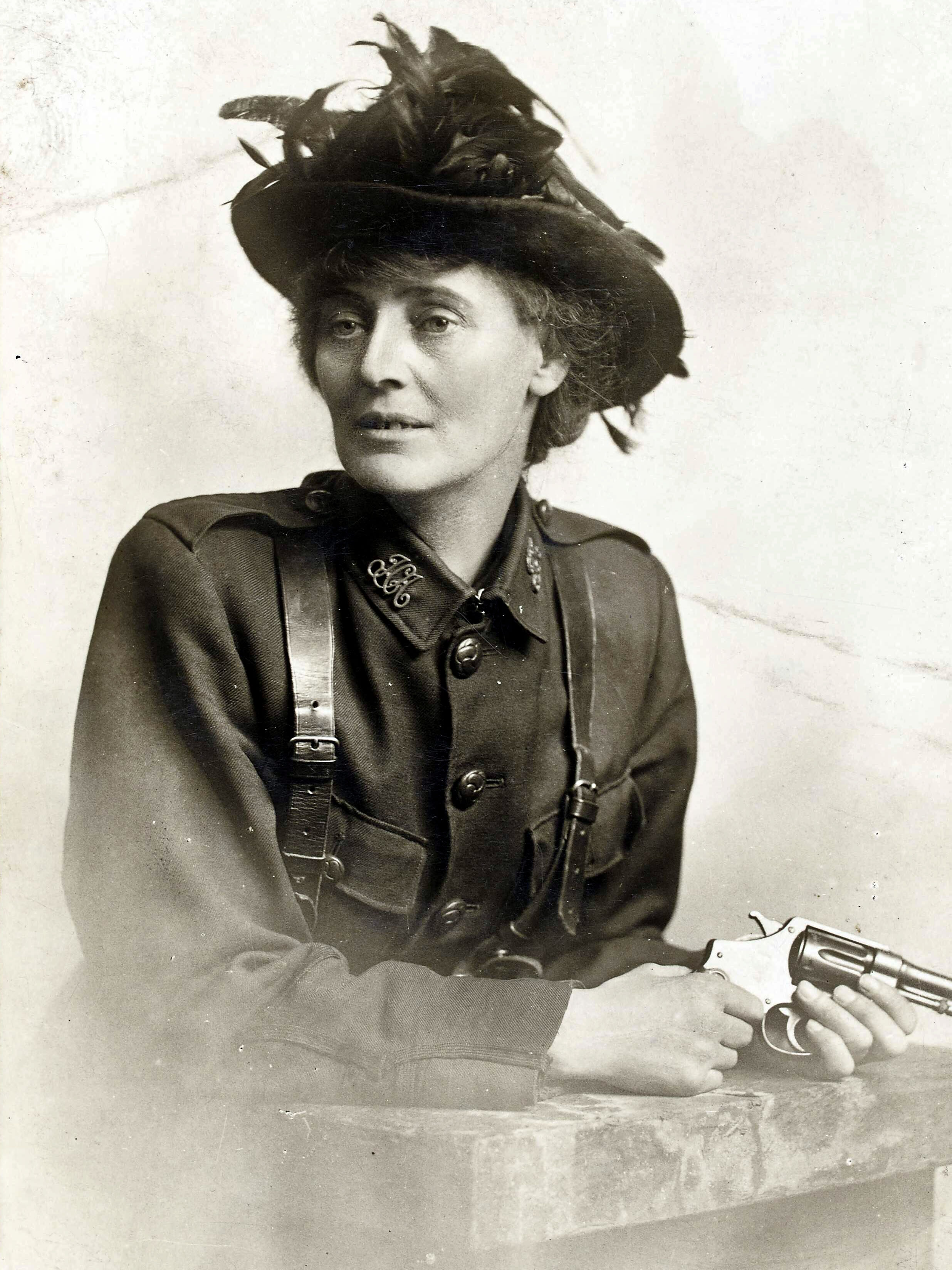
****************
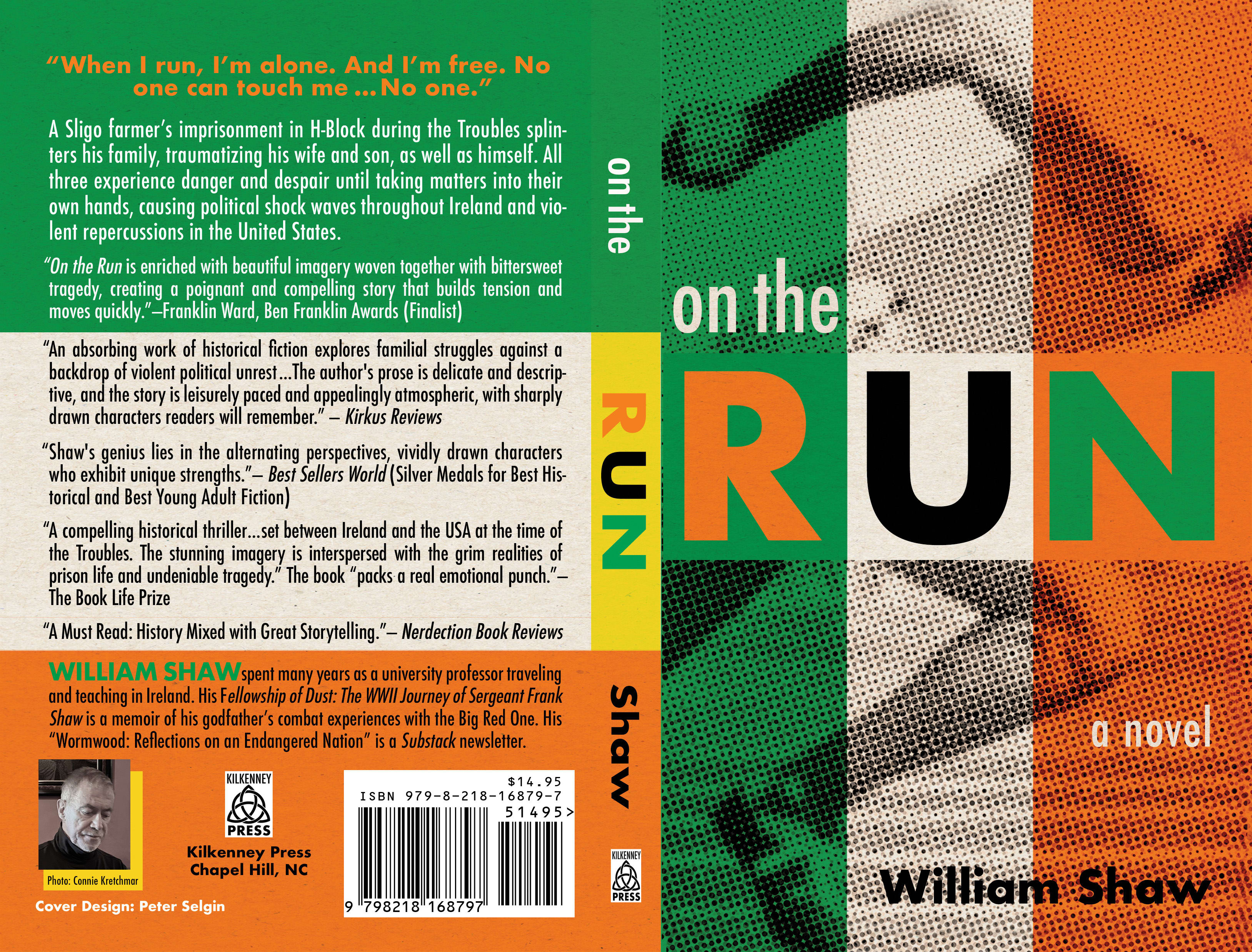
The damage to self that Yeats analyzes may be inevitable to committed activists, to those who achieve success. A chapter from my novel, On the Run, also deals with this subject:
Brian Connolly is an elderly, unrepentant Fenian rebel from the War of Independence to the story’s present (1980) Troubles. His hostile behavior towards British border guards in Northern Ireland causes his grandson and driver, Terence, to be arrested, jailed, and tortured in Maze Prison. Months later, after helping his grandson escape, Brian finally realizes what his political anger has cost him, and others.
**************** On the Run, Chapter 67
WRAPPED IN A SLEEPING BAG on a canvas cot, Terence slept for ten hours. When he woke, he sat down to a breakfast of scrambled eggs, rashers, bangers, potatoes, and fried tomato, plus a pot of strong breakfast tea—his first decent food in months. His grandfather greeted him warmly and told him again how proud he was of him. He poured himself a cup of tea and smiled at his grandson, then placed his hand affectionately on his shoulder.
Brian’s demeanor took a sudden dark turn. He started to speak to Terence, then stopped and took a sip of his tea. He started to speak again, and his eyes welled with tears. Terence was startled. He had never seen the old man like this, so he reached over and touched his hand.
“What’s the matter, Grandfather?”
Brian tried to wave away the question and the need for a response, but he couldn’t. “I thought I’d lost ye, Terence, and I couldn’t stand the thought,” he said. “If it wasn’t for me, lad, ye never would have been at that border and suffered as ye did. I lost me own Michael—yer Da—for being a stubborn, thoughtless bastard. I couldn’t deal with the thought of losing his boy as well.” Terence wasn’t sure what to say. He held his grandfather’s hand while the old man wept and spoke.
“Yer Da was a splendid man,” said Brian. “He was stubborn to a fault, like most of us Connolly’s. But he had his own stern principles. He could not be pushed around, not even by me. I wanted him to be like me, an IRA man. He was republican to the core, but he wanted no part of the violence. He just wanted to work his farm and raise his family in peace, like you, lad.”
Brian stood up and lit a cigarette, shaking his head and wiping his nose with a handkerchief as he looked out the window. “But the whole family fell on hard times in the thirties, and your Da thought if he enlisted in the army, he could make money to send home. So, he joined the Canadian Army when the war started. He couldn’t abide fighting with the British. At least we agreed on that. But we disagreed that fighting the Germans was anything we should get involved in. De Valera urged neutrality. I agreed with him—at first, anyway—since the Germans had always supported us against England in the past.”
Brian paused to catch his breath and wipe his nose again. Terence held a solemn gaze on him. “But since we separated on bad terms, I never got a chance to set it right. It ruined me life with yer grandmother. She blamed me till the day she died. Rightly so. I was no comfort to her. Me silent response to Michael’s death contributed to Moira’s despair and her suicide. And yer Ma, yer Ma . . . God bless her. When yer Da came home in that box, well . . . it was a dark day for all of us, but too much for her. She loved him deeply and depended on him completely. Too much so.” Brian paused to catch his breath.
“I was too young to remember that day,” said Terence. “I know she had a tough time managing our farm and me, but her sister, Lilian, Aunt Lilian and her husband Devin, helped her with chores and helped raise me.”
“Two weeks ago,” Brian blurted, “I woke from a dream calling Michael’s name, asking him to forgive me. I thought I saw his face in my bedroom mirror.”
Terence seemed helpless to allay his grandfather’s deepening sadness. He attempted to rally him with reassurances of the good he had done with his life, how he served his country with courage and devotion, how he became a surrogate father to him and a magical friend to Tim. When Brian pursed his lips and shook his head, resisting the slightest shred of consolation, Terence placed his hand gently on his grandfather’s bald head. This touch released a torrent of tears.
After a few moments, Brian wiped his eyes with his sleeve, wiped his nose again, then took a sip of his tea, his hand shaking. “At any rate, Terence, me lad,” the old man began haltingly, “I think I can help ye and yer family now. We are getting ye a new name and a passport. We are going to get ye back with Bridget and Tim, and then set ye up with a job and a home in America.”
“Thank ye, Brian. I’m happy to hear that. I’ve had enough of this bloody mayhem. I’m just a farmer, as ye well know. That and me wife and me boy are all that I ever wanted. I’m grateful to ye, old man.”
_________________________