THE CURSE OF THE LAW
THECURSE OF THE LAW
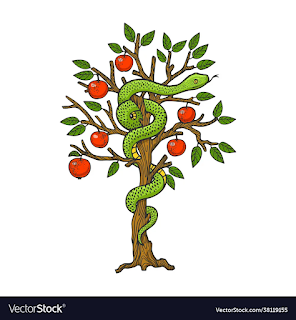 “Foras many as are of the works of the law are under the curse; for it iswritten, “Cursed is everyone who does not continue in allthings which are written in the book of the law, to do them.” But that no oneis justified by the law in the sight of God is evident,for “the just shall live by faith.” Yet the law is not of faith,but “the man who does them shall live by them.” Christ has redeemed usfrom the curse of the law, having become a curse for us (for it iswritten, “Cursed is everyone who hangs on a tree”), thatthe blessing of Abraham might come upon the Gentiles in Christ Jesus, thatwe might receive the promise of the Spirit through faith” (Gal. 3:10-14).
Introduction
Previously, we saw that people today areblessed by hearing and obeying the same gospel Abraham heard and obeyed.“Abraham believed God, and it was accounted to him for righteousness” (Gal.3:6). As it was for Abraham, so it is for us. I wrote that Abraham wasjustified on account of the gift of faith God gave him. I’vesince come to realize that it’s possible to take this the wrong way. Why?Because many today have a wrong understanding of what faith is. So, I need tospend a moment, if I may, elaborating on this.
Inthe old cowboy movies, it was common to see a cowboy “rope a steer.” Faithis a lasso. God, as it were, is at one end of the rope and you are at the other.He has got hold of you, but after a fashion, you’ve also got hold of Him. This“rope” is your lifeline. It is the means by which you received therighteousness of Christ. This “rope” is called “Faith.” Faith is what connectsus with God.
Howare we joined to God? We are connected by a Mediator. Your faith, then, isreally Christ with one hand on you and the other on God.
 Image from Web Tohave faith is to have Christ, which is to have HIS righteousness. Therefore,speaking chronologically, Abraham received the gift of faith before Godjustified him. Or to put it another way: God do not justify Abraham while hewas unbeliever. He declares righteous only those who have faith in Christ andHis righteousness.
Faith, then, is like the telephone wirethrough which the transaction was made. The message down the wire is: “Abraham,now that you can hear Me, I declare you righteous!”
Image from Web Tohave faith is to have Christ, which is to have HIS righteousness. Therefore,speaking chronologically, Abraham received the gift of faith before Godjustified him. Or to put it another way: God do not justify Abraham while hewas unbeliever. He declares righteous only those who have faith in Christ andHis righteousness.
Faith, then, is like the telephone wirethrough which the transaction was made. The message down the wire is: “Abraham,now that you can hear Me, I declare you righteous!”Faithis not something Abraham worked up within himself. If that were the case faithwould be his own work. And Abraham would have been saved by his own works. Faith,then, is the umbilical cord by which we are attached to God. Christ is the lifelineand His righteousness flows through Him to us.
Whenwe receive His righteousness through faith, then, God declares us justified inHis eyes. But for the record, let’s make it clear that no one is saved simplybecause of they have faith. We are saved because what Christ did has beenaccredited to us and received by us through faith.
Abrahamwas justified by faith in the righteousness of Christ as revealed in the gospel.And the nations are to be saved in the same manner. They are to be justified byfaith like Abraham. Abraham believed in the same gospel we todaybelieve. That is the blessing with promise. This blessing of the gospel is nowintended to be a blessing for all the nations. The blessing is that we aredeclared righteous through God’s gift of faith and not through our own works. Thisis the blessing of the Covenant God made with Abraham the father of thefaithful.
Andwe who belong to the Gentiles (i.e., the nations) are today receiving this sameblessing. This blessing is good news. It is the gospel of salvation by gracethrough faith not works.
Now,what we’re looking at in the following is the flipside of this. Tokeep on believing in Christ and His righteousness is to be blessed. Itis to be under the Covenant of Grace. But not having faith is thesame as not having Christ. And those without Christ are under the curse untilsuch times as they are rescued, or, if you will, lassoed by Him.
We’llfocus our attention on a couple of things: First, the demand foryour continual perfect obedience is part of the curse of the Law. And secondly,another related part of the curse is its demand that full payment be made foryour imperfect obedience to the Law.
Perfection
Thecurse of the Law demands perfection. The trouble with this demandis that we live in an imperfect world. How can anything be done perfectly in afallen and therefore imperfect world? Therefore, it’s not hard to see that weare cursed before we even begin. So, we need to ask the question: When did theworld become an imperfect place? And all Bible scholars know thatthis happened when Adam sinned against God.
Theworld became imperfect when Adam broke the Law of God. The Law was written onmankind’s heart. It was Adam’s guide for keeping perfect obedience to God.The Law was his helper, his compass, his map, his Indian Scout. The Lawwas like Tonto, his good, faithful and reliable friend.
Youhave to admit that it would have been easier to keep the Law in a perfectworld. Adam was perfect, and the world was perfect because Godhad made all things very good (Gen. 1:31). God had made a covenant with Adam. Wecall this covenant: The Covenant of Works.
Now,I want you to keep in mind that God always relates to His creation in terms ofcovenant. You’ll remember that we borrowed a useful definition of covenant fromCharles Hodge, “A covenant is a promise suspended upon acondition.” If you keep this in mind it will help you to understand therelationship between Adam had with God in the Garden. It was covenantal. Thedeal was that if Adam lived perfectly by the Law, then he would receive thegift of everlasting life. In other words, the period of his probation would beover, i.e., complete. God would then have placed Adam into a new relationshipwith Himself. Let me once again emphasize the grace of God involved here.
Godwasn’t obligated to promise Adam a thing. But, again, the relationship betweenGod and Adam was covenantal: “If you do this, Adam, you’ll die – you’ll becursed. But if you do this, Adam, you’ll live – you’ll be blessed!”
Godis the One who sets forth the terms of the His Covenant. A covenant, then, is apromise suspended upon a condition. The condition of receiving the promise is aperfect continual upholding of the conditions of the Covenant. And thecondition of the Covenant is the Law of the Covenant. Keep the Law perfectly andyou will receive the promised blessing. Fail to keep the Law perfectly &you will be cursed. However, we know that Adam did not keep theLaw perfectly. When he ate the forbidden fruit he broke all Ten Commandments. Buthe also, as it were, broke God’s heart. But even though it was smashed by Adam,The Covenant of Works still stands. But it no longer stands as our friend, butour accuser.
 Image from Web Ifthe Lone Ranger represents Adam and Tonto represents the Law, then the LoneRanger has turned against his faithful friend. The Law, then, became Adam’senemy when he turned against it. And the Law became a curse to Adam because itkept on reminding him of his sin and of the judgment to come. Therefore, allhis descendants, like Adam himself, want to silence the Law once and for all.
 Butcould you imagine the Lone Ranger tying Tonto up and torturing him? It wouldreally demonstrate that the Lone Ranger had turned evil if he were to cut Tontoin pieces strip by strip until he was dead. Yet this is what people do as theytry to appease an accusing conscience. This is the warped way in which fallenman tries to prove that he is still righteous. He tortures his once faithfulfriend, (God’s Decalogue), in order to silence him. But the law will not besilenced even though you put it to death.
“Whathave you done? The voice of your brother’s blood cries out to Me from theground” (Gen. 4:10). Even from the grave the Law points itsaccusing finger at your sin. The Law is spiritual. It cannot be killed. Even ifyou were to bury it, it would still rise to judge you. Only perfect continualobedience will silence its accusations. For “Cursed is everyone who does notcontinue in all things which are written in the book of the Law, to do them.”
Whathad once been able to be kept in a perfect world, had now become impossible tokeep. Why? Because God placed a curse on the earth from which Adam and all hisdescendants come. The world has become an imperfect place and each human beingadds to that imperfection. Yet the demands of the Law are still the same:Perfect continual obedience. Therefore, the conditions of the Covenant of Worksremain.
TheLaw demands continual perfect works of obedience. But, as we have noted, noneof our works are perfect because we too are part of the curse. For those underthe Covenant of Works, their works are as filthy rags to God. The curse of theLaw then, for mankind is that it still demands perfection, a perfect life livedin obedience to God. It still demands our most perfect and continual service toGod.
Butfallen men continue on trying to deny and defy the spiritual Law of God. Butjust as is the quest for perpetual motion, they are doomed to failure. They aredoomed to failure unless God removes His curse from the ground out of which wecome. And the curse remains upon all who remain under the Covenant of Works. Foras Paul says, “The man who does them shall live by them” (Gal. 3:12b).
Whothen can keep can perfectly continue to keep the conditions of God’s Covenantin order that he may live by them? God is still demanding thesame perfect obedience he required of Adam before the fall. But now it’s evenworse because we have the Curse of the Covenant to contend with too. Who thenis perfect enough to keep the conditions of the covenant in order that He mayreceive the promise of the covenant? Well, this Person would first need tofulfill the conditions God required of Adam. And He would also need to makepayment for the sins of Adam and his offspring.
Doyou know of anyone who would be up to this task? The Person we’relooking for would, first off need to be a man like us. But He would need to beuntainted by Adam’s sin. And in order for Him to live a life of obedience, He’dneed to place Himself under the Law. And if He wanted to lift the curse from usand all of creation, He would need to become the curse. Paul says, “Christ hasredeemed us from the curse of the law, having become a curse for us (for it iswritten, “Cursed is everyone who hangs on a tree”) (Gal.3:13).
Payment
Thecurse of the Law demands payment. Death is the payment for breaking thecondition of the Covenant! “Adam, the day you disobey Me by eating theforbidden fruit you shall surely die!” (Gen. 2:17). The wages of sin, then, isdeath! (Rom. 6:23).
ButGod still demands to be recompensed. He needs to be reimbursed for the sinfuland criminal acts committed against Him. God needs to be paid in full, and Hedemands that payment from every human being. Failure to meet His demandsresults in everlasting death – for this is how God exacts His payment. But doesthis mean that those who hate God will be annihilated? Not at all. But it doesmean that they will spend eternity in a state of perpetual motion.
 Image from Web TheLaw of God will eternally point the burning finger of accusation at those inhell. And God will continue forever to extract His payment of death from thosewho hate Him and His Law (as summarised in the Ten Commandments). The curse ofthe Law will remain upon them always. They will remain condemned under theCovenant of Works forever. “There is no rest”, says the LORD, “for the wicked”(Isa. 48:22). But they will never be able to meet with the demands of the Law. Thisis the curse of the Law.
Theonly way to be free from the curse of the Law is to pay God what you owe Him. Buteven if you worked forever you could never make this payment. Because all yourworks would remain cursed works, warped. And the Law demands perfect perpetualobedience.
Allof mankind is to live by the sweat of his face. He has to toil all of his daysuntil he dies. Yet he will never be able to pay back to God the debt ofobedience he owes. He has become a slave to the Law. The Law which once workedfor him now works against him. Man is a slave to sin, but he is not an innocentslave.
Justas sure as sinful Cain turned round and killed his righteous brother Abel, soall of us are guilty of turning round smashing all the Commandments of God. Andwe all know in our consciences, somehow amends need to be made for this. And itgets worse and worse the more we are reminded of the Ten Commandments. Like thePharisees, we think we’re doing a good job of keeping the Law, until Jesusreminds us of the spiritual nature of the Law. Even by hating someone in yourheart you are as good as killing that person. And the penalty for wilfullykilling someone is death.
Jamessays, “For whoever shall keep the whole law, and yet stumble on one point, heis guilty of all” (James 2:10). The Ten Commandments are not like tenwindowpanes. The Law is more like a windscreen on a car. Break any portion andthe whole needs to be replaced.
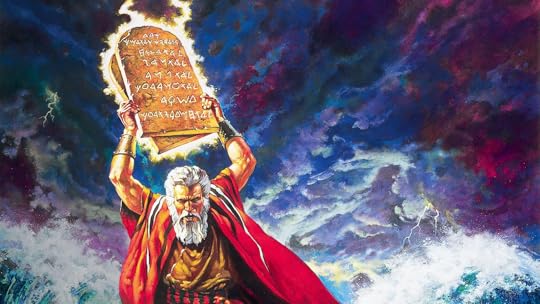 Image from Web Mosesclimbed Mount Sinai and received the Law of God. While he was away, Israel wasbusy breaking the Second Commandment by making the golden calf. Deuteronomy9:17 records what happened next: “Then I [i.e., Moses] took the two tablets [i.e.,of the covenant] and threw them out of my hands and broke them before your veryeyes” (Deut. 9:17). God displayed His anger through the anger of His prophetMoses The people had broken His covenant in their hearts just as Moses hadsmashed the tablets before their very eyes. These Tablets were the covenant ofGod with His people. The Lord through His prophet Hosea says, “But like Adamthey transgressed the covenant, they dealt treacherously with Me” (Hos. 6:7).
Tobreak the Law is to break God’s covenant. God’s Covenant is the righteousnessof God on display. God’s Covenant is the revelation of Himself and His will.They reveal God’s character. The Ten Commandments, if you will, are written onGod’s heart. The Law is the outward expression of what’s on God heart.
WhenAdam transgressed God’s covenant all humanity transgressed it in him. And eachone of us has personally transgressed and continue to transgress that covenant.When Adam smashed that covenant our whole relationship to it changed. Therefore,a new covenant was needed because the relationship to old one has been broken. God,by His grace, began to display His righteousness in another way. By way of whatwe call the Covenant of Grace – which the gospel has revealed.
Therevelation to man of this Covenant of Grace began right after the Fall (Gen.3:15). The Ten Commandments given to Moses was revelation of the Covenant ofGrace. However in the Covenant of Grace there is also the strong reminder ofthe broken Covenant of Works – as heard in Christ’s command for us to “Repentand believe in the gospel” (Mark 1:15). We are to repent of our law-breakingand trust in the law-keeping of Christ revealed in the gospel.
TheLord had His people watch Moses break the Tablets of the Covenant of Grace inanger. This showed the people that God was angry with them for breaking theconditions of the covenant. They were far from loving God in their heart andloving their neighbour as themselves.
Nowthen, if the Commandments are the revelation of God’s righteousness, and theGospel is also the revelation of God’s righteousness (eg, Rom. 1:17), then we’dhave to conclude that both the Law and the Gospel reveal the exact same thing. Butwhat the Gospel does is show us how to attain this righteousness, which isthrough faith in this righteousness as it is revealed in Christ. However, youneed to understand that God in His wisdom left a door open. But no sinner canever enter through this door because Adam closed it on us. The door I speak ofis the perfect keeping of the Law as a Covenant of Works.
Speakingof the Works of the Law Paul says, “The man who does them [i.e., the works ofthe Law] shall live by them” (Gal. 3:12b). The Pharisees are proof that Godhadn’t put the lock on the door. They knew it was possible for a man couldreceive everlasting life through the keeping of the Law. But before you form alynch-mob and hang me from the nearest tree, listen! Where the Pharisees wentwrong was in their understanding of their own righteousness. If the Law were agreat oak tree, they had shaved it so much that it resembled a matchstick. Thenthey held up this match stick as it were the light of the world. However, onlyAdam, before the Fall, could have kept the Law of God perfectly and havereceived everlasting life. But he didn’t! No son of Adam since the fall iscapable of doing this because he is a born sinner. But God made another Adam,didn’t He? Jesus Christ the Second or Last Adam.
AndPaul says, “Christ has redeemed us from the curse of the law, having become acurse for us (for it is written, “Cursed is everyone whohangs on a tree” (Gal. 3:13). So, Christ redeemed us from the curse. LiterallyHe bought us out of the hands of the curse. And who did He make the paymenttoo? You’d be surprised how many people think Christ purchased us back from thedevil. But to be under the curse is simply to be sinners in the hands of anangry God; the same God who expressed His anger before the eyes of His peoplewhen Moses smashed the Ten Commandments.
Andhow did Christ make payment for our sins? Well, He became the curse for us,didn’t He? There’s that little verse of Scripture that has come to mean so much.Paul quotes that verse as it was written in the Septuagint which was the HebrewOld Testament written in Koine Greek. “Cursed is everyone who hangs on a tree” (Gal.3:13b). It’s curious to note the lead up to this verse in Deuteronomy 21:23speaks of dealing with disobedient sons. They were to be stoned by all the menof the city. And anyone who had committed a sin worthy of death was to behanged on a tree. He was to be hanged on a tree as a thing accursed by Godafter he was dead. It would remind us that Adam sinned the sin worthy of deathwhen he ate of the tree.
Thesin worthy of death, the unpardonable sin, is to turn your back on Christ andHis righteousness. The Galatians were on the verge of doing just that. Therefore,Paul wants to remind them once again of the righteousness revealed in theGospel. For in the Gospel God expresses His righteous anger by breaking Hisonly Son on a cross (Isa. 53:5). In the Gospel He smashes the curse of the Lawbefore our very eyes. Just as surely as Moses smashed the Covenant before theeyes of the rebellious people of God, and as did Paul when he proclaimed theGospel to the now becoming rebellious Galatians, “Before whose eyes JesusChrist was clearly portrayed among you as crucified” (Gal. 3:1).
However,when Christ became the curse, He didn’t become a sinner. A sinner is someonewho breaks the commandments of God. No! Christ on the cross kept the Covenantof Works perfectly. That’s what He was doing. And because He, as well as beinga Man, is the eternal God, His work stands forever. The work of Christ atCalvary was a perpetual motion. It was a perfect work done by a perfect man.
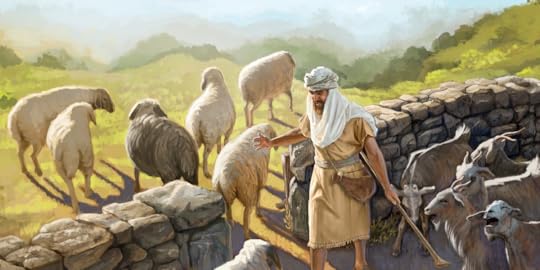 Image from Web ByHis work He transferred us out of the arms of the curse of the Law and into Hiseverlasting arms. And if you’re thinking, “Aren’t these the same arms then?”,then you’d be correct. For the blessings and the curses of the covenant arepronounced in Jesus Christ. God pronounces them upon the wheat and the tares,the sheep and the goats, through Jesus Christ. As Jesus in Matthew says, “Thenthe King will say to those on His right hand, ‘Come, you blessed of My Father,inherit the kingdom prepared for you from the foundation of the world... ThenHe will also say to those on the left hand, ‘Depart from me, you cursed, intothe everlasting fire prepared for the devil and his angels” (Matt. 25:34, 41).
Paulsays to the Corinthians, “For He made Him who knew no sin to be sin for us,that we might become the righteousness of God in Him” (2 Cor. 5:21). Christbecame, not a sinner, but sin for us. And God took that SIN and, in His anger,He SMASHED it before our very eyes. Why? That we might become the “righteousnessof God in Him.” Christ, then, is our righteousness, and His righteousness isrevealed in the Gospel, and His righteousness is received through faith.
Christwas hung on a tree. Why? To remove the curse of the Law. The curse of the Lawhas been removed in Jesus Christ. Isn’t that good news? Jesus Christ removedthe curse of the Law, “That the blessing of Abraham might come upon theGentiles in Christ Jesus, that we might receive the promise of the Spiritthrough faith” (Gal. 3:14).
TheCurse of the Law, as we have seen, was in its demand for continual perfectobedience. The Pharisees were the New Testament expression of the Law workingas a curse. The Law constantly worked against them and they constantly workedagainst the Law. But in Jesus Christ we see the Law as it really is, i.e., ourguide, our faithful friend.
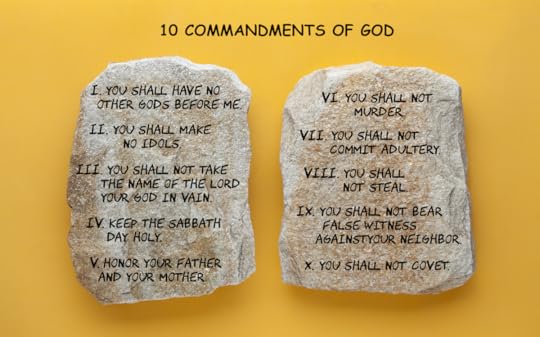 Image from Web TheTen Commandments are simply the expression of the righteous character of God. Therefore,to have the curse of the Law removed from you as to have God back as a friend. Nolonger is He your enemy whom you constantly fight against. Scripture callsAbraham God’s friend forever (2 Chron. 20:7b). And I don’t have to tell you howGod treats His friends, do I? He blesses them and blesses them and blesses them.
Theblessing of Abraham is to continue until the last day. All the nations are tohear the Gospel. And in the Gospel the righteousness of God is revealed inChrist. Therefore, the Gospel is the new Covenant, the Covenant of Grace, fullyrevealed.
Wenow have a new covenantal relationship with God. Instead of keeping the Law foreverlasting life as it was for Adam before the Fall, now it is through faith inChrist and His righteousness. Christ has removed the CURSE OF THE LAW from us. Butas we look around we see Christians acting as if Christ had removed His LAWfrom us. Yet the Promise throughout Scripture is that He would put His LAW inour hearts. That’s what it means to have received the promise of the Spirit. Youknow you have been blessed when God’s Law is your delight and not your enemy. Justas you delight in a close friend – like the Lone Ranger and Tonto. For instance,the Lord says, “I will give you a new heart and put a new spirit within you; Iwill take the heart of stone out of your flesh and give you a heart of flesh. Iwill put My Spirit within you and cause you to walk in My statutes, and youwill keep My judgments and do them” (Ezek. 36:26-27). But we see littleevidence of this, and yet it remains as the promise of God. Therefore, we havea glorious and wonderful task ahead of us, don’t we?
Conclusion
It’sour great privilege to take the blessing of the Gospel to this presentgeneration. And we have God’s own promise that He will bless all the nations. Hewill bless the nations by revealing to them His Law, but not as a Covenant ofWorks which condemns us. In the Gospel He will reveal to the nations His Law asour faithful friend – the One who guides us into the Promised Land. For the Lawof God points us to Jesus Christ who kept the Law as a Covenant of Works forall who have faith in Him, and that Christ has made full payment for all ourtransgressions – even those of Adam.
TheCondition for receiving the righteousness of Christ as revealed in the Gospelis faith. By faith and by faith alone are we justified before the eyes of God. Thusthe Curse of the Law has been removed from you and me as believers.