How Snake Oil Got a Bad Reputation
We use the term “Snake Oil Salesman” as a metaphor for fraud of all kinds, and particularly medical fraud.
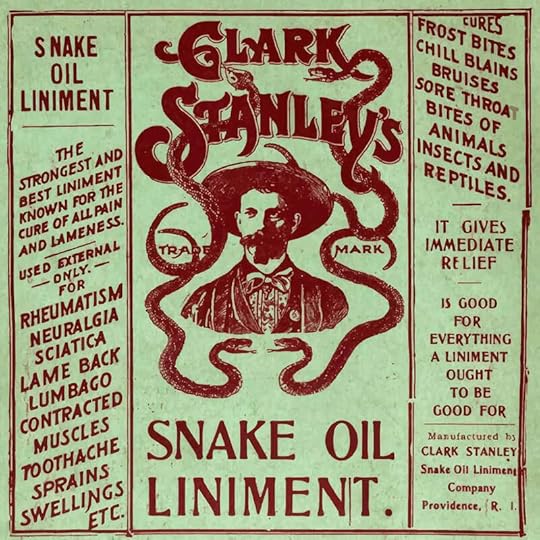
The stuff's fraudulent reputation might have originated with Clark Stanley’s Snake Oil Liniment. Federal investigators analyzed the popular unguent in 1917 and found that it contained mineral oil, beef fat, red pepper, and turpentine. No snake oil was evident. So, the fraud wasn’t that Clark Stanley was making outrageous claims about the oil's efficacy; it was that no snake had died in its production.
 We use the term “Snake Oil Salesman” as a metaphor for fraud of all kinds, and particularly medical fraud.
The stuff's fraudulent reputation might have originated with Clark Stanley’s Snake Oil Liniment. Federal investigators analyzed the popular unguent in 1917 and found that it contained mineral oil, beef fat, red pepper, and turpentine. No snake oil was evident. So, the fraud wasn’t that Clark Stanley was making outrageous claims about the oil's efficacy; it was that no snake had died in its production.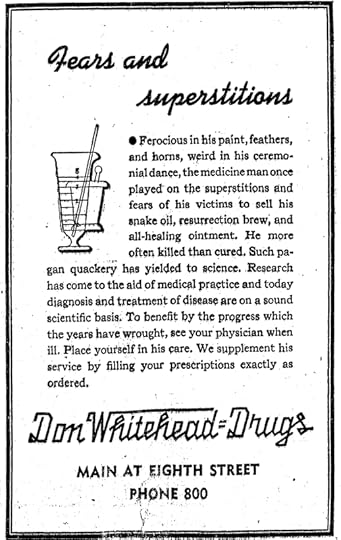 This 1943 ad from a Boise drug store played on the progress made since snake oil.
Snake oil contains a high percentage of omega-3 fatty acids, which we value today for anti-inflammatory effects, their heart-healthy reputation, and eye health. Although we typically don’t get it from snakes anymore, it is still used in traditional Chinese medicine.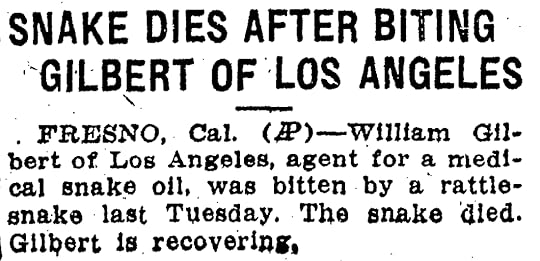 In 1901, the Idaho Statesman reported that the Klamath Falls region of Oregon was poised to be the new snake oil capital, due to orders from a Minnesota reptile farm. It seems the local postmaster got a letter inquiring about the price of snakes. Thinking it was a joke, he wrote back saying he’d sell all the snakes they wanted for 25 cents a pound. To his surprise, he got an order by return mail for 400 pounds of snakes, with a promise for an 800-pound order in the fall. The article ended with, “It is believed here that tons of the snakes could be shipped from this place annually without materially decreasing the supply.”
Idaho was one of many sources of snake oil, because snakes. In 1934, the Idaho Statesman reported that a local drugstore was having a run on genuine Idaho rattlesnake oil with mail orders from the Midwest. The article included the method for obtaining the oil: “snake-hunters skin the reptiles and fry out the oil.”
The druggist said, “Idaho does have some rather plump specimens of rattlesnakes. Many of them probably would produce more and better oil than their creeping cousins in states closer to the middle west.”
So, the next time you fry up a snake, you might want to consider bottling a bit of the drippings.
The stuff's fraudulent reputation might have originated with Clark Stanley’s Snake Oil Liniment. Federal investigators analyzed the popular unguent in 1917 and found that it contained mineral oil, beef fat, red pepper, and turpentine. No snake oil was evident. So, the fraud wasn’t that Clark Stanley was making outrageous claims about the oil's efficacy; it was that no snake had died in its production.
We use the term “Snake Oil Salesman” as a metaphor for fraud of all kinds, and particularly medical fraud.
The stuff's fraudulent reputation might have originated with Clark Stanley’s Snake Oil Liniment. Federal investigators analyzed the popular unguent in 1917 and found that it contained mineral oil, beef fat, red pepper, and turpentine. No snake oil was evident. So, the fraud wasn’t that Clark Stanley was making outrageous claims about the oil's efficacy; it was that no snake had died in its production.
This 1943 ad from a Boise drug store played on the progress made since snake oil. Snake oil contains a high percentage of omega-3 fatty acids, which we value today for anti-inflammatory effects, their heart-healthy reputation, and eye health. Although we typically don’t get it from snakes anymore, it is still used in traditional Chinese medicine.
In 1901, the Idaho Statesman reported that the Klamath Falls region of Oregon was poised to be the new snake oil capital, due to orders from a Minnesota reptile farm. It seems the local postmaster got a letter inquiring about the price of snakes. Thinking it was a joke, he wrote back saying he’d sell all the snakes they wanted for 25 cents a pound. To his surprise, he got an order by return mail for 400 pounds of snakes, with a promise for an 800-pound order in the fall. The article ended with, “It is believed here that tons of the snakes could be shipped from this place annually without materially decreasing the supply.”Idaho was one of many sources of snake oil, because snakes. In 1934, the Idaho Statesman reported that a local drugstore was having a run on genuine Idaho rattlesnake oil with mail orders from the Midwest. The article included the method for obtaining the oil: “snake-hunters skin the reptiles and fry out the oil.”
The druggist said, “Idaho does have some rather plump specimens of rattlesnakes. Many of them probably would produce more and better oil than their creeping cousins in states closer to the middle west.”
So, the next time you fry up a snake, you might want to consider bottling a bit of the drippings.


No comments have been added yet.