Currencies of the Dark
Design concepts for money in VotE: ReDux
Light is the Currency
Light is often only way to find a path and stay alive. Light is a resource that is always being eaten away. Light must be carried, in the form of lamp and fuel. Light is literally a currency; the Lume.
Distance relates to time. There is no solar cycle down below. Seasons and cyclic calendars, are partial, conditional and strange. The most important aspect of travel is how long it takes to get somewhere; this is measured in a loss of Lumes; “eight lumes distant” means you will need eight hours of strong light to find your way there.
Prime Currencies of the Veins
The Lume = 1l
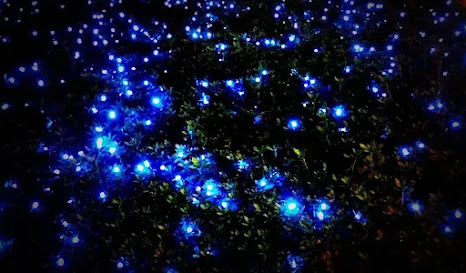
The ghosts of fireflies made extinct in a long-forgotten apocalypse. The pale wraiths are imperishable, distinct, and gather and gust through currents in the Veins, moving in swarms through ocean and stone. Only rarely are they accessible en-masse; the means of capture and containment are particular and queer.
The ghosts are held in little bags made from fine intestine; ‘glow bags’, or in little Lantern-pots of clay or bone. They are transferred with great care; sucked into pipes of silver, bone or reed, held at the end in clumps, or trapped on little honey-dabs held at the ends of sticks, then gentle ‘poofed out’; transferred to another’s ‘Glow Bag’. Merchants and settled peoples have scales for measuring the unweight of a Glow Bag so that the bags themselves can be exchanged.
The massless nature of the ‘Lume’ and the extreme difficulty of forging Lumes, helps to make them the base ‘physical’ currency of the Veins; they can be carried without impediment, but not without care. The fact that ‘Glow Bags’ can be damaged in combat, or opened, and the ‘Lumes’ set free, to float away into the stone, makes them difficult to steal. The slow and ritual nature of exchanging Lumes is favoured in the Veins as, in this careful breathing and depositing, both sides of become vulnerable to the other; to exchange is a matter of trust.
A Glow Bag of Lumes of a little bone or clay Lamp-Pot, gives out its own small ghost-light; a vague glow up to five or ten feet of clarity, if that, but enough to accomplish small tasks or to provide comfort in the dark. Veinslings may sleep, or do small deeds, lit by their purses glow.
The Lume as literal currency is paired with the ‘Lume-as-Concept’. A ‘Lume’ is worth one hour of strong light, in whatever form, though the most usual form of exchange is Whale-Oil. What counts as useful light varies enormously according to the buyer, the seller and local conditions, but the universality of this conception; One Lume = One Hour of Light, forms the pillar of stability in economy of the Veins. All is based on the Lume, counted in Lumes, and reduced back to Lumes. Even distances are given in Lumes as that indicates how many hours of light you will need to reach wherever it is.
Occultum = 10,000l
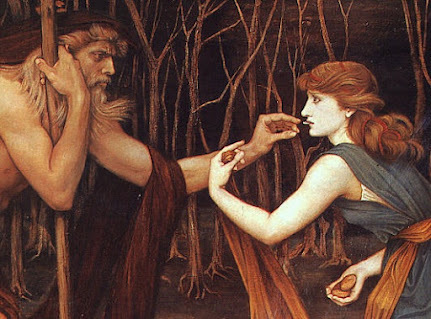
A massless shadowy disc, its edges blurred, the texture of Occultum is felt by the Soul, rather than material flesh, (Golems, like many Janeen Viziers, cannot use them directly).
No-one really knows exactly where Occultum Coins are made or found. Rumours say they are forged in some hell, or minted in a ‘House of Leaves’ where the substance of reality is strange. They come always from below.
Like ‘Lumes’ they weigh nothing like are impossible to forge. Occultum is magic-neutral, it cannot be picked up, manipulated, scried or otherwise altered via magic. The coin itself resists duplication. The black discs cannot be chopped, melted, cut or ground down; if chipped or ‘snapped’ they simply ‘burst’ collapsing into little static clouds and staining the area nearby with fluctuations in natural chance.
The one danger of owning too many Occultum Coins is that, if kept in large numbers, they are inherently uncertain, meaning the total value and number of the coins may fluctuate. The extent of this fluctuation increases the more you have. Usually if you get into triple digits, you can expect a variation of about 5% over time, with there sometimes being up to 105 coins and sometimes as few as 95. (In rare cases variations can be more extreme). Nevertheless, the variation itself tends to be stable over time, so many wealthy cultures maintain their core currency reserves in Occultum; they can eat the cost of temporary fluctuations, it all evens out over time.
Occultum has a heavy cultural weight which goes beyond the movement of economies and trade routes. Just as in our world, Gold is Gold, and signals and displays wealth, permanence and seriousness, regardless of the fluctuations of the times, in the Veins, Occultum is Occultum. Even the most high-toned merchants or Lords would not refuse payment in the Black Coin. Of all currencies, perhaps only Lumes themselves are more stable and only Cloudcradle silk of equal status.
Occultum is known to, and accepted by, supernatural and extra-planar entities. Demons, Ghosts, and Things from Beyond, all accept its worth and for some rare magical services Occultum is the only coin accepted; a disc equivalent to mortal souls.
Intermediate Currencies
The Veins has a massive and permanent problem with making change. The two most well-known, accepted and strongest currencies, the ‘massless two’; Lumes, and Occultum (which is still ultimately measured in Lumes), occupy the far ends of the value scale. What on earth do you do when you need to buy intermediate things? To some extent ‘Glow Bags’ can make up for this, but the Veins has developed a range of complex intermediate currency-equivalents to make up the difference.
None of these are ‘massless’ in the same manner as Lumes or Occultum, but all are very light and a great many are slightly luminescent themselves. While every culture will accept Lumes, Occultum and Silk, an exchange for these intermediate currencies is not universally guaranteed, you may have to chop and change to work things out.
Gleams = 8l
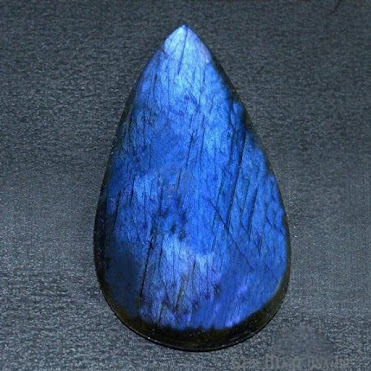
Also called ‘Gleamers’ or ‘Butane Gleamers’. These gems are blue as the flame. Their edges seem to shiver in the dark. Usually these are bagged up into ‘Bags of Gleams’ worth about 80l each.
Slave-Month Links (or just 'Links') = 31l (varies)
Usually made in chased and engraved silver. Each culture, (often Knotsman, Aelf-Adal and various Janeen Courts), engraves its links in a varied and highly distinct style. Each link represents a nominal month of particular labour owed. Often gathered into great linked chains and worn by potentates. Ray-Men and some other cultures with weird principals might refuse to take these.
Toxolucent Emeralds ('Greens') = 200l
Acidic and slightly poisonous to the touch, its widely thought these are cut from rare bezoars recovered from abyssal creatures of the Nightmare Sea. Olm will almost always refuse these.
Topaz Flames ('Flames') = 500l
These seem to glimmer and flicker slightly in the hand. Though they are utterly cold, when smashed, they reliably produce a burst of pure flame. Undead prefer not to deal in these.
Knotsman Debt-Threads ('Knots') = Variable & Bespoke
Knotsmen record their debts and contracts in what else, but knots? Formed in rare and precious materials depending on the depth of the debt. Neither immaterial nor magical, and sometimes frustratingly bespoke and weird, the strength of the knots as currency comes from the fanatical dedication of Knotsman culture to maintaining them. Knotsmen hate to be in debt to anyone from outside their culture. They are very eager to ‘gain knots’ as this gives them power over others from within their culture. All are utterly deranged in their pursuit of counterfeiters. Though a strong material currency, some cultures or groups just really hate Knotsmen and will refuse to deal with these. Also the nature of the exchange can just be weird; how much is a ‘Thirteenth-level Fundamental Humiliation” worth in real money?
Whale Oil – Variable
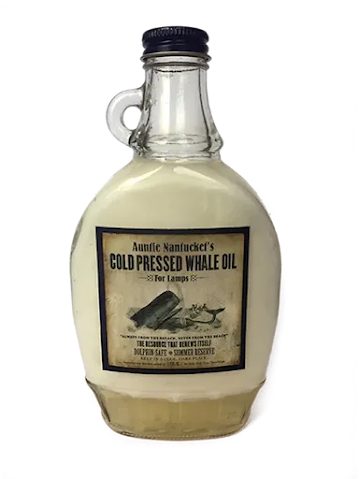
Somewhere between a trade good and a currency, Whale Oil is useful, ubiquitous and has a regular rate of exchange. Compared to most Veins currencies, it is a bit heavy and difficult to use, but it literally burns to make a pure, bright, smokeless (important for Veins cultures who hate waste and staining the rock), flame. Usually sold in ‘day pots’ for 24 hours of clean-burning oil, (24 Lumes) or ‘watch pots’ for eight hours of light (8 Lumes). For some groups, traders or individuals who have solved their light problem by other means, the Oil is just not worth it as a medium of exchange. Olm find it useless but might take it at a reduced rate, Opal-Winged Chiropterae in particular tend not to like it.
Bank Notes = Variable
There are banks in the dark, often associated with the Great Cultures or with one or more of the Grand Coagulations (cities). Usually run by Vampires for their Aelf-Adal overlords, the worth of such a currency will often diminish the further into the Wastes you get. Though, if you can get to another Alef-Adal-run Coagulation, they will often accept these notes, more as a point of pride, since to refuse them would be an insult to another Aelf-Adal, (unless the Byzantine intrigues of that race means these Courts are currently opposed, in which case they may not only refuse, but also take offense.)
The nature of these Notes/Bonds/Certificates can vary from something like an exquisitely handwritten I.O.U, to something like an actual, printed note, though usually hand-printed on soft skin, rather than machine printed on paper. (Aelf-Adal know about various forms of surface money.)
If you are in an Aelf-Adals city-coagulation, it’s hard not to take payment in their bank notes. After all, they have the Aelf-Adals name and perhaps something like a face on them, and are signed by Vampire Banker. A whole sub-skill of ‘ritual excuses’ exists to allow Veinslings to attempt to get out of being paid in local notes.
Silks
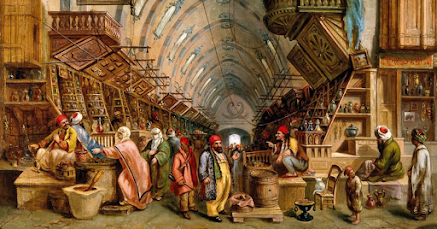
Even cheap silk is light, resistant to decay, and compresses down deeply, allowing a large surface area to be transported in a relatively small ‘bale’.
Silk is heavily associated with the Aelf-Adal. A ‘Bale’ of silk is in most cases, much smaller and lighter than that transported on the historical silk Road in our reality. Even for ‘Rough Silk’ like Whipsilk, a ‘bale’ will only be two or three feet square and weigh 40 to 50 kilos. The highest value of silk is sold in ‘hands’; roughly thick envelope or small parcel sized packages, which, due to the incredible density of packed silk, can still weigh quite a lot; 5 to 10 kilos.
Whipsilk = 10c per bale
Silk given as a status symbol to slaves trusted to oversee their fellow slaves. An illusory boon. The silk carries the cultural taint of alien flesh and Aelf-Adal will never touch it once it has been used. A nominal advantage is that Aelf-Adal will tend to assume that anyone wearing Whipsilk is some kind of Slave Overseer, and ritually not-perceive them.
Stormsilk = 25l per bale
Colour of a storm sky and rough to the touch. A perfectly serviceable ‘commoners silk. Worn by the lowest members of a Coagulation, by normie Once-Men out in the sticks or by Aelf-Adal ‘hunting parties’ who want to make a point about getting out of the Spire and ‘roughing it’.
Chainsilk = 50l per bale
If braided can form a strong rope or chain. Practical. Carries a little cultural ‘cool’ as it is standard military gear for many cultures and coagulations.
ClipperSilk = 100l per hand
Tough, noted for its ability to survive long journeys. Not well respected. A bit of a Bourgeois upwardly-mobile low-rent social climber silk. The very top of the ‘middle class’ silks, but the bottom of the ‘upper class’ silks. Does anyone actually wear this stuff?
Maskmaker Silk = 500’ per hand
Valuable enough that if given as tribute one can be considered to have ‘made ones mask’ in Aelf-Adal terms – a sufficient bribe to be someone actually worth talking to. Makes up much of the ‘baseline wear’ for Aelf-Adal and other Volume Lords.
Cloudcradle Silk = 1,000’ per hand
Like folded smoke, flowing wearable steam. In most coagulations, this is either illegal to wear under direct sumptuary laws without being a member of the ruling class, or is simply culturally impossible to wear unless you are so.
Being gifted this silk, or given formal dispensation to wear it, makes you near-officially part of that rulers ‘Court’. Be careful; accepting this means that in a sense, the giver ‘owns’ you, and takes responsibility for you, which can be good or bad in many ways.
Cloudcradle silk is highly valued by traders as light, tough, high-value currency. It is probably used more as currency than as clothes; so few who live and breathe are willing or able to wear it.
Design Notes
Collapsing the concept of the ‘Lume’
In the original VotE, the ‘Lume’ was purely a concept, rather than a material thing, but I thought, people generally won’t understand this or grasp it, and also I thought ‘why not?’. There seemed to be little disadvantage to me in making ‘Lumes’ both a concept and an actual thing you could use in game, that way the concept and the physical item reinforce each other (though of course, in keeping with VotE aesthetic and world-scheme, they are not actually physical.
So now a ‘Lume’ is one of these tiny firefly ghosts you keep in a special little bag or pot. You can exchange one of these ghosts for one hour of strong (really 30 to 50 ft visibility or more, but you can negotiate that), light with most merchants and settled peoples.
The ‘Lumes’ themselves also make a little light eternally, but only enough to do close hand-work with, probably not enough to help you get around (though a last ditch possibility for those severely lost).
The difficulty and slowness of exchanging Lumes, and the kind of ritual behaviour it suggests, seems to me to fit the nature of the Veins, as does their weightless nature and the fact that, if lost or thrown away, they simply disappear into the stone without a trace.
If you think this was a dumb idea you can let me know in the comments.
Finding Treasure/Getting Paid
Generally players really like to find treasure and to get paid in weird, distinct and particular ways.
In most cases its more enlivening to find a curious artefact, or even a bag of jewels or bale of rare silk than just a pile of coins.
This works out more in the low to mid levels of a game, where the value of a particular treasure or gem or something as a trade item still has potency. As you get into the higher levels I have generally found that people stop caring as much.
Likewise, sometimes people actually want a little haggling sub-game where you have to try to get your hands on the kind of currency you want and avoid those less useful, but sometimes you really just want the whole thing over and done with so you can end the session. It depends on taste and circumstance.
This currency pattern is meant to be adaptable to both playstyles if needed. You can enliven and solidify it by giving players a bunch of weird currencies, each desired or disliked by different cultures under different circumstances, or you can just abstract the whole thing to ‘so many lumes’.
Hopefully, finding or being given Occultum should remain deeply interesting and exciting at any level. I wanted it to be, and to feel, special.
[Occultum has always been, and still is, based on the Obol, first invented by Mateo Diaz.]
Mixing Currencies/Using Money
For the silks and intermediate currencies I fell back on a lot of ideas I first used in ‘Deep Carbon Observatory’, though with somewhat altered values.
Most of the Gems are super easy to carry but have things that are slightly wrong with them (Emeralds mildly toxic, Topaz might actually set you on fire if it breaks). Others have moral issues (Slave-Links or Knotsman ‘Humiliations’), some are just a bit awkward (Whale Oil and Bank Notes).
The ‘Bales’ are meant to be fucking annoying to carry around, but still solid currency, better in the early game or perhaps moved en-masse by servants in the later game as part of a trading journey.
…
U.S orders are now open on the False Machine Store
…
I am going to Dragonmeet at the end of November
I don’t have a store or a talk or anything, and so far have no particular plans but I will be there.
Light is the Currency
Light is often only way to find a path and stay alive. Light is a resource that is always being eaten away. Light must be carried, in the form of lamp and fuel. Light is literally a currency; the Lume.
Distance relates to time. There is no solar cycle down below. Seasons and cyclic calendars, are partial, conditional and strange. The most important aspect of travel is how long it takes to get somewhere; this is measured in a loss of Lumes; “eight lumes distant” means you will need eight hours of strong light to find your way there.
Prime Currencies of the Veins
The Lume = 1l

The ghosts of fireflies made extinct in a long-forgotten apocalypse. The pale wraiths are imperishable, distinct, and gather and gust through currents in the Veins, moving in swarms through ocean and stone. Only rarely are they accessible en-masse; the means of capture and containment are particular and queer.
The ghosts are held in little bags made from fine intestine; ‘glow bags’, or in little Lantern-pots of clay or bone. They are transferred with great care; sucked into pipes of silver, bone or reed, held at the end in clumps, or trapped on little honey-dabs held at the ends of sticks, then gentle ‘poofed out’; transferred to another’s ‘Glow Bag’. Merchants and settled peoples have scales for measuring the unweight of a Glow Bag so that the bags themselves can be exchanged.
The massless nature of the ‘Lume’ and the extreme difficulty of forging Lumes, helps to make them the base ‘physical’ currency of the Veins; they can be carried without impediment, but not without care. The fact that ‘Glow Bags’ can be damaged in combat, or opened, and the ‘Lumes’ set free, to float away into the stone, makes them difficult to steal. The slow and ritual nature of exchanging Lumes is favoured in the Veins as, in this careful breathing and depositing, both sides of become vulnerable to the other; to exchange is a matter of trust.
A Glow Bag of Lumes of a little bone or clay Lamp-Pot, gives out its own small ghost-light; a vague glow up to five or ten feet of clarity, if that, but enough to accomplish small tasks or to provide comfort in the dark. Veinslings may sleep, or do small deeds, lit by their purses glow.
The Lume as literal currency is paired with the ‘Lume-as-Concept’. A ‘Lume’ is worth one hour of strong light, in whatever form, though the most usual form of exchange is Whale-Oil. What counts as useful light varies enormously according to the buyer, the seller and local conditions, but the universality of this conception; One Lume = One Hour of Light, forms the pillar of stability in economy of the Veins. All is based on the Lume, counted in Lumes, and reduced back to Lumes. Even distances are given in Lumes as that indicates how many hours of light you will need to reach wherever it is.
Occultum = 10,000l
.jpg)
A massless shadowy disc, its edges blurred, the texture of Occultum is felt by the Soul, rather than material flesh, (Golems, like many Janeen Viziers, cannot use them directly).
No-one really knows exactly where Occultum Coins are made or found. Rumours say they are forged in some hell, or minted in a ‘House of Leaves’ where the substance of reality is strange. They come always from below.
Like ‘Lumes’ they weigh nothing like are impossible to forge. Occultum is magic-neutral, it cannot be picked up, manipulated, scried or otherwise altered via magic. The coin itself resists duplication. The black discs cannot be chopped, melted, cut or ground down; if chipped or ‘snapped’ they simply ‘burst’ collapsing into little static clouds and staining the area nearby with fluctuations in natural chance.
The one danger of owning too many Occultum Coins is that, if kept in large numbers, they are inherently uncertain, meaning the total value and number of the coins may fluctuate. The extent of this fluctuation increases the more you have. Usually if you get into triple digits, you can expect a variation of about 5% over time, with there sometimes being up to 105 coins and sometimes as few as 95. (In rare cases variations can be more extreme). Nevertheless, the variation itself tends to be stable over time, so many wealthy cultures maintain their core currency reserves in Occultum; they can eat the cost of temporary fluctuations, it all evens out over time.
Occultum has a heavy cultural weight which goes beyond the movement of economies and trade routes. Just as in our world, Gold is Gold, and signals and displays wealth, permanence and seriousness, regardless of the fluctuations of the times, in the Veins, Occultum is Occultum. Even the most high-toned merchants or Lords would not refuse payment in the Black Coin. Of all currencies, perhaps only Lumes themselves are more stable and only Cloudcradle silk of equal status.
Occultum is known to, and accepted by, supernatural and extra-planar entities. Demons, Ghosts, and Things from Beyond, all accept its worth and for some rare magical services Occultum is the only coin accepted; a disc equivalent to mortal souls.
Intermediate Currencies
The Veins has a massive and permanent problem with making change. The two most well-known, accepted and strongest currencies, the ‘massless two’; Lumes, and Occultum (which is still ultimately measured in Lumes), occupy the far ends of the value scale. What on earth do you do when you need to buy intermediate things? To some extent ‘Glow Bags’ can make up for this, but the Veins has developed a range of complex intermediate currency-equivalents to make up the difference.
None of these are ‘massless’ in the same manner as Lumes or Occultum, but all are very light and a great many are slightly luminescent themselves. While every culture will accept Lumes, Occultum and Silk, an exchange for these intermediate currencies is not universally guaranteed, you may have to chop and change to work things out.
Gleams = 8l

Also called ‘Gleamers’ or ‘Butane Gleamers’. These gems are blue as the flame. Their edges seem to shiver in the dark. Usually these are bagged up into ‘Bags of Gleams’ worth about 80l each.
Slave-Month Links (or just 'Links') = 31l (varies)
Usually made in chased and engraved silver. Each culture, (often Knotsman, Aelf-Adal and various Janeen Courts), engraves its links in a varied and highly distinct style. Each link represents a nominal month of particular labour owed. Often gathered into great linked chains and worn by potentates. Ray-Men and some other cultures with weird principals might refuse to take these.
Toxolucent Emeralds ('Greens') = 200l
Acidic and slightly poisonous to the touch, its widely thought these are cut from rare bezoars recovered from abyssal creatures of the Nightmare Sea. Olm will almost always refuse these.
Topaz Flames ('Flames') = 500l
These seem to glimmer and flicker slightly in the hand. Though they are utterly cold, when smashed, they reliably produce a burst of pure flame. Undead prefer not to deal in these.
Knotsman Debt-Threads ('Knots') = Variable & Bespoke
Knotsmen record their debts and contracts in what else, but knots? Formed in rare and precious materials depending on the depth of the debt. Neither immaterial nor magical, and sometimes frustratingly bespoke and weird, the strength of the knots as currency comes from the fanatical dedication of Knotsman culture to maintaining them. Knotsmen hate to be in debt to anyone from outside their culture. They are very eager to ‘gain knots’ as this gives them power over others from within their culture. All are utterly deranged in their pursuit of counterfeiters. Though a strong material currency, some cultures or groups just really hate Knotsmen and will refuse to deal with these. Also the nature of the exchange can just be weird; how much is a ‘Thirteenth-level Fundamental Humiliation” worth in real money?
Whale Oil – Variable

Somewhere between a trade good and a currency, Whale Oil is useful, ubiquitous and has a regular rate of exchange. Compared to most Veins currencies, it is a bit heavy and difficult to use, but it literally burns to make a pure, bright, smokeless (important for Veins cultures who hate waste and staining the rock), flame. Usually sold in ‘day pots’ for 24 hours of clean-burning oil, (24 Lumes) or ‘watch pots’ for eight hours of light (8 Lumes). For some groups, traders or individuals who have solved their light problem by other means, the Oil is just not worth it as a medium of exchange. Olm find it useless but might take it at a reduced rate, Opal-Winged Chiropterae in particular tend not to like it.
Bank Notes = Variable
There are banks in the dark, often associated with the Great Cultures or with one or more of the Grand Coagulations (cities). Usually run by Vampires for their Aelf-Adal overlords, the worth of such a currency will often diminish the further into the Wastes you get. Though, if you can get to another Alef-Adal-run Coagulation, they will often accept these notes, more as a point of pride, since to refuse them would be an insult to another Aelf-Adal, (unless the Byzantine intrigues of that race means these Courts are currently opposed, in which case they may not only refuse, but also take offense.)
The nature of these Notes/Bonds/Certificates can vary from something like an exquisitely handwritten I.O.U, to something like an actual, printed note, though usually hand-printed on soft skin, rather than machine printed on paper. (Aelf-Adal know about various forms of surface money.)
If you are in an Aelf-Adals city-coagulation, it’s hard not to take payment in their bank notes. After all, they have the Aelf-Adals name and perhaps something like a face on them, and are signed by Vampire Banker. A whole sub-skill of ‘ritual excuses’ exists to allow Veinslings to attempt to get out of being paid in local notes.
Silks
Even cheap silk is light, resistant to decay, and compresses down deeply, allowing a large surface area to be transported in a relatively small ‘bale’.
Silk is heavily associated with the Aelf-Adal. A ‘Bale’ of silk is in most cases, much smaller and lighter than that transported on the historical silk Road in our reality. Even for ‘Rough Silk’ like Whipsilk, a ‘bale’ will only be two or three feet square and weigh 40 to 50 kilos. The highest value of silk is sold in ‘hands’; roughly thick envelope or small parcel sized packages, which, due to the incredible density of packed silk, can still weigh quite a lot; 5 to 10 kilos.

Whipsilk = 10c per bale
Silk given as a status symbol to slaves trusted to oversee their fellow slaves. An illusory boon. The silk carries the cultural taint of alien flesh and Aelf-Adal will never touch it once it has been used. A nominal advantage is that Aelf-Adal will tend to assume that anyone wearing Whipsilk is some kind of Slave Overseer, and ritually not-perceive them.
Stormsilk = 25l per bale
Colour of a storm sky and rough to the touch. A perfectly serviceable ‘commoners silk. Worn by the lowest members of a Coagulation, by normie Once-Men out in the sticks or by Aelf-Adal ‘hunting parties’ who want to make a point about getting out of the Spire and ‘roughing it’.
Chainsilk = 50l per bale
If braided can form a strong rope or chain. Practical. Carries a little cultural ‘cool’ as it is standard military gear for many cultures and coagulations.
ClipperSilk = 100l per hand
Tough, noted for its ability to survive long journeys. Not well respected. A bit of a Bourgeois upwardly-mobile low-rent social climber silk. The very top of the ‘middle class’ silks, but the bottom of the ‘upper class’ silks. Does anyone actually wear this stuff?
Maskmaker Silk = 500’ per hand
Valuable enough that if given as tribute one can be considered to have ‘made ones mask’ in Aelf-Adal terms – a sufficient bribe to be someone actually worth talking to. Makes up much of the ‘baseline wear’ for Aelf-Adal and other Volume Lords.
Cloudcradle Silk = 1,000’ per hand
Like folded smoke, flowing wearable steam. In most coagulations, this is either illegal to wear under direct sumptuary laws without being a member of the ruling class, or is simply culturally impossible to wear unless you are so.
Being gifted this silk, or given formal dispensation to wear it, makes you near-officially part of that rulers ‘Court’. Be careful; accepting this means that in a sense, the giver ‘owns’ you, and takes responsibility for you, which can be good or bad in many ways.
Cloudcradle silk is highly valued by traders as light, tough, high-value currency. It is probably used more as currency than as clothes; so few who live and breathe are willing or able to wear it.
Design Notes
Collapsing the concept of the ‘Lume’
In the original VotE, the ‘Lume’ was purely a concept, rather than a material thing, but I thought, people generally won’t understand this or grasp it, and also I thought ‘why not?’. There seemed to be little disadvantage to me in making ‘Lumes’ both a concept and an actual thing you could use in game, that way the concept and the physical item reinforce each other (though of course, in keeping with VotE aesthetic and world-scheme, they are not actually physical.
So now a ‘Lume’ is one of these tiny firefly ghosts you keep in a special little bag or pot. You can exchange one of these ghosts for one hour of strong (really 30 to 50 ft visibility or more, but you can negotiate that), light with most merchants and settled peoples.
The ‘Lumes’ themselves also make a little light eternally, but only enough to do close hand-work with, probably not enough to help you get around (though a last ditch possibility for those severely lost).
The difficulty and slowness of exchanging Lumes, and the kind of ritual behaviour it suggests, seems to me to fit the nature of the Veins, as does their weightless nature and the fact that, if lost or thrown away, they simply disappear into the stone without a trace.
If you think this was a dumb idea you can let me know in the comments.
Finding Treasure/Getting Paid
Generally players really like to find treasure and to get paid in weird, distinct and particular ways.
In most cases its more enlivening to find a curious artefact, or even a bag of jewels or bale of rare silk than just a pile of coins.
This works out more in the low to mid levels of a game, where the value of a particular treasure or gem or something as a trade item still has potency. As you get into the higher levels I have generally found that people stop caring as much.
Likewise, sometimes people actually want a little haggling sub-game where you have to try to get your hands on the kind of currency you want and avoid those less useful, but sometimes you really just want the whole thing over and done with so you can end the session. It depends on taste and circumstance.
This currency pattern is meant to be adaptable to both playstyles if needed. You can enliven and solidify it by giving players a bunch of weird currencies, each desired or disliked by different cultures under different circumstances, or you can just abstract the whole thing to ‘so many lumes’.
Hopefully, finding or being given Occultum should remain deeply interesting and exciting at any level. I wanted it to be, and to feel, special.
[Occultum has always been, and still is, based on the Obol, first invented by Mateo Diaz.]
Mixing Currencies/Using Money
For the silks and intermediate currencies I fell back on a lot of ideas I first used in ‘Deep Carbon Observatory’, though with somewhat altered values.
Most of the Gems are super easy to carry but have things that are slightly wrong with them (Emeralds mildly toxic, Topaz might actually set you on fire if it breaks). Others have moral issues (Slave-Links or Knotsman ‘Humiliations’), some are just a bit awkward (Whale Oil and Bank Notes).
The ‘Bales’ are meant to be fucking annoying to carry around, but still solid currency, better in the early game or perhaps moved en-masse by servants in the later game as part of a trading journey.
…
U.S orders are now open on the False Machine Store
…
I am going to Dragonmeet at the end of November

I don’t have a store or a talk or anything, and so far have no particular plans but I will be there.


No comments have been added yet.