THE CRAFT OF WRITING REGIONAL FICTION – OCTOBER 2025
Welcome back to another episode of great writing advice on the CRAFT OF WRITING blog. This year we’re focusing on Genres, and we’re learning about approaches to writing thrillers, mysteries, romances, and more. Each month I interview an accomplished author who writes in a particular genre, so get ready to learn from the experts!
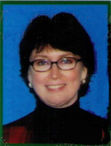
Today’s guest is my good friend Lisa Simonds. Lisa writes under the name of L.K. Simonds, and she’s here to give us insight into the craft of writing regional fiction. She certainly has the credentials—her novel Stork Bite won an IPPY Award for Regional Fiction in 2021.
Click the image below to go to the Amazon book page.
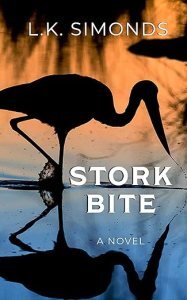
The name of each person who enters a comment on today’s blog will be put into the drawing for a copy of Stork Bite. So join the conversation and earn a chance to win. I’ll post the name of the winner after 9 PM Central Time tonight, and Lisa has agreed to provide a copy of the book to the winner. (Ebook, paperback, or audio, whichever the winner would prefer.)
The Craft of Writing Regional Fiction with LK Simonds
Share on X
* * *
Welcome, Lisa, and thank you for being on the Craft of Writing blog!
What is your definition of regional fiction?
Stories in which the setting (location and time) is a major character. I couldn’t resist comparing my definition to Google’s. Google cited some specific characteristics of regional fiction I think are helpful: detailed descriptions of the locale, characters who are shaped by their region, local dialects, and community rituals. I would add the cuisine because I am a foodie who is fortunate to also be Southern.
Why did you decide to write regional fiction?
The characters I wanted to write about lived in a location and time that shaped their lives. The location (Louisiana) was made meaningful to me by my family, beginning with my grandfather, who was born there in 1888. My grandfather was a storyteller, and he fueled my childhood imagination. There were others who told me about their lives. Most importantly, my aunt, who inspired the character of Mae. My aunt showed me the love letters from her high school sweetheart, whom she jilted to marry a racy boy she met in Shreveport. Also my mother’s cousins, my parents, my brother. My mother’s uncle kept a diary during WW1 that inspired some scenes in SB. My niece is a genealogist and is always coming up with interesting documents that flesh out our family’s Louisiana story. One was a newspaper clipping about my great uncle, who tried to break out of the LeCompte jail by climbing up through the hangman’s trapdoor on the roof. He eventually spent time in Angola. A little tidbit of his story—he was convicted of murder rather than a crime of passion because he reloaded his shotgun—made it into SB. All these people and their stories informed the novel. Besides relying on my own family lore, I did a ton of research on everything from cotton farming to Reconstruction.
Your book Stork Bite is set in Louisiana in the early part of the twentieth century. Tell us about your book and why you picked that place and time?
SB explores how the time and place (early 20th century Louisiana) shaped people’s lives in very different ways. First, there’s David Walker, a young black man whose life’s course is dramatically altered by a chance encounter with a Klansman. Then there’s Cargie (rhymes with Margie), a brilliant young black woman who has just graduated college with an accounting degree and can’t find work. There’s Mae, a young white woman who has everything going for her in a time and place that favored people like her. Yet she makes decisions that turn her into an outcast in the society that would have welcomed her with open arms. There are other characters whose lives are shaped by the region. The Tatums, who own a cotton farm; Jax, who woos Mae; and last but not least Thomas, who loves and enables Cargie.
As I mentioned earlier, I picked the setting because I could write about it with a depth of knowledge I don’t possess for any other locale. I don’t feel I know my own region (the Dallas-Fort Worth area) as well as I know the Louisiana of my family’s past.
Did you encounter any problems writing about such a remote place and time?
There’s an advantage to writing about a remote setting, especially if it involves a time or place that no one living has actually experienced. The author has the opportunity to create the universe of the story. If a writer can “keep it real” the reader will suspend disbelief and follow. Here’s an example of what I mean. Some of the characters in SB are black. I don’t think I could write about black characters living in today’s world and “keep it real.” I don’t have the knowledge or experience. But writing about black characters during Jim Crow was different. I did a lot of research besides the many books I had already read, such as, Black Like Me by John Howard Griffin, The Ways of White Folks by Langston Hughes, and Life is So Good by George Dawson. It became easy to imagine how I or anyone would feel in that time and place.
There’s a scene in SB in which David Walker’s family sits him down and explains race relations and how he must behave to avoid trouble with whites. The conversation became necessary because David had been raised in a remote area but was going to make supply trips to Shreveport with his grandfather. I never imagined when I wrote that scene that many black families still have a conversation on that topic with their young sons today. I learned that later from friends of color who read the book. I learned a lot writing this novel.
Was it difficult to capture the essence of the characters in your book?
I would not say any of the characters were difficult, but two of them took me a long time to understand. The first was Mae Compton, who was inspired by my Aunt Mabel, to whom the book is dedicated. It took me some time to permit Mae to come out from my aunt’s shadow and emerge as a personality who was her own woman. The second was David Walker, who made a decision I could not understand. I was so troubled that I went to prayer about David and eventually came across a psychology book that gave me insight into what was going on with him.
Writers approach their characters in different ways. I begin with something a character is doing or has done. My understanding of the character’s motives, etc. deepen through the writing process. That’s where they reveal who they really are, deep down. I really love an interview with William Styron about a character revealing herself to him during the writing process. You have to subscribe to The Paris Review to read the interview, but here’s the excerpt I’m talking about:
STYRON: There’s a scene near the beginning of Sophie’s Choice about Sophie’s childhood in Poland, and she begins to talk about her father. I was trying to establish her personality through the memory she had of Poland and her father. As this monologue unspooled and I wrote it down, I began to feel as if I were listening to an actual voice. She tells how her father—a professor at the Jagiellonian University in Krakow—had become a passionate fighter during the war to save Jews from the depredations of the Nazis. Then the most amazing thing happened: I suddenly said to myself, This woman is lying to me; this fictional character that I’m creating is telling me a lie. This couldn’t be! I knew I had to wait for a long time in the book to reveal it, but I realized that her father was in reality a vicious anti-Semite. This is what I mean about the autonomy of the character: how characters become more real than real. What amazed me was that I discovered this about this young woman even as I was writing—this revelation came out of the blue. But I was totally convinced that she was telling the truth first, and I only realized in my inner self that she was lying. That to me is a testimony of the ability for characters in a novel—at least of the kind I was writing—to take on a life of their own.
Can you give us a brief outline of the process—from concept to completion—that you used to write Stork Bite?
Well, it was a years-long process of imagination and experimentation. I had thought about writing a novel inspired by my Aunt Mabel’s life for a long time. I wanted to explore the decisions she’d made as a young woman, decisions that had run her future off the rails of what everyone expected for her. Over many months, I imagined the character Mae and the major characters. The most prominent ones are Cargie, who counterbalances Mae, along with Thomas, Jax, and David Walker. As the characters formed, I could see how their lives influenced one another.
The structure for all these characters’ stories became unwieldy quickly, mainly because David Walker’s story happened much earlier in time. I experimented with alternating chapters in each character’s POV, but that involved going back and forth between different time periods. Other novels have done this successfully, but it did not seem to work for SB. It was just too choppy and hard to follow. I wanted to give the reader an immersive, cohesive experience. What I came up with was a two-part novel. Part One is David Walker’s story. Part Two picks up in Shreveport with a new cast of characters a few years after Part One ends. This structure makes sense as the story unfolds to its conclusion.
I admit some readers struggle with the two-part format. When Part One ends and the Shreveport story begins, some readers are like, Hey! What happened to David Walker? And who are all these new people? Others seem to just settle in and enjoy the ride. To my thinking, those are the readers who demonstrate a lot of trust that the author will come through and satisfy them in the end. Still others love the feeling they got two novels in one and relish the mystery that is eventually revealed. I personally feel the format gives the novel depth it wouldn’t have had otherwise, much like discovering a long-hidden family secret. Suddenly all the years make sense whereas they were confusing before.
Writers can’t please everyone. I believe you have to be true to your own sensibilities and the story itself. It may not make for a bestselling book, but hopefully it will make for a novel that stands the test of time.
Here’s a link to the Kirkus page by a reviewer who was in the “What happened to David?” category. That review really disappointed me in 2021. I read it again for this interview and focused on all the good things Kirkus said and their recommendation to get the book. I was thrilled! Just shows the perspective that time and a little emotional distance from her work gives a writer. That’s a good thing.
What advice would you give an author who decides to write regional fiction?
First and foremost, know the place you’re writing about. It doesn’t matter how you know it, but you have to be really, really knowledgeable to create an immersive experience for readers. I never lived in Louisiana, but the place was a constant presence throughout my childhood. We went there all the time to visit relatives, who told story after story. My grandfather told stories. My aunts and uncles told stories. My parents told stories. My brother told stories. We ate the food, which is fantastic. All of this romanticized Louisiana in my mind, and I hope I was able to pass that allure along to readers who pick up SB.
I must add that even my familial saturation with all things Louisiana wasn’t enough. I researched this, that, and everything else during the writing of the book. (All novelists know research is much more fun than actually writing!) Speaking of research, I think regional fiction demands the writer use good judgement when weaving research into their story. Most readers don’t want to wade through an info dump in the middle of a scene.
Besides your own books, what other novels would you recommend?
I can’t NOT recommend To Kill a Mockingbird for regional fiction, or any fiction. Besides that phenomenal work, Fair and Tender Ladies by Lee Smith, set in Appalachia. I recommend the audiobook, which is beautifully done. I think the dialect in Ladies might be difficult in print and make the story less enjoyable. The Olive Kitteridge books by Elizabeth Strout are set in Maine. Strout is a wonderfully readable and subtle writer. Dear Committee Members by Julie Schumacher, in which the regional setting is a university. Kay, I think you know something about universities having their own very strong cultures. Hamnet by Maggie O’Farrell is set in Shakespeare’s England. There are so many more, but these are some of my favorites.
May I list a few memoirs, even though they aren’t fiction? Out of Africa by Isak Dinesen (Kenya), A Moveable Feast by Ernest Hemmingway (Paris), West with the Night by Beryl Markham (Africa), The Liars’ Club by Mary Karr (Texas coast). These are powerful works that show how a region shaped a writer.
Are you working on a book now?
I am, although this one is not regional fiction. It’s the story of a young wife and mother who gets caught up in a police investigation into a crime committed by her neighbors. This book will be a quick, feel-good story that targets a wider range of potential readers than my other novels.
Where can we find out more about you and your writing?
I recommend going to Goodreads under L.K. Simonds. That’s the best place to find reviews of my books and questions from readers. My reviews of the books I’ve read are there too.
I’m also on Facebook and Instagram under lisaksimonds
Thank you, Lisa, for being with us today!
The Craft of Writing Regional Fiction with LK Simonds
Share on X
***
Meet Lisa Simonds

L. K. Simonds is a Fort Worth local. She has worked as a waitress, KFC hostess, telephone marketer, assembly-line worker, nanny, hospital lab technician, and air traffic controller. She’s an instrument-rated pilot and an alumna of Christ for the Nations Institute in Dallas.
Her debut novel, All In, was released in August 2019. Her second novel, Stork Bite, released in November 2020.
***

The post THE CRAFT OF WRITING REGIONAL FICTION – OCTOBER 2025 appeared first on Kay DiBianca.