
Like Difference
 On the original list of “100 Ways to Make the World Work,” there are at least four suggestions that embrace either difference or diversity. And at some point you may very well see a Conversation on every one of them. It’s a simple acknowledgement that variety enriches us.
“Of course!” you say. But do people really think so? There are tourists abroad who always seek out McDonald’s. There are people I know who won’t go “downtown” because of their visions of panhandlers, crazy people collecting soda cans, and others who don’t look or act like they do. There’s the food you don’t like because of texture, taste, or just, well, because.
So, if difference and diversity (if one dare use that word), enrich us, how and why can’t we embrace this? But why should we? We still don’t like those foods and are uncomfortable when that person on the corner gets a little loud and moves oddly. Most of our friends look like us, talk like us, and are on the same social level. We watch the same shows on television every week, repeat our usual social patterns, and have preferences on clothing, pets, and sexual partners. In the process we reflect, positively or negatively, values passed down from our parents and the opinions of our friends.
Difference? Where, when, why, and, in today’s world, how?
First of all, I’m guessing that when I said, “variety enriches us,” you agreed or you would have stopped reading. There’s an agreement that variety stretches us in good ways, perhaps helps us at least seem smarter, more productive, or increasingly creative.
So? Where does this variety show up for you? Perhaps you love traveling. Whether a new town down the road or a new country across the ocean, when you travel there are different foods, faces, and festivals. Do you find all this interesting, fun, challenging? Sit with it. How do these differences impact you? Do they change you? Expand how you think or look at your daily life?
For one scientific example, in horticulture, variety has been proven to help plants develop resistance to disease. Developing a single strain of something eliminates responding to disease and unexpected pests or can challenge users of that particular plant. Less artificial manipulation of crops, e.g., “non-GMO,” has produced crops that cause fewer allergic reactions (at least for some of my friends).
That said, where else can you see differences? In people? Maybe your Uncle Frank gets angry easily and you’re more mellow. Perhaps most of the people, or even one or two, at that event or in that store have a different skin color or talk with an unfamiliar accent or are in a different age range. How might that enlarge your understanding and experience of the world? Could there be another way to look at something you assumed?
When was the last time you tried, if you dared, an unfamiliar food or drink? Did you like it? Did it put you off trying something else? (For whatever reason, food is one of the things that brings communities together, which is something to remember when traveling or exploring other cultures.) When did you last retry something you were sure you don’t like, but weren’t allergic to? Any change? One of the best ways to embrace the idea of difference being positive — maybe the only way — is to take a moment to really know yourself and liking what you are. Race. Sexuality. Nationality. Age. And, yes, also the things that seem to be given about you that in theory could change, such as religion, language, food preferences, skill base, interests. Where have you changed things in those categories? While I don’t easily learn other languages, I can be polite in several. From my teen years through now, I went from always using cream and sugar in my coffee to adding just milk to drinking it black, with a several year preference somewhere in there for drinking tea in the morning. At least one unexpected interest change, that came through a brief relationship, is that I am now a Formula1 fan and can, in a pinch, watch or listen to conversations about auto racing.
Superficial? Maybe. But change can be subtle. In fact. it’s seldom abrupt.
How does this serve you or change the world? When you know who you are, diversity and difference don’t threaten you. And most of the world isn’t like you. In fact, none of it is because there is only one you. Seeing difference becomes interesting and exciting rather than threatening and creates peace, calm, and lovely options when we step outside our own doors. It might make it possible to listen to someone you don’t agree with but would love to understand. It might be fun! It certainly changes the world.
___________________________
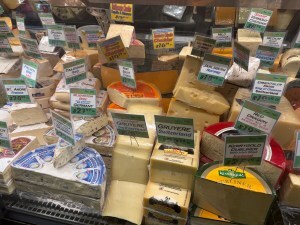
Photo by Spirit Moxie:
Part of the cheese display at Gibb’s Cheese,
Findlay Market, Cincinnati, Ohio


