Co-authoring for stories to share, and Kickstarting
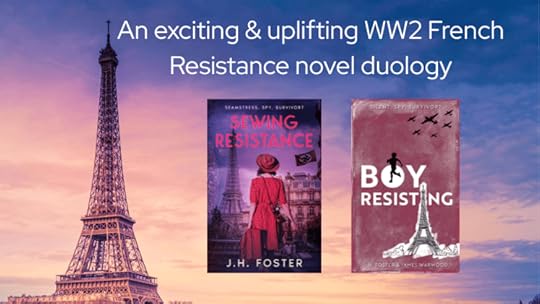
Recently, I wrote in a new genre, for me, AND co-authored in order to write the second in a series of books exploring the French Resistance in Occupied Paris. I had already written a historical suspense for adults, but, as I prepared to publish it, I couldn’t shift the idea that the story also needed to show a child’s perspective, and be read by children of that age. I stopped the publication process and gave my idea some more thought.
My intention grew into an idea – create a pair of stories which an adult could share and discuss with a child, but each could read a story written in a style which would appeal to them. A way to share a love of reading, together, but also offer parents a mechanism to talk with their children about WW2 – a key part of the UK curriculum in both primary and secondary education. The stories would both detail the experiences of wartime, but also how to stand up for what is right, and to resist oppression, in an exciting tale of espionage and adventure. I felt strongly that the overriding message needed to be one of hope.
The challengesWriting a single compelling narrative is a feat in itself, but crafting two interconnected books that tell the same story from distinct points of view presented me with a unique set of challenges and opportunities, which I felt I couldn’t do justice to entirely on my own. “Sewing Resistance” delves into the perspective of Hannah, while “Boy, Resisting” provides the narrative through the eyes of her young son, Freddie, and it was his story which needed another pair of expert eyes on it.
So after my first draft of ‘Freddie’s story’, I approached a middle-grade author-illustrator to help and co-author with me. Thus, J.H. Foster (a new pen name for me to write historical fiction with), and my friend and co-author, James Warwood, tackled “Boy, Resisting” together. Luckily, James was 100% on board with the idea to offer readers a rich, multi-layered experience of wartime Paris. With over 30 books published between us, together, we felt ready for the challenge… and what a journey it has been.
One of the primary challenges was managing information asymmetry between the two protagonists. Hannah, as an adult Resistance operative working a day job under the noses of Nazis, is privy to classified information, adult conversations, and the harsh realities of their Jewish identity and illegal immigration status. Her understanding of events, such as assassination plots or the specifics of intelligence gathering, is detailed and strategic. Conversely, Freddie (aged 8-11 during the period) experiences the war through a child’s lens, often interpreting fragmented adult remarks or simply playing dumb to avoid suspicion. His narrative frequently highlights what he doesn’t understand, or how he misinterprets situations based on limited information. This contrast meant we had to carefully pace revelations, ensuring key plot points unfolded naturally within each character’s knowledge sphere without undermining the other’s narrative.
Expressing emotion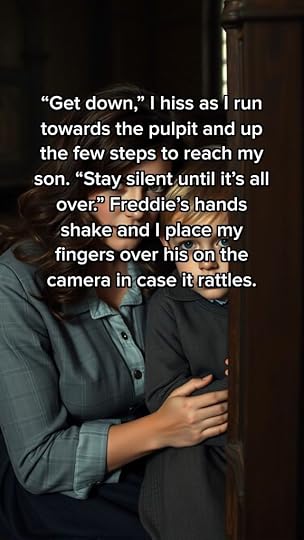
Furthermore, the differing emotional and psychological responses to shared traumatic events demanded sensitive handling. For example, a convent attack was experienced by Hannah with frantic urgency to protect Freddie and a clear understanding of the murders. Freddie, however, recalled it through the trauma of seeing dead bodies and the specific fear of the Nazi soldier’s voice, which haunted him and led to his self-imposed silence.
The practicalities of narration also differed significantly. Hannah’s story is told through her internal thoughts and interactions, including her secret work as a chambermaid gathering intelligence at the Ritz. Freddie’s account, particularly given his silence and reliance on drawing, necessitates conveying much through observation, internal monologue, and his “spy club” notes and maps. ‘Boy, Resisting’ is written in a diary style, which was a choice we made early on in the process to appeal to younger readers who like ‘Diary of a Wimpy Kid’ type of narrative. James also provided light-hearted illustrations to emphasise Freddie’s abilities and break up the narrative with humour.

Ultimately, crafting such a duology, and indeed co-authoring, was akin to viewing a complex mosaic through two different, yet complementary, peepholes. Each perspective reveals unique details and emotional textures, but only by engaging with both books does the reader gain the full, intricate picture of resistance and survival in Occupied Paris. Each of us authors tried to bring with us our experiences of writing for the historical fiction/middle grade market to ensure we hit the right notes. And, importantly, each story had to standalone in its own right.
Working together – how we handled the practicalitiesAuthoring is usually a solitary job – you sit at a computer, type words and generally the characters live in your head until you bring them to life on paper. Working WITH someone required sharing that vision of the story, talking about the characters. This wasn’t my first experience of co-authoring, but I hoped to bring my knowledge of what works well (for me and the other author) to the table when I approached James. I had already drafted Boy, Resisting but, when he got his hands on the manuscript, he immediately spotted some flaws in my thinking for middle grader readers. Luckily, he then took the time to rework bits, cut through the stuff which kids might find dull and turn it into something far more appealing. We decided on style (writing and illustration), which illustrations and formatting might work best, and got to work.
We started talking on GoogleMeet on a weekly basis, which then, in the build up to the Kickstarter, became a fixed Monday morning meeting to plan and plot the next steps. For months, we swapped documents, edited and suggested, to develop all the materials we would need.
Practical tips which ensured our co-authoring worked smoothly:
Before we got too far into the project, James and I signed a partnership agreement which specified how we would publish, who took responsibility for what and how royalities would be shared. Getting these decisions out of the way and decided made it a lot easier to move forward, despite our very British reticence to talk about money. Publishing is a business, at the end of the day.Left our egos at the door. It’s hard to take criticism, but we achnowledged that we each had our own specialisations and that an expert is only the person who knows one more thing than the others in the room. Asked for help when needed. Where we didn’t know how to do something, we sought others’ help. Anthea Sharpe’s book and the Kickstarter for Authors group on Facebook was a godsend. Other author friends and family chipped in their support as well, realizing the size of the mountain we faced climbing. They read advanced copies, left reviews, shared about the project, and we couldn’t have done it without them.Created a shared drive where we stored all information, easily accessible to us both. Style guides. I created a style guide with fonts and logos and generic images on Canva. I took out a CanvaPro subscription which paid for itself with the resize and switch function – invaluable for creating the Kickstarter project.Lots of lists and spreadsheets – including who had agreed to do what and by when, expenses, etc. Trying to be SMART about the project. This included understanding who had access to which programs and ways to publish. Publication: James uses BookFunnel and I use Story Origin as ways to deliver books, but we decided both books would be ‘published’ by my company, So Simple Published Media, as there can be only one publisher. Both books were listed early on with KDP (Amazon) and Ingram Spark (for wider distribution) to ensure we could collect early reviews which we would later use in the Kickstarter.Set ourselves reasonable, doable timescales for completion. We started working together early in 2025, and by the time Boy, Resisting was completed, we knew we’d still need a long run in to sort out the Kickstarter, so we decided to launch the project in September. Both of us were working around children and holidays! Even then, it felt like the 3 month lead time from listing the project, to gather followers, to writing it was a push.Launching a conceptDespite much research, we couldn’t find any other examples of a pair of books for different audiences. This meant we were launching not just books, but a reading concept. Branding the series became even more important. Because the idea of ‘sharing stories’ in this way is unique, we decided to launch them on Kickstarter first (September 2025), then they would go live in all good booksellers in the winter of 2025.
Why Kickstarter as a crowdfunding platform? Simply because there was already an established precedent on there for publishing. There were other platforms we could have used, but Kickstarter seemed to be the one which focused on raising money for creative projects over personal fund-me-to-do-XYZ. Launching on Kickstarter also enabled us to offer bonus goodies to reward backers for taking a chance on us!
 Branding
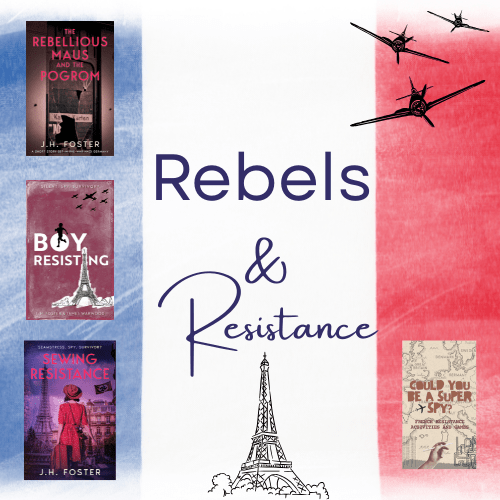
I had already, earlier on in the writing process, realised I’d need to ‘brand’ the series. It needed to be simple, accessible to both audiences and convey the essence of what the books were about. Developing the Kickstarter really honed in on what the Rebels and Resistance Series was trying to do. I think, if I hadn’t had to refine exactly what the offering was (including all the extra books/printables/teaching resources) for the Kickstarter, it possibly wouldn’t have been as well constructed as a package.
When I look at it now, I hadn’t fully realised before, just HOW much I’d written to develop the idea of the Rebels and Resistance series. A pair of books had turned into 3 books, a workbook/printable for children, and about 20 documents to support the project (teaching resources, bonus chapters etc). I think in the end we had close to 200 images (different sizes for different parts of the project listing) because Kickstarter is so visual, and that’s on top of the 50-odd illustrations James did for Boy, Resisting.
Writing this as the Kickstarter has successfully funded, I now find it so much easier to talk to readers and teachers about the concept. Being able to share these additional reference materials only adds to my enthusiasm (and theirs) to read the books and use them as intended. Even before the official launch of the duology on online marketplaces like Amazon, at book events I’ve found the concept has been well received and people are excited by it.
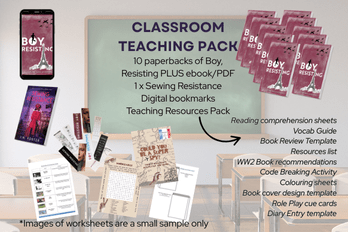
The teaching bundle was even tested in classrooms to be sure it was age appropriate and the children liked the activities!
Final ThoughtsWould I do it again? Co-authoring, absolutely. I found sharing the journey so much more enjoyable with someone else to lean on for motivation when things got tricky.
Kickstarter? Tricky question. Yes, we funded. I absolutely will take that win. But, when you look at the breakdown of who funded us, it is largely comprised of people who we directly knew or approached for support. The concept had the potential to ‘go big’ but somehow never took off. We’re still not sure why – the experts we spoke to who reviewed the project before we went live loved it (including the lovely head of publishing at Kickstarter), but we didn’t get the organic push from the platform which we hoped for.
It was a lot of work. Months and months of it. Would I repeat the exercise? Maybe. I’m certainly more confident about the platform than I was.
Check out the books…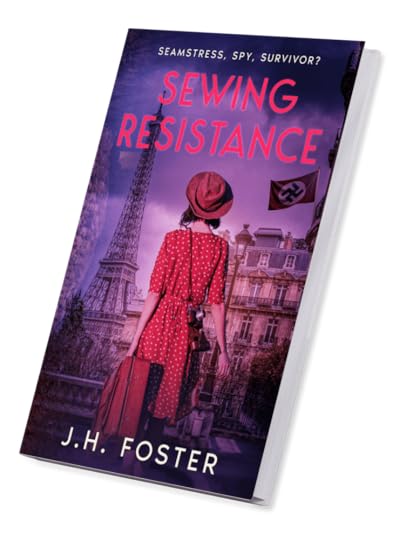
A gripping and emotional tale of courage, love, and resistance.
After witnessing the brutal nature of the Nazi regime, Hannah, a quiet Jewish girl with a rebellious streak, escapes Germany with her traumatised young son. Leaving behind her dreams, she seeks refuge in Paris with a childhood friend, Kat, in the hopes that this tie to her past will provide a desperately needed sanctuary for them both. Though reluctant because of her own precarious situation, Kat agrees to help.
But when the war reaches Paris, Hannah’s heritage once again puts them all at risk. Lacking the right papers, fleeing is out of the question. When Kat’s Nazi cousin demands to move in, the family turn to a dangerous life of disguise and subterfuge just to stay alive.
In Occupied Paris, they are the invisible, unseen and unheard, until an opportunity to resist appears. Will Hannah have the courage to find her voice and rebel, even if it means risking her heart, her family and her dreams? And how far will Kat go to take back what’s rightfully hers?
For fans of “The Nightingale” and “All the Light We Cannot See,” this historical suspense novel takes readers on a journey through the Occupation, re-imagining well-known figures such as Coco Chanel and her Nazi lover, the staff of the Ritz Hotel, as well as the brave individuals who worked for the Resistance and the SOE. Inspired by true stories and the powerful film documenting Paris’s liberation, “Sewing Resistance” is a gripping story of courage, sacrifice, and the resilience of the human spirit.
Buy now at www.books2read.com/sewing resistance
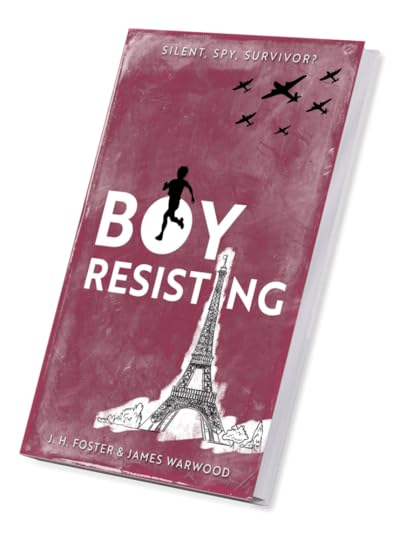
Silence was supposed to keep me — and my secrets — safe.
So I accidentally became a spy…
I was just supposed to stay hidden. Keep my head down. Don’t get noticed by the Nazis. Simple, right? Yeah… not so much.
Getting to Paris to stay safe was hard enough — then the Nazis came, and suddenly it wasn’t safe there either. Turns out, when you’re good at sneaking around and listening when you shouldn’t, people start asking you to do things. Dangerous things. Like delivering secret messages. Hiding spy equipment that can’t be found. Taking photos that could get you arrested — or worse. Oh, and I still have to go to school…
Now I’m part of the French Resistance. I know the hiding places. I know the codes. I know which soldiers to avoid. One wrong move means capture. Or worse. And every time I sneak through the city — even underground through the spooky Catacombs — I wonder: will this be the mission I don’t come back from?
One mistake could mean none of us — me, Mama, or Kat — survive.
If you like danger, secret missions, close calls, and real history — this is my story. Just don’t tell anyone you read it.
Buy now at www.books2read.com/boyresisting
You can find out more about the series, and check out the Kickstarter project here: https://www.kickstarter.com/projects/janfoster/exciting-uplifting-ww2-french-resistance-duology