Refold Approach to Language Learning: Spanish 2000-Hour Update
 Photo by David Vives on Unsplash
This is my eighteenth update for my Spanish learning journey with the Refold approach. Articles, as at Medium, will always be free, but there is an option to be a paid subscriber.
For my first update, see here.
For my second update, see here.
For my third update, see here.
For my fourth update, see here.
For my fifth update, see here.
For my sixth update, see here.
For my seventh update, see here.
For my eighth update, see here.
For my ninth update, see here.
For my tenth update, see here.
For my eleventh update, see here
For my twelfth update, see here
For my thirteenth update, see here
For my fourteenth update, see here
For my fifteenth update, see here
For my sixteenth update, see here
For my seventeenth update, see here
For more information about the Refold approach, see here. For a basic Spanish Anki vocabulary deck, see here.
General ProgressReached 2000 hours of immersion. Passed the B2 test. Continued reading a lot: ranked up another 500k words over the last few months. Started doing weekly deliberate writing practice, and moved my dating app location to Santiago, Chile.
I got my B2 results back in late August, and absolutely crushed the test, especially my speaking section, which I was surprised by. More of on each section in the relevant part.
Since the last update I’ve largely shifted to consuming Italian content (expect an update as soon as I’ve finished the Harry Potter series, around 200 hours). Spanish has thus been limited to my weekly lessons, about ~100 page of weekly reading, and conversations with natives on HelloTalk and Bumble (haha).
My lowest scores on the B2 test were in the writing and listening sections. In order to move those forward I need to watch more TV/listen to podcasts, which I have a lot of resistance to, and practice writing, which I also have a lot of resistance to. To try and combat these things, I’ve attempted to make both activities more social: using Bumble and HelloTalk to exchange voice memos with native speakers in other Spanish speaking countries.
I’m also going to Madrid in December for a week! If you’d like to meet up, shoot me a message. Trying to avoid using English at all during my trip, which I hope should catapult my fluency to a much higher level.
I haven’t done any of the grammar book since the last update. I hope to start up again soon as I plan to take the C1 test in May of next year again.
I’m still thinking about trying to implement a digital detox more than ever, as my tech use habits are completely out of control, and some kind of rules would really help to rein it in. Right now I’m working on my evenings: trying to turn off all electronics by 8pm if I’m not going out. Then I’ll be working on my mornings: no electronics before 8am except to arrange runs. After that I’ll deal with the challenging task of reducing my tech dependency during the day.
Overall, Spanish is going extremely well. Although I haven’t put in many consistent immersion hours over the last few months, that is more because I’m feeling content with my level and wanting to focus on Italian.
Open questions: What place do digital technologies have in your life? How did you go about transitioning a language from learning to maintenance mode?
DELE Exam
I took the test in May ago in Washington D.C. through the Isabella and Ferdinand Language Academy. The written portion of the test was at an elementary school in western D.C. (which was a really fun e-bike to get to from where I was staying near Penn station: huge win for bike infrastructure in the city), and the oral portion was at an Armenian church a few miles away. The test started early on Saturday morning, and took about half the day. In the written portion there were three sections: reading, listening, and writing, each taking about 80 minutes. To pass, I needed to get a 60% on the reading and writing combined, and a 60% on the listening and oral combined.
My scores in the different categories did not match my initial impressions that I wrote about last time. Writing was by far my lowest score, because I’ve hardly practiced writing at all, let alone writing without a spell check. Although I felt I did well, I probably made numerous spelling grammatical errors that I wouldn’t have even recognized. Something to work on next time. Reading and listening went about how I expected, but speaking went phenomenally! My nearly 200 hours of lessons are paying off.
Next up for me on the testing front is probably a C1 test in May.
Reading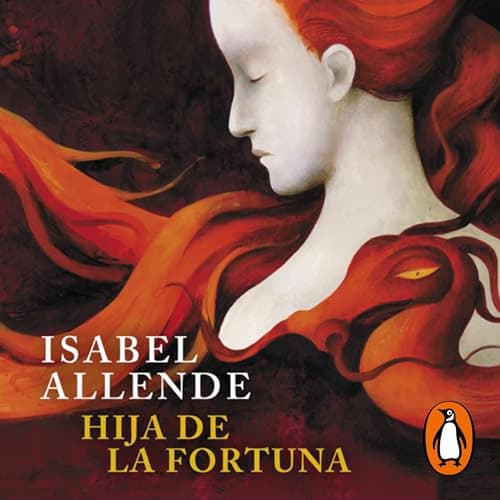 What I’m reading right now
I haven’t been consuming a ton of Spanish media in the past few months, but I did still manage to read four books. I’m no longer really emphasizing Spanish books in my daily life, but I always have 1-2 at various stages of completion that I try and pick up a few times a week.
Most of my reading time during this update was made up of the chunky (and quite mid) El camino de los reyes. Despite its length, I certainly considered this an easy book. Joining it in the easy category was Persona normal by Benito Taibo. We read this in Refold book club and unfortunately all of us found it to be quite bad (smarmy and fake were my big two criticisms.
I also read a collection of short stories by Guadalupe Nettle (El matrimonio de los peces rojos) which I highly recommend. Each story draws a parallels between how we treat specific animals and how that is often a reflection of other problems in our lives. The final book in this update was a book on exercise training and physiology, La naturaleza del entrenamiento by Manuel Arjuna. Although a little bit overwritten, the message of this book was something at a lot of age-group athletes need to hear: training is heavily overcomplicated and it’s really not that deep, you just gotta put in the time bro. Both of these books I’d place in the medium category.
I still have a lot of work to do with reading, I nopped out of another refold book club that was going to tackle La ciudad y los perros by Vargas Llosa because the book was too hard. However, I’m feeling like these gains will come naturally with time as I stack up the hours.
I’ve started collecting all the books I’ve read that were originally written in Spanish and sorting them into these three categories on another page of my blog. This desperately needs an update
Total immersion time: 1094 hours, approximately 10 million words (thanks Sanderson), 75 books originally written in Spanish, 109 books in Spanish total.
Monthly word totals: June: 158k, July: 0k, August: 75k, September: 325k, October: 95k (so far).
Future plans: Just keep chugging
Open Questions: Recommendations for nonfiction originally in Spanish?
Sentence MiningI’m up to 2981 cards now with a 84.61% lifetime mature retention rate, but a higher 95.6% (!!!) rate in the past month. This is a crazy improvement from the last update, and is almost certainly due to the changes implemented in the FSRS algorithm that are supposed to guarantee a retention rate over 90%.
I’ve also started using a plug-in for Anki that allows me to study ahead for the next few days reviews. This is a nice way for me to be able to do more Anki when I’m motivated, and take some of the pressure off days that I’m not feeling particularly motivated.
I’d still like to get to 10k total Spanish cards, but this will probably take another ten years. In any case, I like doing Anki, so I don’t see slowly chipping away at this goal being too much of a problem. The low number of new cards represent the relatively small amount of sentence mining I have been doing recently.
Open Questions: None
WritingWriting was my lowest score on the DELE, so I am doing some deliberate weekly practice to try and improve. These consists of a series of essay prompts given to me by my tutor Mailen that center around responding to the “Temas de nuestro tiempo”. The first one I’ve done so far was about artificial intelligence in higher education. I’m continuing to do book reviews as well.
In addition to these longer writing prompts I’ve also been communicating with native speakers via Bumble (lol). American dating expectations are so insane that I’ve changed my location to Santiago, Chile in the hopes of meeting a long-term language partner. So far it has been a success! I hope to visit Chile after I graduate from Hopkins and meet some of these people in person!
Output time: 12 hr tracked, including DELE, with 9k words written
Open Questions: Anyone want to be pen pals?
ListeningI didn’t to much listening between this update and last: only 22 hours total. Most of this listening was relistening to The Magicians in Spanish, but I also did some reality TV and movie watching. I just canceled my Netflix subscription again (I really don’t use the service) and Rvte.es is requiring a Spanish postal address, so I don’t know how much TV and movie watching I’m going to be doing in the future. Listening is an important skill that I need to work on, but I think audiobooks and podcasts might be the way to go for me. I just can’t seem to make myself watch TV, as much as it is good for my Spanish.
Total Immersion time: 717 hours, 2 million words from audiobooks.
Monthly Hours: July:1.4 hours, August:2 hours, September:18.6 hours
Future Plans: Podcasts
Open Questions: Film recommendations? RomComs?
SpeakingI’m continuing to take regular lessons on iTalki. After reading, this was my biggest source of immersion, with around 23 hours of lessons since the last update. I have at least one lesson every single week, but I aim for two more often than not.
Each of my two main teachers have taken on slightly different roles. With Rafa, I end up having pretty deep conversations about philosophy and current events, which really helps to move vocabulary I have from passive immersion into the active part of my brain. Rafa and I will also spend 5-10 minutes on grammar corrections at the end of class, which has been paying gradual dividends. Rafa is the teacher who I have the most lessons with (biweekly), and I’ve come to look forward to them as one of the highlights of my week.
When I don’t have a lesson with Rafa, I have one with Mailén. We are alternating between reading literature (short stories) and going over my writing practice in preparation for the C1 exam. As I get closer to the exam date, I will be shifting towards more exam prep.
I’d like to try out some other tutors on iTalki soon, but I think this will have to wait until work calms down a little.
I also found a Spanish happy hour group that meets on Thursdays at Ministry of Brewing in Baltimore. This has been a consistent source of immersion for me and is about 1/3 native speakers. With non-natives in this group I seem to find myself in much more of a teaching/corrective role, which makes me feel good about my ability, but also frustrated about the lack of work other people seem to be willing to put in to improve1. I’m hoping this group will connect me to other local Spanish speakers and help me make more Spanish-speaking friends. I unfortunately have a project management class this semester starting this Thursday, so I won’t be able to attend Spanish Happy Hour until 2026!
Output time: 196 hours
Explicit GrammarDoing explicit grammar practice has been somewhat of a revelation for me about the potential flaws in the Refold methodology. To make a long story short, explicit grammar has been really really helpful for me both in outputting and in more explicitly understanding some of the remaining sticking points I have with reading.
I’ve mainly been using some exercise books, which were highly recommended by a trusted Goodreads user (Roy Lotz). These books cover everything, from gender to common prepositions to the subjunctive, and I’ve been jumping around the book trying to spread out my learning on different topics. I’ve done about half of the book so far, which probably represents about 20 hours of explicit study. After I’m done, I’m planning on going through the book and Ankifying any issues I might have, before starting on the C2 book.
Future PlansI’ve hit 2k hours of Spanish finally! In some ways it feels like the explicit part of my journey has ended: of course there are still things to learn and study, but Spanish feels like less something I deliberately do, and more of just part of my life. I still have relatively concrete goals related to the language: pass the C1 and C2 tests, and read some of the great classics of the Castilian language (Juan Rolfo, Almudena Grandes, Cervantes, etc.) but these seem to me things that will come with time, rather than goals I have to strive for. On to Italian.
Other LanguagesUnfortunately the Italian class at Hopkins was during my lab meeting every Tuesday, so I couldn’t take it this semester. However, in the spirit of one of my other recent blog posts, Italian has reared its head anyway. I’m currently doing about 60 minutes a day of Italian, most of it reading and listening to audiobooks with a little bit of grammar. Progress has been really rapid, and I’m hoping to start outputting around 500 hours of immersion. Look out for an update on this soon.
HealthStill having some sleep issues, but I think they mainly stem from poor sleep hygiene (i.e. phone in bed, no wind-down). I’m working on becoming a more mellow person, and it seems to be paying dividends, albeit slowly!
Overall ImpressionsReally happy with my test results and with my progress. Hoping to maintain and use Spanish a tool for connection as I build up my Italian in the years ahead!
Open Questions: When were you “done” with a language? How do you go about maintaining a language when you started an L3?
Full immersion link data link.
I blog about language learning, biology, the science and art of learning, and many other things. If you feel inclined, please subscribe or consider buying me a coffee.
Josh
1You do not get good at Spanish by outputting once a week. The amount of people at this group who’ve never read a book in Spanish (or even tried) continues to amaze me. That being said, everyone has different reasons for doing things and “getting good” may not actually be that high on other people’s list.