Remembering the Future — Part I: Introduction
I live in a time of fear and the fear is not of war or weather or death or poverty or terror. The fear is of life itself. The fear is of tomorrow, a time when things do not get better but become worse. This is the belief of my time. I do not share it.
—Charles Bowden
A few weeks ago, I had the honor of giving the closing presentation at the Moab Photography Symposium. In my talk, titled Remembering the Future, I shared some thoughts about the future of photography: what it might be and how we may prepare for it. I touched on several topics but had to limit my discussion of each to fit within the allotted time and the format of a public presentation. Since then, the thought kept nagging at me: each of these topics warrants further, more detailed discussion. I decided to use the theme and structure of my talk as a foundation for a series of essays I will share here in the coming weeks.
Before proceeding, please consider the following:
Please join me on Saturday December 6th for a talk titled, “Be Extraordinary: Individuality of Expression in Photography,” hosted by the Royal Photographic Society’s Digital Imaging Group. The talk will be recorded in case you can’t join the live session (registration is required to access the recording).If you have read any of my books, please take a moment to post a short review on Amazon. It will cost you nothing and help improve my books’ search ranking.If you find this blog and my photographic work of value, please consider supporting me on Patreon for as little as $2/month, or make a donation using another method of your choice.If you purchase anything from Amazon using the links provided below, I will earn a minuscule commission.~~~
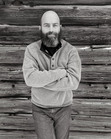
The late Charles (Chuck) Bowden was one of my favorite writers. Please don’t take this as an unqualified recommendation to read his books. In fact, let me qualify it: if you are not easily triggered by strong language or by raw, honest, no-holds-barred narratives holding no punches and paying no heed to political correctness or age appropriateness, then yes, I absolutely recommend reading anything by Bowden you can find. His writing is some of the most beautiful I have ever encountered, and often painfully so. Critic David Kipen wrote this about Bowden: “At the height of rapturous indignation, with majestic lamentations stretching out almost to the snapping point, he sounds like Walt Whitman in a very bad mood.”
What does Walt Whitman in a very bad mood sound like? Here’s an example from Bowden’s book, Desierto: Memories of the Future, published in 1991 and dedicated to Bowden’s good friend, the writer Edward Abbey, who passed away a couple of years before:
Because of the time in which I live, and the forces loose upon the land now, I may be fated to spending my entire life remembering the future. I hope not, but it could be. I will witness cities built where there is no long-term basis for them, watch families and friends proliferate in a place where there will never be enough food for them, and watch the earth underneath all this activity grow weary, sag with fatigue, and slip into a coma that smacks of death.
You may wonder why I chose to open with such a seemingly pessimistic note. There are two reasons. The first: I like the idea of remembering the future. I think it’s a good way to think about events in the world today, including what’s happening in the world of photography. The second reason is that Bowden is not wrong: we are facing some formidable and consequential challenges, as photographers, as human beings, and as members of the community of life on Planet Earth. Ignoring or denying them will not make them go away. I should mention also that I don’t consider Bowden a pessimist but a realist who embraced life passionately, with all its challenges and horrors, very much in the sense of Nietzsche’s admonition: amor fati. But that’s for another discussion.
Despite what may seem a negative opening, please trust that my intention here is not to discourage or depress you. In fact, the opposite is true. My aim is this: when you are done reading this series of essays, I hope you will feel inspired and driven to live and to create with a greater sense of passion, urgency, and inspiration. Just because we are facing daunting challenges doesn’t mean that we should become cynical and resigned, or that we can’t face these challenges with courage, find deep and life-affirming meaning and beauty in them, and do so creatively and defiantly. I realized that there are two ways I can go about pursuing this goal: an easy way and a hard way. Those who know me, I’m sure, will have no trouble guessing which one I’ll go with.
The easy way would be to ply you with comforting platitudes and unfounded affirmations about such things as the human spirit, the beauty of nature, or how great you would feel if only you spent your money on something: a piece of gear, expensive travel, or some other distraction, sidestepping anything that may be contentious, worrisome, complex, or ethically ambiguous.
The hard way, in contrast, would be to face things as they are: to acknowledge that we live finite lives in an imperfect world—a world rife with joys and sorrows, beauty and despair, bliss and anxiety, inspiration and heartache—a world that limits us in numerous ways beyond our capacity to transcend, but also offers us opportunities, perhaps difficult and risky ones, to enrich and elevate our lives: to (as I refer to it in my book by this title) be extraordinary.
~~~
Remembering the future may seem like an oxymoron. We can’t remember what hasn’t yet happened (thank you very much, second law of thermodynamics). But there are things we can remember about the future.
Specifically, we can remember these things:
We can remember that the future will come, so we may as well prepare and not be in denial about it.We can remember that the future is shaped by the present, which means that, as Walt Whitman told us, we “may contribute a verse,” which is a poetic way of saying we may help shape the future.We can remember that we can predict at least some of what might happen in the future.We can remember that the future is not here yet, but we are and we have to live our lives now, in the present.We can remember that we have a choice in how we feel about the future, no matter how good or bad we might believe the future to be—we may choose to rise to the future as artists and creators, with dignity, passion, and creative energy.In the upcoming essays in this series, I will elaborate on each of these points, discussing topics ranging from obsolete traditions to artificial intelligence.