From Many Pluribus, episodes 1-3, reviewed.
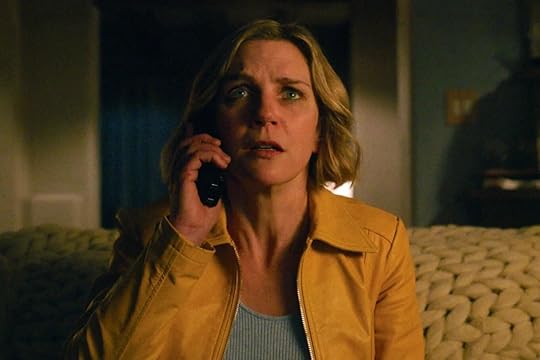 Image courtesy Apple TV+
Apple TV seems to be providing some of the more highly original, thought provoking, and thoroughly creepy science fiction television out there today. The first season of Severance blew my mind. And, while Murderbot wasn't deeply creepy, the adaptation still knocked it out of the park, in my opinion. And then we come to Pluribus, the latest series from Breaking Bad and Better Caul Saul creator Vince Gilligan, which turns a whole lot of dystopian apocalyptic tropes on their head, and makes us think deeply about what it means to be an individual, and human.
Spoilers obviously follow, so if you don't want to be spoiled, refrain from reading after the break. And, honestly, this show hits better, the less you know of it, going into the first episode. So, if you haven't seen it, go see it, then come back to this review.
=+=+=
All right, you were warned.
The story starts under a night sky, as a clock counts down from just under 440 days. Post-doctoral students and interns at a SETI-like communications array detect a signal from space. While not as exuberant a first contact scene as in Contact, the young scientists believably can barely contain their increasing glee as the authenticity of the signal from 600 light years away is confirmed, the intelligence behind it undoubtable. And the signal carries an unusual pattern. It seems to be split into four parts, each emitting in a different pattern. What is this quatenary pattern? Some encryption code? Or something a lot more basic?
Upon realizing that the signal is actually a DNA sequence, the governments of the world, showing unfortunately natural human curiosity, start producing this DNA to see what it can do. At first, it appears to do bupkis to the assortment of animals they try it on. But when an apparently-dead subject rat two workers try to dispose of (thankfully while wearing biohazard gear) wakes up and bites one, the plague has found a host intelligent enough to get started on its plan.
While this has a bit of the feel of a zombie plague, these "zombies" move with a choreography that is truly creepy to behold. Moving as though they know what every single one of them is thinking, they set about preparing to infect all of humanity. And the countdown clock counts down. Still another few weeks to go.
The first episode of Pluribus is a slow burn. We break off from the building invasion/plague to follow cynical best-selling romance author Carol Sturka as she finishes off her book tour alongside her agent/lover Helen. Why should we care about this woman? As a non-best-selling author, I found myself somewhat unsympathetic to her complaints about the fame she's received from art she sees as, at best, formulaic. But, stay tuned; actress Rhea Seehorn puts on a masterful performance, especially when the poop hits the fan and the whole human race, everywhere, including her partner Helen, goes into seizure.
Pluribus is billed as a dark comedy and you see it as Carol, panicked almost out of her mind, still improvises wonderfully to get her partner onto a makeshift stretcher, into the back of a borrowed pick-up truck (after shoving the seizing driver into the passenger seat) and driving to the nearest hospital, where she finds everybody there -- patients, doctors, nurses, everyone -- affected. She still does the best she can, trying to tend to Helen, and giving her CPR after the woman comes out of the seizure, smiles beatifically at her, and dies.
At this time, everybody else wakes up, and before you can say 'Zombie Apocalypse', writer Vince Gilligan flips the script. The "Zombies" don't try to eat Carol. A doctor tries to kiss her, but backs off when Carol adamantly rejects him. They seem far more interested in taking Helen's body away and cleaning up the damage around them than they are in Carol. When Carol yells at them to back off and demands to know what they want, the whole crowd replies, in unison, "We just wanna help, Carol."
That is an utterly chilling moment. That is the last thing you'd expect the Zombies to say, and it reveals so much. These people are now operating as a single entity. They have taken over completely. And, most of all, they know Carol's name.
Weirder still, the people obey Carol's orders. When a creepy neighbour child is told to go away and leave her alone after pointing out to Carol at her doorstep where the spare key is, every single neighbour on Carol's street piles into their cars and and goes away, leaving Carol alone.
Carol, having rushed home with Helen, driving past mobs of infected people fighting to put the fires out, rather than to stop them, gets to her TV set and tries to get news from the rest of the world. To her delight, C-SPAN is still running, but tuning in, she sees an unfamiliar man in a suit standing behind the presidential podium, smiling at the camera, while the ticker crawl reads, "No pressure. We know you've got questions. Carol, when you're ready you can reach us at this number."
The highest surviving member of the former American chain of command, who happened to have a suit on, fills Carol in on the details. Humanity is now a hive mind. It's all just the human race, they assure her. They know her because they have the memories of the people who know Carol, including Helen, who they swear was happy to join the collective, even as she died. They assure Carol that her mind is her own. They just want her to be happy, as they are happy. They promise to try and not do anything that would hurt her or frighten her. But as she is now one of only twelve humans who has proven immune to the hive mind virus, they're doing what they can to remove that obstacle and welcome Carol into their living embrace.
"I thought you said my mind was my own," Carol replies, showing great feistiness even while surely being near, if not past, her breaking point.
Be sure to get close for the C-SPAN conversation. The words on the lower-third of Carol's screen are truly a delight to behold.
Pluribus, at least the first three episodes I've seen, is wonderfully acted, fantastically directed, and amazingly written. Vince Gilligan and his partners have put together a scenario that viewers can engage with on many levels. You can follow along with and sympathize with Carol's visceral anger over what has happened, and her drive to bring things back to the way things were, as unrealistic though that may be. And in terms of what she's facing, Vince has crafted an infinitely creepy and alien adversary that's disturbingly easy to like, both for its humanity, and inhumanity. The concept of a human hive-mind raises tons of questions that gets your brain rolling, in much the way the concept at the heart of Severence does. How does this work? What is humanity's new purpose? What the heck is going to happen next?
One of my elevator pitch lines for The Curator of Forgotten Things is "what if the robots took over, but they were nice about it." I feel the same vibe here. This is the coziest of cozy apocalypses, and yet it's more frightening than your typical alien or monster thrash. The antagonist that just wants to help is rare, and probably difficult to write well, but when done well, as done here, it's as scary as it is strangely compelling. Helping in this regard is actress Karolina Wydra as Zosia, who acts as a spokesperson for the hive mind, and is developing an excellent chemistry with Rhea Seehorn's Carol.
Pluribus is running for nine episodes this season, and reports on the original deal suggest that two seasons have been commissioned. It's still early to fully assess this series, but I'm on board. And I highly recommend that everybody else get aboard.
We need to see this. Together. All in one.