
How Cameron Balser Rewires Pain, Intuition, and Purpose
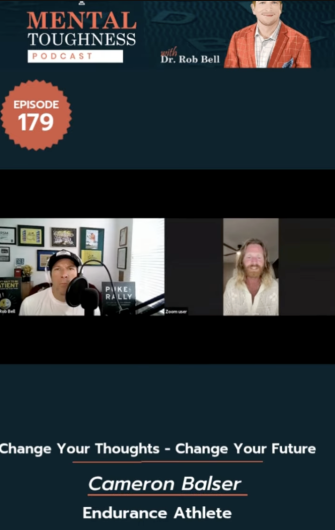
Cameron Balser turned a breakdown into a border-to-border breakthrough.
Known for running the entire perimeter of the United States—solo, self-supported, and hauling a cart for months—Cameron Balser offers a crisp lesson: change your thoughts and change your future. This is not a backpacking brochure. It is a call to arms for anyone tired of living inside other people’s expectations and ready to test their own limits with humor, heart, and a stubborn refusal to quit.
Table of Contents Nature as Home Base
 Community, Surprise, and the Prairie on Fire
 The Hinge Moment: Choosing to Live
 Trusting Intuition: Where Joy Lives
 Forgiveness as a Radical Strategy
 Problem-Solving on Four Wheels (and Duct Tape)
 Hinge Moments Multiply: The Speed Project
 Where the Love Comes From
 Final Challenge: Practice Small Audacity Nature as Home Base
Cameron Balser finds peace in the radical simplicity of nature.
For him, running is more than cardio; it is communion. He describes how days alone on the road never felt lonely because the world around him—trees, sun, wind—acted like a reminder that perception shapes reality.
When the mind quiets, perspective returns. Cameron uses grounding rituals—sometimes removing shoes and feeling the earth—to reconnect with something larger than anxiety or Instagram algorithms. It’s the psychological equivalent of turning off notifications and actually enjoying coffee while it is still hot.
Community, Surprise, and the Prairie on FireEven solo explorers discover they are not alone. At Prairie on Fire, Cameron Balser watched groups transform: people who had never run more than a few miles finishing marathons or 100-mile loops, under a moon bright enough that headlamps felt optional.
Those shared nights produce a useful truth: people are mirrors. The energy someone brings into a tent or aid station returns in unexpected kindness. Cameron’s journey was peppered with strangers offering meals, lifts, and tire replacements—evidence that generosity is often a two-way street. If you want help, try doing something hard first; the universe seems to notice effort.
The Hinge Moment: Choosing to LiveIn 2017, Cameron Balser reached a hinge moment. He hit a depth that most avoid naming: he no longer wanted to exist in the same way. What followed was not a dramatic overnight rescue but a methodical reorientation of thought.
“I changed my thoughts and it changed my life.”
That sentence is deceptively simple and deliberately challenging. Thoughts are not just private fluff; they are the architecture of action. Cameron made small, deliberate choices—eating better, trusting his instincts, and letting go of what he couldn’t control. Those tiny decisions compounded into a life reconfigured around purpose and presence.
Trusting Intuition: Where Joy LivesTrusting the gut is not mystical fluff when practiced daily. Cameron Balser credits intuition for crucial decisions, including the choice to walk away from a relationship that no longer allowed unconditional love. That painful step opened doors: the cross-country circumnavigation, unexpected sponsorships, and the deeper recognition that the internal compass often points truer than external advice.
Practical takeaway:
Listen first: quiet the opinions, then notice the pull in your chest.Test gently: trust won’t be perfect, but small bets build confidence.Be willing to pivot: when intuition and fear disagree, follow curiosity. Forgiveness as a Radical StrategyCameron speaks about forgiveness not as a platitude but as a survival skill. He shares personal history—being sexually assaulted—and frames forgiveness as a choice to break cycles of harm. Forgiveness does not mean forgetting or staying in toxic patterns; it means refusing to pass pain forward.
Holding resentment is like carrying a second cart—unnecessary weight that slows progress. Cameron challenges others to view forgiveness as ongoing work: sometimes a daily ritual, sometimes a hard conversation, sometimes a boundary that protects the heart.
Problem-Solving on Four Wheels (and Duct Tape)Running 11,000 miles with a 50 to 60-pound cart is an engineering challenge. Tires fail. Supplies dwindle. Cameron Balser learned to solve problems creatively: duct-taping tires, asking for help, and reframing each breakdown as a story in the making.
Key lesson: when essentials are food, water, and shelter, the rest becomes optional. That stripped-down worldview produces calm. It also forces cleverness. If a solution is not obvious, invent one—and be ready to accept help when it arrives. No person is an island; even island runners accept rides occasionally.
Hinge Moments Multiply: The Speed ProjectMid-journey, Cameron took an invitation to the Speed Project: a 300-mile race that required a short sprint and a long endurance heartbeat. He ran 40 miles a day to arrive, raced hard, took two days to recover, and then kept going. The experience crystallized a larger truth: opportunities show up when courage meets availability.
Open doors are often disguised as extra work. The challenge is to say yes more often—and to be willing to finish what you start.
Where the Love Comes FromCameron Balser credits much of his capacity for unconditional love to his mother. Her example taught him to love without expectation. That upbringing became the scaffolding for his public generosity and the quiet patience he shows others on the road.
This is a reminder that great endurance feats are built on small, consistent acts of care, often supplied by one person who believes in you before the crowd notices.
Final Challenge: Practice Small AudacityCameron Balser’s story is an invitation, not a blueprint. You do not need 11,000 miles to test a truth. Start with a single audacious thing: say no to what drains you, forgive one person (including yourself), trust your gut on a small decision, or unplug for a morning and feel the ground.
“It’s always going to work out. If it hasn’t, it’s just not the end.”
That line is both comfort and dare. If comfort is your goal, keep scrolling. If growth bothers you in the best possible way, take one step today.
Practical Sprint PlanDay 1: Practice 15 minutes barefoot grounding or quiet walking.Day 3: Make one decision based on gut, not logic, and note the result.Day 7: Reach out and offer help or accept it—test the mirror effect.If Cameron Balser teaches anything about mental toughness, it is that the edge of life is where clarity lives.
Run toward it. Laugh when the cart needs duct tape.
Forgive, love, and keep moving.

Dr. Rob Bell is a Sport Psychology Coach. DRB & associates coach executives and professional athletes. Some clients have included three different winners on the PGA Tour, Indy Eleven, University of Notre Dame, Marriott, and Walgreens.
Check Out All The Books
Keynote Speaking On Mental Toughness
Mental Toughness Podcast as we interview expert athletes and coaches about Mental Strength and their Hinge Moment.
New Blog Posts are published weekly.
Follow on Twitter @drrobbell
Follow on Instagram @drrobbell


