The Lost Library of Alexandria: What Was Lost?
The loss of the Library of Alexandria means you’ve missed out on countless ancient manuscripts containing essential knowledge from science, philosophy, and culture. Entire worlds of ideas, discoveries, and historical insights vanished forever, including unique texts from Egypt, Greece, Persia, and India. This destruction created gaps in understanding human history and progress. If you’re curious about what exactly was lost and how it impacts us today, keep exploring this fascinating story.
Key TakeawaysThe library housed countless ancient manuscripts across various civilizations, many of which were unique and irreplaceable.Significant scientific, mathematical, philosophical, and literary works were lost, hindering progress in multiple fields.The destruction erased entire worlds of knowledge from ancient Greece, Egypt, Persia, and India.Most manuscripts were one-of-a-kind, so their loss created permanent gaps in human understanding.The library’s destruction symbolizes the fragile nature of cultural knowledge and highlights the importance of preservation.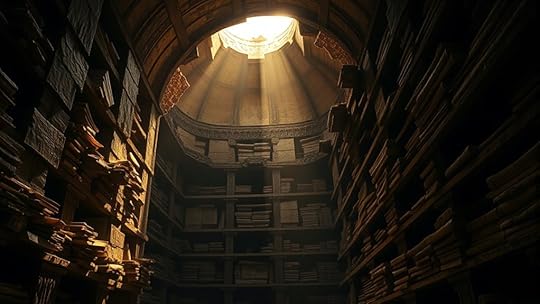
Have you ever wondered what knowledge was lost when the Library of Alexandria burned? This ancient center of learning, once the greatest repository of human thought, contained countless ancient manuscripts that held the secrets of civilizations long gone. When fire consumed its vast halls, it wasn’t just shelves of scrolls that vanished, but an entire world of ideas, discoveries, and cultural insights. The loss remains one of history’s greatest mysteries, sparking endless scholarly debates about what might have been contained within its walls. Some believe it held works from ancient Greece, Egypt, Persia, and India—texts that could have reshaped our understanding of science, philosophy, and history. Others argue that the library’s collection was more modest than legend suggests, but even a fraction of these manuscripts would be invaluable today.
As you explore the history, you realize that the true scope of what was lost isn’t fully known, which fuels ongoing scholarly debates. Historians and researchers often argue about whether the library’s destruction was a single event or a series of calamities over centuries. Some suggest Julius Caesar’s invasion of Alexandria caused the first major damage, while others blame later conflicts or neglect. Despite the uncertainties, what’s clear is that the library’s destruction was a significant blow to human knowledge. Many manuscripts, written in diverse languages and on various subjects, disappeared forever, leaving gaps in our understanding of ancient science, mathematics, literature, and culture. The loss of these texts also meant the disappearance of unique perspectives and ideas that could have influenced subsequent civilizations.
Furthermore, the destruction of the Library of Alexandria highlights the importance of cultural preservation and the fragility of knowledge across history. You might wonder if any of these manuscripts survived elsewhere or if copies existed in other collections. Unfortunately, most of the ancient manuscripts housed in the library were unique, and few copies were made. This means that the knowledge lost was irreplaceable, and our current understanding of ancient history relies heavily on what little survived or was documented elsewhere. The debates surrounding the library’s loss also touch on the importance of preservation and the fragility of knowledge. If such a monumental collection could be destroyed, it underscores how crucial it is to safeguard our current repositories of information. Today, the story of the Library of Alexandria serves as a reminder of the transient nature of knowledge and the importance of protecting cultural and scholarly treasures for future generations.
Frequently Asked QuestionsWere Any Manuscripts From the Library Recovered Elsewhere?Some ancient papyri and lost manuscripts from the Library of Alexandria were recovered elsewhere. Scholars have found fragments and copies of texts that might have originated there, often through archaeological discoveries in Egypt and the Mediterranean. While nothing definitively confirms they came directly from the library, these recovered ancient papyri offer valuable insights, helping us piece together what might have been lost when the library was destroyed.
Who Were the Main Scholars Associated With the Library?You should know that the main scholars associated with the library included figures like Eratosthenes, who calculated Earth’s circumference, and Hipparchus, known for his work in astronomy. These scholars studied ancient manuscripts, advancing science and philosophy. Scholarly debates continue about the extent of their influence and the loss of knowledge. Their work highlights the library’s significance as a hub for intellectual exchange, even amid the mysteries surrounding its destruction.
How Advanced Was the Library’s Collection Compared to Today?You’d be amazed at how advanced the library’s collection was compared to today. It housed ancient manuscripts that showcased significant scientific, philosophical, and literary knowledge, reflecting a scholarly influence that shaped centuries of thought. While modern libraries contain vast digital data, the Alexandria collection’s focus on original texts and groundbreaking ideas made it a pioneering hub of knowledge, centuries ahead in its dedication to discovery and dissemination.
What Specific Topics or Fields Were Most Represented?You find that ancient manuscripts on astronomy, mathematics, philosophy, and medicine were most represented in the library. These texts held vast cultural knowledge, spanning Greek, Egyptian, Persian, and Indian traditions. The collection aimed to preserve and advance human understanding across diverse fields. By studying these manuscripts, you gain insight into early scientific thought, philosophical debates, and cultural exchanges that shaped civilizations, making the library a true treasure trove of human achievement.
Could the Library’s Destruction Have Been Prevented?You could have helped prevent the library’s destruction by supporting efforts to protect ancient manuscripts and address preservation challenges. If more resources and awareness had been directed toward safeguarding these invaluable texts, the risk of damage from fires, neglect, or conflicts might have decreased. By prioritizing preservation and fostering early conservation techniques, you could have played a role in ensuring that the knowledge held within the library endured through history.
ConclusionAs you imagine the Library of Alexandria’s silent halls, you realize what was lost is more than scrolls and knowledge—it’s a beacon of human curiosity extinguished. The flames devoured centuries of wisdom, leaving echoes of greatness in their wake. Yet, in your mind’s eye, that lost library beckons like a myth waiting to be rediscovered, inspiring you to seek new horizons. The flame may be gone, but the quest for knowledge burns brighter in your heart.