Review: Jawbone, Monica Ojeda
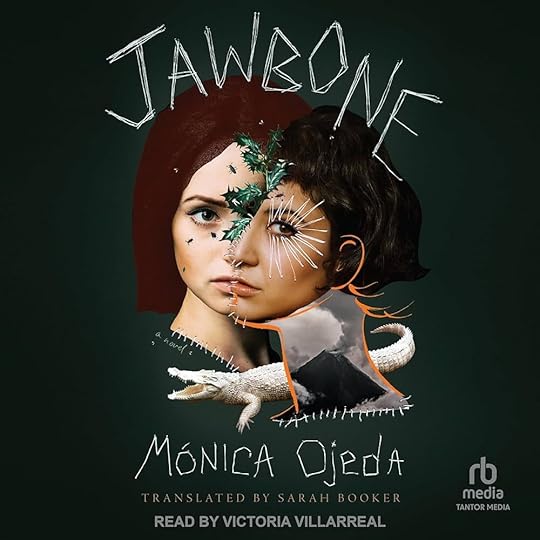
Books like Jawbone are why I love reading: Elaborate and evocative worlds that pull you into their dark waters and hold you under. Brash and flawed characters who reflect our own shortcomings and desires. Extraordinary circumstances that somehow feel familiar.
Monica Ojeda is the spellmaster who conjured up this horror gem that was a finalist for the National Book Award in 2022 (translated by Sarah Booker). Ojeda is a confident, fearless and challenging writer, and I’m here for it. She doesn’t take it easy on the reader. She dares you to stop turning the pages, knowing you won’t, much like her characters push each other into more dangerous and gross dares.
There are two primary story lines to follow: the friendship of Fernanda and Annelise — two imaginative teen girls who revel in horror stories, deadly stunts and a shared mythology they build around caimans, a drag-queen god and the menacing color white — and Clara, their austere literature teacher who is still recovering from her abusive upbringing and a home invasion perpetrated by two students at her previous school.
Clara recognizes in Fernanda and Annelise the same danger she noticed in the two girls who attacked her. She is determined not to let these new girls get the jump on her, so when Annelise, who senses Clara’s fear, warns her that Fernanda is planning something awful, Clara pre-emptively kidnaps Fernanda and keeps her tied up in her house.
In captivity, Fernanda considers her fascination with horror. With physical escape impossible, she turns to a philosophical one: “To be afraid was to sense the truth like an eyelash floating over an eye.”
The truth is that every character is a victim. Every character is a perpetrator. Much of what is alleged is unconfirmed. Is Annelise using Clara to inflict revenge on Fernanda? Is Fernanda the monster she’s accused of being? Is Clara an abductor or merely a survivor?
The narrative makes use of multiple voices and various media — including creepypastas, therapy sessions, the Cthulu mythos, personal essays and disjointed conversations — to construct a puzzle box of trauma, metamorphosis and torture. Ojeda’s pacing is expertly controlled through textual choices. A one-page Q&A chapter will be followed by a few pages of dense, unbroken block text that forces the reader to slow down and live with the discomfort Ojeda imposes.
The mostly female cast of the novel (which is set in an elite girl’s school in Ecuador) adds another layer of meaning. We view puberty through the lens of body horror. Female sexuality is both power and vulnerability. Sex is fear and desire all tangled up. The girls are repulsed and fascinated by their changing bodies.
Jawbone is a bleak and immersive read, provincial with its isolated world inhabited by exotic bugs, venomous snakes, hungry caiman, a drag-queen god and plenty of human monsters.
It is a grotesque study in desire and insecurity, adolescence and debasement, and the deeper you look, the darker it gets. As Annelise observes, “When the idea of good and evil disappears, all that’s left is nature and its violence.”