Why did Alaska secede?
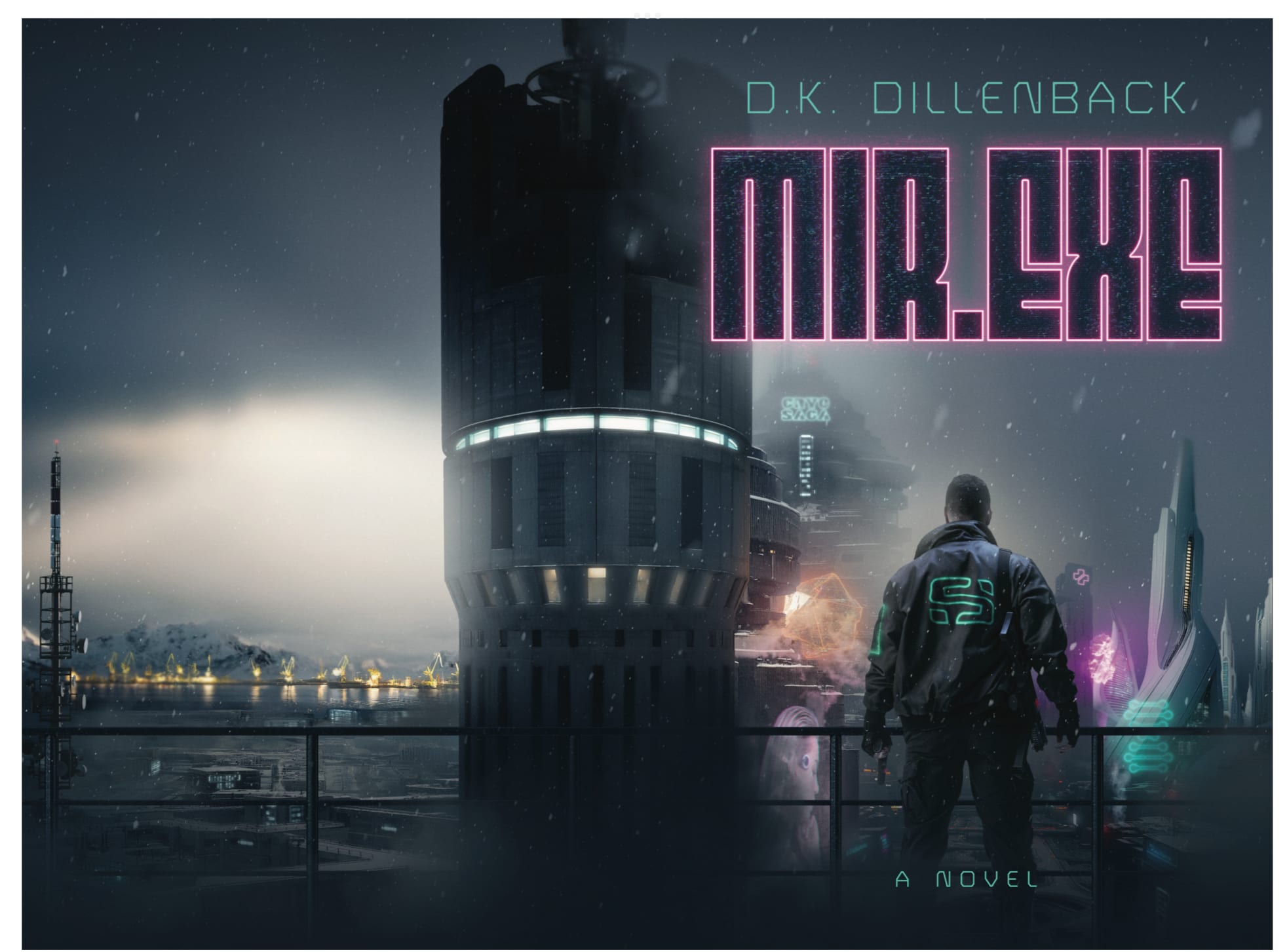
To create a world that is both fantastic and familiar, I tried to balance sci-fi with speculative fiction in MIR.EXE. When I started, I didn’t necessarily intend for it to be a cyberpunk thriller, but that balance pushes it into the genre.
My favorite sci-fi stories are ones in which only a small change in the near future causes cascading effects. So, after some hastily scribbled notes on a plane from Anchorage to D.C., I sat down one evening and began to chart an alternate history.
The critical sci-fi element is the discovery of PermaFlux, a new, naturally occurring elemental compound that allows for super conduction at warm temperatures. This solves one of the few remaining physics problems affecting technology, resistance and temperature.
PermaFlux allows unfathomable amounts of energy to move with almost no temperature build up, meaning less energy demand to transfer that information. This leads to an explosion in technological advancement and tectonic power shifts in the world order as it becomes the most valuable substance on the planet overnight.
Here’s how it plays out…
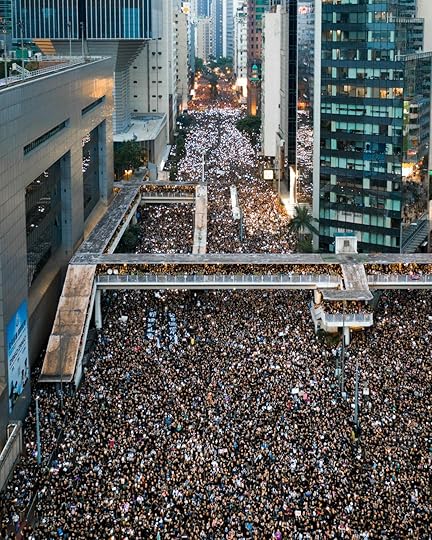
2033:After a populist social movement pressures U.S. politicians to withdraw from the international stage in favor of domestic policies, the People’s Republic of China attempts to unify with Taiwan by force.
The U.S. does attempt to keep its promises by providing direct and indirect military aid to the Taiwanese government.
Lack of strategic logistics infrastructure between the lower 48 and Alaska caused an over-reliance on imports through a limited network of ports. Unattributed cyberattacks on the port of Alaska cause a humanitarian crisis when imports are reduced by seventy-five percent. Grocery stores are critically short of food within one week.
Taiwan is unable to prevent the PRC from establishing a beachhead, but assistance from the U.S. results in a protracted conflict without decisive results on either side.
2039:A nuclear detonation is detected on the Democratic People’s Republic of Korea by satellite. Before the Kim regime puts out a statement, Russian state media reports a western attack on the sovereign nation. The United States and NATO deny the claim. Internal U.S. analysis initially determines that the detonation is either a Russian false-flag operation to incite the Kim regime, or a nuclear accident that the regime is attempting to cover up. Regardless of the cause, the DPRK retaliates in the spring.
Convinced that the Kim regime is facing an existential threat, and assessing that the United States will limit its response based on their continued conflict with the PRC, DPRK conducts retaliatory nuclear strikes on Japan, Guam, and Hawaii. Shortly afterward, North Korean troops cross the demilitarized zone and begin an offensive in South Korea to unify the peninsula.
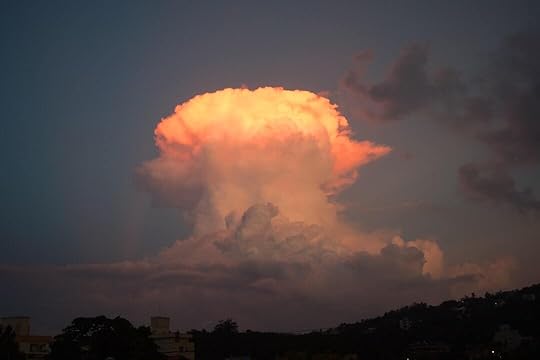
The United States and Republic of Korea defend Soeul and halt the DPRK offensive to maintain momentum, the DPRNK uses stockpiles of tactical nuclear weapons. PRC intervenes over land in support of DPRNK, leading to a protracted ground war on the peninsula.
2044:AK’s population continues to suffer. Secessionist views grow in popularity and begin to appear on legitimate media and political party platforms. Mass starvation leads to declining birth rates and increased violent crime. Alaska’s population decreases by 20%.
2045:Cryosaga industries discovers large deposits of lithium and Cobalt are found in central Alaskan Shelf. The United States federal government enacts the Defense Production Act to channel money into developing mining operations in support of the wartime economy. This foments already tense public sentiments regarding the federal government’s perceived exploitation of Alaska.
2052:Alaska holds a special election and reorganizes the state government to give the governor emergency powers over economic matters. A referendum reaffirming Alaska’s complete control of natural wealth within the state’s border passes with broad, multi-partisan support. The state of Alaska grants total mining rights to Cryosaga industries with the provision that the state government receives 50% of all profits. Cryosaga claims this removes any responsibility to provide taxes to the U.S. federal government. The US government condemns the declaration but has no foreseeable options as the Great Pacific War drags on.
2058:Alaska has recovered from the wartime crisis and is becoming incredibly wealthy due to the superconductor trade. Cryosaga industries is the world’s largest lithium and cobalt supplier and is making evolutionary strides in superconductor development.
Alaska has made most of its money by selling materials to US allies. This causes friction between Alaska and the United States as the perception of poor treatment foments views that the State of Alaska is becoming an increasingly rogue entity. Politicians and media in the lower 48 begin to talk about reasserting dominance over the state. As the rift between the United States and Alaska grows. Russia and the PRC begin making inquiries into purchasing materials. Alaska has officially refused, but a black market grows, and the state government is happy to look the other way.
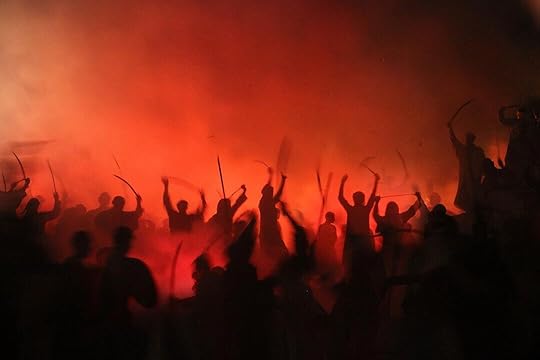
Russia attempts an invasion of Alaska to seize lithium and cobalt mines, which have become essential to modern technology including computing, energy production, and weaponry.
 2059:
2059:The Alaskan war is short, the United States is unable to defend Alaska, having invested most of its development and training for the pacific conflict prior.
Canada intervenes on behalf of the United States. Although it is unable to provide a sizeable navy, the Army is able to prevent a ground invasion of the mainland.
Russia controls the Aleutian Island chain and works into a stalemate while periodically attempting to send regular ground invasions. Long range artillery and naval gunfire nearly destroy the city of Anchorage.
2060:Secessionist groups stage a coup d’etat by taking control of the state legislature and conducting a special election. The secessionist party wins with ninety-six percent of the vote, sparking accusations of corruption. Cryosaga financially supports all secessionist activities, seeing this as an opportunity to increase export markets.
After the Alaskan government is overthrown, Russia sues for peace in exchange for increased access to lithium and cobalt. Alaska negotiates a treaty without consulting with the United States, who accuses the new Alaskan Government of high treason. However, the US government, still recovering from the economic impacts of the Great Pacific War, is unable to intervene militarily.
This marks the beginning of a domino effect of withdrawal from superpower status. The United States is forced to accept a stalemate in Korea, leading to a near status quo return. The United States also cedes Taiwan, abandoning the Taiwanese government. U.S. requests military aid from Canada to suppress the “Alaskan insurrection.”
Canada sees this as an internal U.S. matter and does not intervene, especially considering the high concentration of Canadian citizens living in Alaska or having family there. Canada completely withdraws troops from Alaska that were stationed there to defend against Russia.
2061:The new Alaskan government secedes from the United States and declares itself the Federated States of Alaska (FSA) with Anchorage as its national capital. Cryosaga provides the capital and means to fund the Alaskan defense. Russia, the PRC, Japan, Iran, India and Pakistan quickly recognize the FSA’s sovereignty in a bid to gain favored access to raw materials.
2063:Cryosaga announces the invention of PermaFlux, a new elemental compound that, when alloyed with lithium and cobalt within the upper mantle, acts as a superconductor at negative twenty degrees Fahrenheit. This unlocks all new modern technology, which can now transmit massive amounts of data with no resistance and is immediately the most valuable substance in the world.
2070:Echo is born in Anchorage.
2072:Alaska is the richest country in the world. Anchorage has become a sprawling mega city.
 2078:
2078:The Reclamation War. The United States attempts to “reunify” Alaska through military means. The invasion is a pincer maneuver consisting of a naval blockade and amphibious assault on the Port of Alaska and a ground invasion through Canada. Canada grants access, basing, and overflight to the United States for the operation.
Russia defends its “territorial waters” surrounding the Aleutian Islands which it annexed after the Alaskan war. Russia threatens to treat any US military violation of its sovereign waters as an act of war. The US Navy has limited axes of advance and the naval blockade is severely hampered.
Alaska defends itself and ceases all exportation of raw materials, including PermaFlux, to Canada. After a short-lived campaign, the United States withdraws and Canada changes its stance, recognizing the FSA.
2081:The United States is no longer able to compete on the world stage without access to PermaFlux and recognizes FSA sovereignty.
2096:Echo Kinyata sits atop his apartment building staring at the remains of the 2088 Olympic Towers…