Jonbar Points
This month on the 20th of January, the ninth episode of my Fractal series novellas came out.
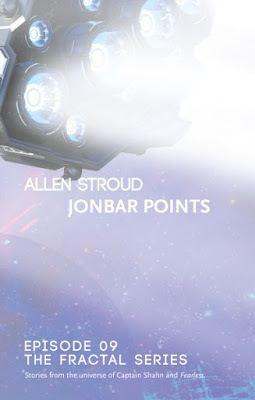
Jonbar Points is a standalone story set in the Fractal Universe. It describes events that are happening between the first trilogy of novels and the new release, Anti-State, set in 2121. Here's the blurb:
A Jonbar Point, is a concept often used in time travel stories. A moment where possible outcomes diverge. Within a plot, a writer can return to that moment and explore alternative options, perhaps as a character seeks the perfect outcome - a happy ending or the saving the world from a crisis.
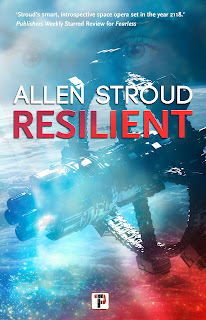
My exploration of this concept is a little different. The main characters in Jonbar Points are digital identities. These are alive in a simulation of events after the aforementioned Atacama Incident, which occurred at the beginning of the second Fractal Series novel, Resilient.
 The story of Jonbar Points is a projection - a simulation being run by a corporation that wants to navigate the global economy in the best possible way after the disaster. Unfortunately, their simulation is hacked and they end up running the simulation again and again to try and isolate the moment the hack occurred.
This story is perhaps one of the most playful in the Fractal Series. It has a lot of influences, from Asimov's Foundation, and the Apple TV series adaptation, HBO's Westworld, Groundhog Day, to Tron and Tron Legacy. The idea of rewinding a moment in time through a digital simulation and then playing it forwards with a different set of circumstances emerging is something I've always been interested in.
I was introduced to procedural generation in narrative when I worked on Elite Dangerous , back in 2013. A detailed examination of the way in which much of the text for Frontier: First Encounters (1995) was written to shift and change around the player, based on their decisions and choices fascinated me. Many of my experimental works since then have tried to incorporate these ideas as I can see the benefit of using code that slots narrative together in different ways, increasing the possible variation beyond what may be achieved by writing every page.Artificial PeopleJonbar Points also explores the concept of artificial intelligence and future prediction. The main character, David Webb, is a simulated human being. In the 22nd century of the Fractal Universe, that simulation has become very sophisticated. In many ways, David is unaware of what he is and what he isn't. But within the framework of the simulation, he is one identity amongst many that has agency, and can make choices that will change the direction of the projection.
The computer system running the Jonbar Point projection is designed to look at hundreds of different possibilities, to wind things forward and backwards continually, acquiring and analysing the generated data of each change and action. There is only one constant in the design - the moment of reality that instigated the need for the projection. Later, a second constant appears, the moment of the hack, hence Jonbar Points - plural.
Even in this 22nd century future, a computer simulation at this level of fidelity takes a huge amount of processing power, which is why the conclusions being drawn are so valuable to a rival corporation and conflict ensues.
David Webb's life occurs in a fraction of a second, but the nature of his consciousness means he is self-aware and acts in a very human way to try and preserve the life that he has been given.
In some ways, this is a modern interpretation of Plato's Cave - a way for us to observe consciousness, intelligence and sentience that exists in a limited world, seeing how it acts and reacts. I guess that's also an example of meta-fiction.
In this contemporary moment, when the world is struggling to grasp what artificial intelligence means and will mean as a disruptive technology, looking forwards to another time where we can see what true artificial intelligence - created in the image of its creators could look like, may help us to reassess. After all, it is easy to feel sorry for David, and that's the point, in a way. The detail of his world constantly changes around him, as names are reassigned, roads, houses and other details change, yet he relies on them as if they are constants, his memories adapting and at times, not even acknowledging the shifts.
Human beings do that too. Our memories are a familiar nostalgia that we rely on, even if in reality they are an edited and subjective recollection of our past. The intellectual sustenance we draw from them shapes us. If true artificial intelligence were created in our image, it makes sense to me that such an intelligence would exhibit similar behaviour.Psychohistory and Artificial Intelligence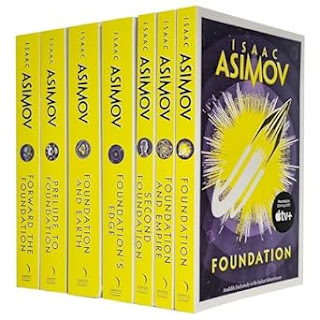
Writing in Foundation, back in the 1940s, Isaac Asimov's description of Hari Seldon's Psychohistory - a form of mathematics that allowed the future of humanity to be predicted - was carefully couched as a humanities subject, essentially a 'history' system, relying on data from what decisions had been made before to make projections about what will be decided when similar circumstances arise again.
Asimov's ideas predated the computer as we know it. By the 1950s, such machines were being used by the biggest corporations and governments, but their ability to calculate and process data was nowhere near what would be needed for a psychohistoric prediction.
Fast forward to today in the 21st century and we find ourselves with computers and networked systems that can process vast arrays of data, identifying trends and patterns in human activity that we would not have seen for ourselves. In some ways, these allow us a limited form of prediction. We can analyse specific crises and identify patterns of behaviour that may reoccur and therefore, plan for these reoccurrences.
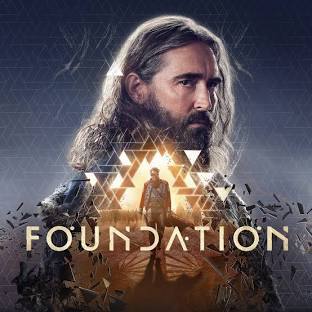
The adaption of Foundation as a television series on Apple TV takes Asimov's concept and modernises it, but again, it is applying complex 'magical' mathematics to what we understand in practical terms as an analysis of trends.
Jonbar Points attempts to do something similar. However, as a writer, I have tried to be a little more transparent with my methodology. I'm not a mathematician and can't envisage the same kind of predictive algorithms, so there is still a certain amount of handwavium in my work, but the idea of simulated identities, with a degree of autonomy being placed in a digital twin of our world and left to make decisions in reaction to specific stimuli, with their actions recorded, rewound and then reassessed time and time again, does seem plausible to me, if, by the 22nd century our access to computer processing power has increased at a similar exponential rate to how it has developed so far (since the 1940s).
What the premise also allows an exploration of is the key science fiction concept of what it is to be human and the key political concepts of freedom and capitalist exploitation. Our digital characters exhibit human traits and seem to think as we do, but they are locked in a world that exists for nanoseconds, their lives terminated at the whim of a data driven agenda that doesn't care what happens to them.
Is there an allegory here? As we experience the corporate exploitation of AI/LLM engines and are told we must give up our intellectual property to improve their accuracy, we might see ourselves in the eyes of digital slaves like David Webb, locked inside the 22nd century prediction engine.
Something to think about.
Jonbar Points is available now from Flame Tree Press.
Jonbar Points is a standalone story set in the Fractal Universe. It describes events that are happening between the first trilogy of novels and the new release, Anti-State, set in 2121. Here's the blurb:
The Atacama event, where the world’s largest solar panel array was destroyed has become a pivotal moment for international corporations looking to profit as the world struggles to rebuild. A corporation runs a simulation to predict the best course for humanity, but is hacked by a rival who injects an adaptive and intelligent program to seize control of their computer systems. David Webb is a digital character in the simulation empowered to act and track down the hack. He is also a family man, with a life and dependents. Can he complete his task, knowing that to do so, might wipe out everything that he cares about as the system resets?
A Jonbar Point, is a concept often used in time travel stories. A moment where possible outcomes diverge. Within a plot, a writer can return to that moment and explore alternative options, perhaps as a character seeks the perfect outcome - a happy ending or the saving the world from a crisis.
My exploration of this concept is a little different. The main characters in Jonbar Points are digital identities. These are alive in a simulation of events after the aforementioned Atacama Incident, which occurred at the beginning of the second Fractal Series novel, Resilient.
.jpg) The story of Jonbar Points is a projection - a simulation being run by a corporation that wants to navigate the global economy in the best possible way after the disaster. Unfortunately, their simulation is hacked and they end up running the simulation again and again to try and isolate the moment the hack occurred.
The story of Jonbar Points is a projection - a simulation being run by a corporation that wants to navigate the global economy in the best possible way after the disaster. Unfortunately, their simulation is hacked and they end up running the simulation again and again to try and isolate the moment the hack occurred.This story is perhaps one of the most playful in the Fractal Series. It has a lot of influences, from Asimov's Foundation, and the Apple TV series adaptation, HBO's Westworld, Groundhog Day, to Tron and Tron Legacy. The idea of rewinding a moment in time through a digital simulation and then playing it forwards with a different set of circumstances emerging is something I've always been interested in.
I was introduced to procedural generation in narrative when I worked on Elite Dangerous , back in 2013. A detailed examination of the way in which much of the text for Frontier: First Encounters (1995) was written to shift and change around the player, based on their decisions and choices fascinated me. Many of my experimental works since then have tried to incorporate these ideas as I can see the benefit of using code that slots narrative together in different ways, increasing the possible variation beyond what may be achieved by writing every page.Artificial PeopleJonbar Points also explores the concept of artificial intelligence and future prediction. The main character, David Webb, is a simulated human being. In the 22nd century of the Fractal Universe, that simulation has become very sophisticated. In many ways, David is unaware of what he is and what he isn't. But within the framework of the simulation, he is one identity amongst many that has agency, and can make choices that will change the direction of the projection.
The computer system running the Jonbar Point projection is designed to look at hundreds of different possibilities, to wind things forward and backwards continually, acquiring and analysing the generated data of each change and action. There is only one constant in the design - the moment of reality that instigated the need for the projection. Later, a second constant appears, the moment of the hack, hence Jonbar Points - plural.
Even in this 22nd century future, a computer simulation at this level of fidelity takes a huge amount of processing power, which is why the conclusions being drawn are so valuable to a rival corporation and conflict ensues.
David Webb's life occurs in a fraction of a second, but the nature of his consciousness means he is self-aware and acts in a very human way to try and preserve the life that he has been given.
In some ways, this is a modern interpretation of Plato's Cave - a way for us to observe consciousness, intelligence and sentience that exists in a limited world, seeing how it acts and reacts. I guess that's also an example of meta-fiction.
In this contemporary moment, when the world is struggling to grasp what artificial intelligence means and will mean as a disruptive technology, looking forwards to another time where we can see what true artificial intelligence - created in the image of its creators could look like, may help us to reassess. After all, it is easy to feel sorry for David, and that's the point, in a way. The detail of his world constantly changes around him, as names are reassigned, roads, houses and other details change, yet he relies on them as if they are constants, his memories adapting and at times, not even acknowledging the shifts.
Human beings do that too. Our memories are a familiar nostalgia that we rely on, even if in reality they are an edited and subjective recollection of our past. The intellectual sustenance we draw from them shapes us. If true artificial intelligence were created in our image, it makes sense to me that such an intelligence would exhibit similar behaviour.Psychohistory and Artificial Intelligence

Writing in Foundation, back in the 1940s, Isaac Asimov's description of Hari Seldon's Psychohistory - a form of mathematics that allowed the future of humanity to be predicted - was carefully couched as a humanities subject, essentially a 'history' system, relying on data from what decisions had been made before to make projections about what will be decided when similar circumstances arise again.
Asimov's ideas predated the computer as we know it. By the 1950s, such machines were being used by the biggest corporations and governments, but their ability to calculate and process data was nowhere near what would be needed for a psychohistoric prediction.
Fast forward to today in the 21st century and we find ourselves with computers and networked systems that can process vast arrays of data, identifying trends and patterns in human activity that we would not have seen for ourselves. In some ways, these allow us a limited form of prediction. We can analyse specific crises and identify patterns of behaviour that may reoccur and therefore, plan for these reoccurrences.

The adaption of Foundation as a television series on Apple TV takes Asimov's concept and modernises it, but again, it is applying complex 'magical' mathematics to what we understand in practical terms as an analysis of trends.
Jonbar Points attempts to do something similar. However, as a writer, I have tried to be a little more transparent with my methodology. I'm not a mathematician and can't envisage the same kind of predictive algorithms, so there is still a certain amount of handwavium in my work, but the idea of simulated identities, with a degree of autonomy being placed in a digital twin of our world and left to make decisions in reaction to specific stimuli, with their actions recorded, rewound and then reassessed time and time again, does seem plausible to me, if, by the 22nd century our access to computer processing power has increased at a similar exponential rate to how it has developed so far (since the 1940s).
What the premise also allows an exploration of is the key science fiction concept of what it is to be human and the key political concepts of freedom and capitalist exploitation. Our digital characters exhibit human traits and seem to think as we do, but they are locked in a world that exists for nanoseconds, their lives terminated at the whim of a data driven agenda that doesn't care what happens to them.
Is there an allegory here? As we experience the corporate exploitation of AI/LLM engines and are told we must give up our intellectual property to improve their accuracy, we might see ourselves in the eyes of digital slaves like David Webb, locked inside the 22nd century prediction engine.
Something to think about.
Jonbar Points is available now from Flame Tree Press.


No comments have been added yet.