
Afterword: Entropy
To provide greater transparency, the various afterwords from my novels are now being published as blog posts. This provides readers of paperbacks and hardbacks with the ability to find the various references and links. Please be aware that there may be spoilers below.
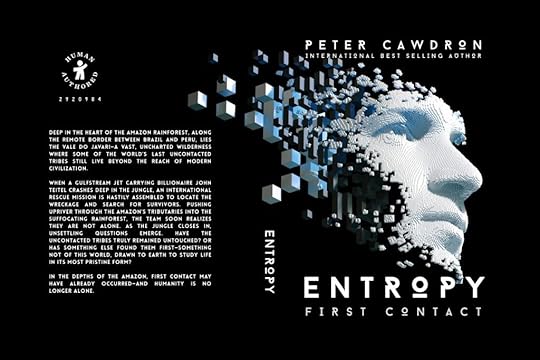
This excerpt has been taken from Entropy, which launches on March 20, 2026.
The Nature of Fiction
By definition, fiction is not true, and yet we flock to made-up stories regardless of whether it’s science fiction novels like this one, superhero movies, historical romance, a buddy-cop comedy or a dark, noir detective story. Why? Because out of the hundreds of millions of different species on Earth, Homo sapiens is the party species. Lots of animals play with each other; it’s a way of building social cohesion as well as instruction, but humans take play to a whole different level. We have made it an art form.
Why is fiction so important to us?
There’s an anecdote attributed to Albert Einstein that I think explains this. It’s probably apocryphal, but it may hold some element of truth and certainly sounds plausible given his love for gedankenexperiments, or thought experiments, such as when he imagined what it would be like to travel at the speed of light.
As legend has it, an anxious mother asked what books she should read to her young son so he’d grow up to be a scientist. Einstein replied, “Fairy tales.” Somewhat taken aback, the mother then asked, “And what else should he read to prepare him for learning at school?” To which, Einstein smiled and said, “More fairy tales.”
Although it’s probably been embellished, the story rings true. In the 1920s, Einstein was quoted in a newspaper as saying, “When two expeditions of scientists, financed by the Royal Academy, went forth to test my theory of relativity, I was convinced that their conclusions would tally with my hypothesis. I was not surprised when the eclipse of May 29, 1919, confirmed my intuitions… I am enough of an artist to draw freely upon my imagination. Imagination is more important than knowledge. For knowledge is limited to all we now know and understand, while imagination embraces the entire world.” And that’s what he meant about fairy tales. Fiction primes us to think deeper about reality.
It’s important to understand that Einstein wasn’t belittling knowledge as such; he was elevating the importance of imagination when challenging the limits of existing knowledge. Neither is redundant. Einstein went on to say, “When I examine myself and my methods of thought, I come to the conclusion that the gift of fantasy has meant more to me than any talent for abstract, positive thinking.” And I think this is the key point: imagination inspires in-depth reasoning.
Why do we love fiction?
Because it challenges the status quo and gets us to think a little longer and deeper about the world we’ve taken for granted. I hope Entropy has done that for you, giving you a little play time between the seriousness of everyday life. I hope it’s been an opportunity to reason through ideas in greater depth.
Life & Entropy
Entropy is a scientific term describing how energy tends toward disorder and equilibrium. Left alone, environments will trend from complex to simple, diverse to homogenous. Squirt some food coloring into a glass of water, and the bright red color will dissipate, turning light pink before seemingly disappearing altogether, spreading evenly through the water.
In practice, though, entropy is constrained by other physical characteristics. Entropy cannot be defeated, but it can be delayed. As an example, when dye is squirted into water, if the coloring is slightly denser than water, it will congregate at the bottom of the glass in a thin layer. If it is less dense, it will form a film near the top of the water. Thus, entropy doesn’t always immediately result in an equal amount of disorder.
And the reason for this is surprising… gravity!
Gravity can be considered a force, but it differs from other forces like electromagnetism in that it has no negative counterpart. Gravity is a one-way force. It only ever attracts. Gravity is between 36 and 40 times weaker than electromagnetism, but because it has no negative, it never cancels out, and so, on large scales, gravity dominates the entire universe, forming stars, black holes and galaxies, challenging entropy, at least in the short term, delaying its encroachment by billions of years.
The universe is self-organized.
Stars form seemingly in defiance of entropy as gas clouds fall into dense spheres that undergo spontaneous gravity-induced fusion. Within stars, convection creates eddies and currents, circulating material. Gravity allows layers of different densities to form inside stars, inside gas giants, and inside terrestrial planets like Earth, separating substances and effectively filtering them. This tendency for gravity to separate contents is everywhere in the universe. It is mind-boggling to realize we live on gigantic slabs of rock floating on super-dense magma. Gravity keeps the continental plates afloat like an aircraft carrier on the ocean.
Life, too, seemingly defies entropy, at least for a few billion years!
The Second Law of Thermodynamics says, “In an isolated system, total entropy never decreases,” but the universe is composed of nested, interconnected systems, including galaxies, stars, and planets. In our universe, outside of black holes, there are no isolated systems other than the universe itself, so it shouldn’t surprise us that we see individual pockets where entropy is slowed. A gas giant like Saturn or Jupiter suspends entropy for billions of years, slowly cooling while appearing astonishingly stable during that time. In the same way, Earth has been bathed in energy from its local star for billions of years, allowing it to temporarily defy the overall entropy of the universe.
Physics favors systems that are efficient—a marble takes the quickest path down a hill. And this is where life throws physics a curveball. Why are there plants and trees? Because, from the perspective of physics, plants and trees are far more effective at absorbing energy than soil and rock. Only a small fraction of that energy is used for photosynthesis to support the majority of life on Earth, with most of the sun’s energy escaping via evaporation, etc, but the universe loves efficiency. The universe favors efficiency because it encourages entropy. Remarkably, plant life is a more efficient means of distributing energy and increasing overall energy distribution (entropy) than a barren planet, and so we have life!
Professor Jeremy England from MIT describes it this way: “When a group of atoms is driven by an external source of energy (like the sun or chemical fuel) and surrounded by a heat bath (like the ocean or atmosphere), it will often gradually restructure itself in order to dissipate increasingly more energy… You start with a random clump of atoms, and if you shine light on it for long enough, it should not be so surprising that you get a plant.”
Although this may seem unlikely, it’s true.
Please forgive the terminology as we walk through this next point. I know this may sound overly technical, but the term nucleotides describes the LEGO building blocks of life. The DNA and RNA in our bodies are made from nucleotides chained together like rungs on a ladder.
Nucleotides are the chemical letters that define the genetic code of life: GATC. They’re often listed as ATGC because adenine pairs with thymine and guanine pairs with cytosine. They’re basic molecules. Each one has nitrogen, a simple sugar such as ribose, and some phosphate. And they’re found occurring naturally in space on asteroids!
Pick an asteroid.
Any asteroid.
And the chances are it will contain these molecules because space is a massive chemistry set. Space has three things in abundance: time, atoms and energy. Anytime NASA samples a comet or an asteroid, it finds these basic building blocks of life! During the Late Heavy Bombardment about 4 billion years ago, Earth was hit by tens of thousands of asteroids and comets, with anywhere up to about a hundred of them being larger than the one that wiped out the dinosaurs. And thus, Earth found itself awash with nucleotides!
And do you know what we need to naturally and randomly form RNA strands up to 300 nucleotides in length? Go on. Guess. Because whatever you guess couldn’t be quite as crazy as what scientists have discovered. Oh, and it’s something that was extremely abundant on early Earth after all of those crazy impacts—volcanic glass!
Suddenly, something that seems unlikely—life springing into existence—is actually quite plausible.
Porous volcanic glass has just the right components to act as a catalyst that allows random nucleotides to join into long chains of RNA—the building blocks of life.
Figuring out the prebiotic origins of life is difficult. Cells are complex, but they didn’t arise overnight as an act of creation. Like all life on Earth, they arose in small, incremental steps—each being a step upward in complexity. Down on the ground floor, the most basic necessity of life is to be able to replicate and evolve (improve), and recent research suggests we have uncovered the mechanism by which this can happen—and we didn’t need thousands or even hundreds of RNA nucleotides. All we needed was 45 bits of biological LEGO! With a mere 45 nucleotides, a strand of naturally forming RNA can develop into a polymerase ribozyme capable of copying itself with 94% fidelity, leaving room for evolutionary steps to occur. This is a remarkable discovery, suggesting that genetic variation can evolve and improve long before any other cellular mechanisms emerge.
Scientists are still figuring out the next steps in the formation of life, but like a 10,000-piece jigsaw puzzle after supper on Christmas Day, the outline is looking pretty damn good, and all the pieces are starting to fit together.
Just as stars are the natural result of a gas cloud coalescing under gravity, life is the natural result of bombarding planets and asteroids with energy. Granted, the planet in question needs to have chemical diversity and moderate temperatures to allow exotic chains of RNA molecules to exist, but they will arise as the system naturally becomes more efficient at dissipating entropy.
Based on this, we would expect life to arise spontaneously elsewhere in our universe, given planets of similar size, composition and temperament. That’s what makes the exploration of Mars so exciting, as there’s a reasonably good chance it, too, had life billions of years ago when it was warmer and wetter.
The Amazon Rainforest
The Amazon is a marvel of nature.
The Amazon rainforest’s geography is astonishing, being a single basin spanning an area roughly 2/3rds the size of the continental US. It’s open to the east, facing the South Atlantic, while being closed to the Pacific by the Andes mountain range running down the west coast of South America. This cages the basin, allowing for rivers to form in the air! The estimated 400 billion trees in the forest release 20 billion tons of water into the atmosphere every day, forming clouds that function effectively as rivers within the atmosphere, unleashing astonishing amounts of rain.
The canopy of trees is dense and unfolds in layers, meaning only around 2% of sunlight reaches the ground. In practice, the jungle floor is in perpetual twilight during the day and pitch-black at night.
Even now, we still don’t have a complete catalogue of all the different species in the Amazon rainforest, with over 100,000 different types of invertebrates, 2,200 species of freshwater fish, 400 different species of amphibians and roughly the same number of reptiles and mammals, and at least 40,000 different species of plants. In one study, 54 different species of ants were found in a single tree! In total, scientists estimate the rainforest supports upwards of 2.5 million different species of insects.
The jungle canopy reaches from 50 feet up to an astonishing 250 feet above the forest floor, averaging around 160 feet. The tallest known tree in the forest is 290 feet tall, or roughly 90 meters in height, which is the same as a 22-story office block—that’s the same height as the iconic Flatiron Building on the corner of Fifth Avenue and Broadway in New York City!
It’s true to say that the Amazon is a layered ecosystem, meaning there isn’t a single ecosystem as such, but rather ecosystems pile on top of each other like floors in a building, with each being unique. The leafy canopy, the lower branches, the trunks of trees, the undergrowth, the forest floor with its detritus and rotting debris, the tree roots and the river itself all provide unique and entirely different niches layered upon each other in which species compete for life. The Amazon is a spectacular forest where Earth comes alive in all its diversity. We need to protect rather than exploit it.
And yes, there really are giant leeches. If this story is ever made into a movie, their appearance will give you nightmares for weeks.
No Intervention
The aliens in this novel avoid intervening in human society, but the ethics of such a decision are far from clear or simple.
Star Trek famously uses the Prime Directive to explain the Fermi paradox, suggesting that more advanced civilizations have agreed to isolate non-warp societies, shielding them and allowing them to emerge on their own. On one level, it makes sense as this ensures they navigate their own cultures and reach their own conclusions without imposition or exploitation, but, as Captain James T. Kirk understood, it’s an imperfect solution to an ugly problem. The Prime Directive leaves individuals to suffer while the collective society and its mastery of technology slowly matures. Intervention, though, is almost always problematic. Morally, it’s wrong to stand by and watch needless suffering you could easily prevent, but interfering breaks the natural course of events.
The Prime Directive is based on the assumption that society advances at a natural pace, allowing a civilization to become ever more civil. Our own history, though, refutes this idea. No two countries on Earth have achieved the same level of civilization. Compare Norway with Afghanistan, and you’ll see how uneven and regressive our supposed “progress” over the centuries can be. The reality is that progress enables both freedom and persecution. The same guns that won World War II enslaved millions behind the Iron Curtain. Advances in technology rarely keep pace with morality. If anything, technology enables exploitation rather than altruism.
The inspiration for this novel and the way that the aliens tacitly intervene comes from a documentary crew working on a project for David Attenborough’s BBC Earth. The team was in Antarctica with a strict ‘no intervention’ policy designed to ensure they observed nature without interfering. When a flock of emperor penguins became stuck for days in a ravine, it became clear the icy sides of the depression were too steep for them to climb. As the young started to die, the crew was faced with a horrible decision: let nature take its course or break their principles to save the flock. They realized they weren’t interfering in any natural process like the predator/prey relationships or survival of the fittest; they were simply showing compassion. They dug a shallow ramp through the snow and ice, and over the course of the next day, the penguins waddled out.
For me, this highlights the essence of intelligence: compassion.
We live in a cold and (essentially) sterile universe. The odds of life arising on Earth were absurdly small. The odds of life surviving for billions of years were infinitesimal. Mass extinctions occurred repeatedly, erasing entire genetic lineages. And yet somehow, life survived and eventually led to a species that had not only the intelligence to reach for the stars, but the insight to recognize the importance of life on this one small rock adrift in the seemingly infinite cosmos. Compassion is the only reasonable, intelligent response to the cold indifference of this vast universe.
Uncontacted Tribes
Remarkably, there are over a hundred uncontacted tribes still inhabiting the few untouched wildernesses found scattered throughout the world. The majority of these tribes are found in South America, but there are also several islands in the Bay of Bengal off the coast of India, as well as sections of the Indonesian archipelago and the islands of Papua in the Pacific that have remained uncontacted.
It’s important to dispel myths and misinformation about uncontacted tribes.
First of all, contact is their choice, not ours. We do not have the right to impose ourselves on them. Most uncontacted tribes have a history of near-contact that resulted in disease and exploitation, traumatizing them.
Being uncontacted doesn’t mean they’ve never had any encounters with other humans, but rather that they don’t welcome others and don’t want to connect with us. Often, we learn about them through their limited contact with neighboring tribes.
We may think of these tribes as barbaric and uncontacted, but the reality is they’re refugees from past contact, having retreated from the excesses of European conquest. They’re not savages trapped in the Stone Age. We may see ourselves as civilized, but their experience differs—they see us as violent and exploitative.
The modern world has become a monoculture, where skyscrapers dominate cities regardless of ancestral roots. From Shanghai to New York, Edinburgh to Cape Town, Istanbul to Sydney, our cities are carbon copies of each other. Bankers and brokers dress largely the same regardless of continent. You can buy the same fridge or television in Seoul as in South Dakota, or in Mozambique and Mexico. We pride ourselves on being civilized, but our civilization has been shaped for us by others. Individually, we have little to no bearing on our culture—not so the uncontacted tribes. Each one has shaped its own unique character. They may be devoid of technology and literature, but not humanity.
It’s tempting to think they need us, that our medical advances and social achievements would benefit them, but that assumes we bring nothing but positives. In reality, we’d assimilate them. A variety of relatively harmless diseases, like the common cold, could wipe them out, just as smallpox and measles killed 90% of indigenous peoples in the Americas during the colonial era, killing almost a hundred million people. In 1910, a single hug from a well-meaning Brazilian military engineer killed four and a half thousand people in the Amazonian Nambikwara tribe. Although it is tempting to think we would fare better today, we struggled with COVID-19.
Leaving these tribes alone is not enough to ensure their survival. They need to be actively protected from religious missionaries and corporations looking to exploit their people and their lands through mining and illegal logging of the forest.
Native Lifestyles
It can be tempting to think of uncontacted tribes as savages, but they’re not. They haven’t advanced as much as Europeans in terms of language and technology, but that’s largely because they haven’t needed to. They haven’t had the same drivers for expansion, such as rapid population growth, fighting for limited resources, reacting to devastating diseases like smallpox and the plague, etc.
In this novel, I describe Mick being laid on a bed of flax leaves, and to the uninitiated, that might sound crazy, but it’s actually quite comfortable. When I’d go hunting with my stepfather in New Zealand, we’d go tramping through the bush for several days hunting feral pigs, and we wouldn’t bother taking a tent—too much weight. We’d simply cut down a few large fern leaves, interweave them into a waterproof layer and make a lean-to for the night. Our bed would be interwoven flax leaves and fern leaves, and I can assure you it was as comfortable as any mattress I’ve ever slept on. South American natives had similar practices, so I was keen to weave this into the story.
Base Javari
Deep in the Amazon jungle, there is an isolated base at the opening of the Vale do Javari. It was established in response to the murder of journalist Dom Phillips and activist Bruno Pereira, who were exposing the illegal exploitation of the region. Militia members at the base are drawn from the local Kanamari people to protect the region from poachers, drug traffickers and illegal mining. This is one of the last untouched regions in the world, home to uncontacted tribes, and needs to be preserved. For the most part, the Brazilian government ignores the region, leaving locals to defend the jungle. In the words of Cristóvão “Tataco” Negreiros, the main Evu patrol leader, “I won’t give up … I’m going to carry on until they kill me. As long as I am alive, I’ll be part of Evu.”
For too long, we’ve seen nature through the lens of capitalism as something to exploit. We need to do better. Rather than being driven by money, we need to see the splendor of nature as something worth more than a bunch of numbers in some obscure bank account. I hope this story helps raise the profile of the Amazon and highlights the need to protect it from exploitation.
National Boundaries
National borders are a hot topic in politics, with “illegal immigration” being a rallying point for the far-right. And it’s not without reason, as people in poor countries seek some form of equilibrium with those in rich countries.
In reality, most Western countries thrive on controlled immigration as it is an easy way of increasing the population and thus improving the GDP and spreading the tax burden. But along with people come culture and religion, and this causes a clash with established locals. From a global perspective, immigration is a system trying to find equilibrium. If local people in one area don’t want immigrants from another, the solution isn’t to turn people away; it’s to improve living conditions elsewhere so equilibrium can be found naturally as this removes the driver for immigration, hence the shortsighted attacks on USAID have been self-destructive, but then, I think that was the point—to inflame the situation, not to solve it.
In this novel, Jillian considers how the lines we see on a map are essentially arbitrary and, contrary to the claims of populist politicians, astonishingly recent and not historical at all.
Perhaps the clearest example of this is the US-Mexico border. Prior to 1848 (which is more than half a century after the Declaration of Independence founded the modern United States of America), Mexico included all of California, Nevada, Arizona, Utah, New Mexico and Texas. Telling Mexicans, “We were here first,” is disingenuous. A civilization that spanned 13,000 years was conquered by the Spanish in 1550. Being inspired by both the American and the French Revolution, Mexico fought for its independence from Spain in 1810, only to become locked in conflict with the Comanche and eventually lose vast tracts of its land to its inspiration—the United States of America itself. Today, border control isn’t about fairness; it’s about enforcing the status quo.
What gets lost in all this is the reality that seeking political asylum is not immigration, and it is not illegal. The 1948 Universal Declaration of Human Rights says everyone has the right to seek asylum from persecution in other countries, but it’s too easy to reject genuine asylum seekers as illegal immigrants without the general population asking too many questions.
Science communicator Professor Brian Cox described the dilemma this way: “The division into hundreds of countries whose borders and interests are defined by imagined local differences and arbitrary religious dogma, both of which are utterly irrelevant and meaningless on a galactic scale, must surely be addressed if we are to confront global problems such as mutually assured destruction, asteroid threats, climate change, pandemic disease and who knows what else, and flourish beyond the twenty-first century. The very fact that the preceding sentence sounds hopelessly utopian might provide a plausible answer to the Great Silence.”
And he’s right. What he’s describing isn’t controversial; it’s common sense. Rather than giving in to tribal instincts and racism, we need to take an honest look at immigration and provide rational, compassionate, reasonable solutions.
Detecting Aliens
Looking out into space in the search for intelligent extraterrestrial life, we’re essentially looking for alien ‘noise’—not literal sound, but anything beyond the background static that reveals their presence. And space is loud. Stars are dynamos. They’re energetic, generating astonishing amounts of noise across the electromagnetic spectrum, including radio waves. We’re at a rock concert, listening for whispers. When looking at exoplanets, we examine the spectra of their atmospheres for unbalanced equations that might indicate the existence of life or even technological pollution as a way of listening in on an alien world.
Historically, scientists have speculated on the ways in which an advanced alien civilization might harness energy and, in so doing, reveal their presence to us at a distance. For example, on the Kardashev Scale, a class one civilization would have learned how to harness all the energy on its planet. A class two civilization would have progressed to harness all the energy produced by its local star, presumably using something like a Dyson swarm to harvest solar power. These kinds of civilizations would be noisy. They’d be (relatively) easy to spot among the chaos of hundreds of billions of stars.
But the Kardashev Scale assumes an insatiable desire for power stemming from unbridled growth leading to ever greater size—it’s unbridled capitalism applied to aliens.
In reality, what we see here on Earth is regular paradigm shifts that change the game, that radically change the nature of how energy is produced and used. For example, for thousands of years, the most efficient form of land transport was the horse. Even with the advent of the train, up until the late 1800s, it seemed as though horses would continue to provide the primary means of personal transportation. And horses brought with them significant problems. Cities like New York were inundated with upwards of a thousand tons of horse manure each day from the 150,000-odd horses trampling the roads. Before the advent of the car, it seemed as though there would simply be more and more horses every year, stretching into the future. And then along came the automobile. During the latter half of the twentieth century, the internal combustion engine seemed invincible, and yet now we’re seeing the rise of electric vehicles—cars, bikes, scooters. The point is that paradigm shifts undermine concepts like the Kardashev Scale, as these kinds of scales assume continual growth, ignoring seismic changes in how growth unfolds as technology advances.
Rather than using more and more energy, alien civilizations probably become increasingly efficient at how they use energy, meaning they make less and less noise as they advance. Just as horse manure is no longer a problem for New York City, excessive infrared leakage is probably not a problem for advanced alien civilizations.
Rather than simply growing in size and consumption (and so being easy to spot), it’s more likely that advanced alien civilizations will become radically more efficient at how they harness their environment. In the same way that a modern home is far more efficient than one built five hundred years ago, they’ll be looking to exploit efficiencies, probably in the areas of biology and quantum mechanics, as these are topics of tremendous potential for us. Already, we’re exploring gene-editing technology like CRISPR to cure previously incurable diseases such as AIDS, various cancers, cystic fibrosis, muscular dystrophy, and Huntington’s disease. Most science fiction focuses on the transformation that would come from the advent of warp drives and exploring far-flung planets, but it is our bodies and environment that will be radically altered by science. Warp drives are the icing on the cake. The real advances will come in taming our environment and becoming more efficient.
In a research paper titled Qualitative classification of extraterrestrial civilizations, scientists from the European Southern Observatory propose an alternative to the Kardashev Scale that considers something other than exponential power growth, suggesting that advanced civilizations will become exponentially more efficient.
They suggest the real measure of advanced civilizations will be how they can advance through four stages of progress.
0: Use the environment as it is — hunter-gatherers.
1: Modify the environment — farming, cities, improved crop yields.
2: Modify themselves to fit the environment — glasses, hearing aids, vaccines, CRISPR.
3: Merge with their environment — genetic improvements, nature integrated into cities, biodomes on the Moon, etc.

The authors of the paper argue that if we only consider large-scale energy harvesting, we’re ignoring how advances happen in other fields and cause greater efficiencies to occur. They see advanced alien species as merging with their environment rather than standing out from it, and this may be why we don’t see extraterrestrials when we stare out into space.
In the same way in which an aircraft or an iPad would seem magical to someone from medieval times, a Class III civilization that has integrated and merged with its environment would seem magical to us and our technological leanings. To summarize, if I can be forgiven for revising Arthur C. Clarke’s famous quote, it seems that “Any sufficiently advanced civilization is indistinguishable from nature.”
Maple Syrup and Cocaine
What do maple syrup and cocaine have in common? They’re both utterly banal in their natural forms. Maple sap is a slightly bitter, almost tasteless liquid. Making one gallon of maple syrup requires boiling down anywhere from 40 to 100 gallons of sap, depending on the quality of the sap and the amount of sugar in the finished syrup. In the same way, it takes around 400 kilograms of coca leaves to make a single kilogram of cocaine—that and a bunch of other distinctly industrial ingredients such as cement powder and gasoline. By itself, a single coca leaf has about the same strength as tea leaves.
A Glass of Water
As discussed in this novel, a single drop of water contains more hydrogen atoms than there are stars in the Milky Way. In reality, it’s not even close. According to ESA, there are somewhere between 1011 and 1012 stars in our galaxy, or between 100 billion and a trillion stars, depending on how you count them (including satellite galaxies and stars too small and distant to be seen in the galaxy’s halo). A single drop of water from a faucet, a teardrop or a single drop of rain contains 5 x 10²¹ atoms, or five sextillion atoms, which is considerably more than there are stars in the Milky Way.
The universe as a whole is estimated to have 1024 stars, but that’s a rough calculation based on what we can see of the observable universe. An 8-oz glass of water has roughly 5,000 drops of water, or 1025 atoms, meaning there are more atoms in a single glass of water than there are stars everywhere in the entire universe!
How is this relevant as anything other than an obscure fact? It highlights how we’re caught in the middle of the absurdly large (the universe as a whole) and the absurdly small (atoms, protons, neutrons, quarks, etc). We live our lives in between extremes. All we see is a glass of water and a handful of stars in the sky. We assume we see the world as it is, but we don’t. In our everyday lives, we only see an abstract subset of reality—actual reality is far broader and grander than anything we can imagine.
Intelligence
Humans are the smartest species on the planet, or so we like to tell ourselves. After all, we’ve invented computers and spaceships, but the plural pronoun ‘we’ gets thrown around a little too loosely. I personally couldn’t invent either a computer or a spaceship. Like most people, I’d struggle to accurately describe how a toilet works, and I use one several times a day (seriously, they’re not as simple as they seem).
As discussed in this novel, intelligence is an elusive quality, and despite our penchant for taking IQ tests, it really applies to a species as a whole rather than individuals.
Professor Simon Garnier from the Swarm Lab at the New Jersey Institute of Technology likes to point out that there are no traffic jams among ants!
Give ants and humans the same spatial problem to solve—the piano mover’s dilemma, where an item is too big to fit through a gap—and both species will easily figure it out, but the ants will generally be faster. Where it gets interesting is when you scale up the problem and involve a group of, say, 15 people, increasing the number of ants to 80: the ants will solve the problem faster, while the humans will be slower. What’s happening is that a collective “swarm” intelligence is emerging from a few simple rules without any one ant being smarter than a human.
The Great Apes, which incidentally includes humans, have been shown to engage in imaginary play. Young female chimps will cuddle sticks as though they were newborn babies, mimicking the behavior of their mothers—essentially, they’re playing with their Cabbage Patch Dolls. Chimps enjoy playful scenarios, like pretending to drink imaginary juice from an empty cup. When an actual cup of juice is left nearby, they’ll ignore it as it’s not part of the game.
Goffin’s Cockatoo will not only use twigs as tools to grab food that’s out of reach, but they will also craft them to fit specific shapes and solve technical problems. Show the cockatoo a problem with multiple steps that need to be solved and present it with a bunch of potential tools, and it will immediately understand the dynamics involved and use the correct tools in the correct order. This suggests that it has the ability to reason conceptually before taking action. Being ‘bird-brained’ is often used as an insult because birds have small brains, but birds have a much higher density of neurons, giving them primate-level problem-solving skills.
Elephants have astonishing memories that span decades, whereas most people struggle to remember what they had for dinner last Tuesday. Elephants also have cultural traditions and navigate old trails with ease.
Are you smarter than a chimpanzee?
Clearly, the fact that you’re not reading this from behind the bars of a cage at the local zoo suggests the answer is yes, but chimps have remarkable working memory. What is working memory? It’s the ability to recall information immediately, like a sequence of numbers. If you’d like to test yourself against a chimp, try the online test. It’s simple. A bunch of numbers is placed in boxes on the screen. You can examine the order for as long as you like, memorizing the pattern, but as soon as you touch [1], all the other numbers disappear, being replaced by blank white squares. The rest of the sequence is in your head. All you have to do is repeat it back to the computer. Chimps can do this from 1 to 9 with 90% accuracy and astonishing speed, after seeing the pattern for only 1/200 of a second, implying they have near photographic memory. Humans struggle to get anywhere near the competency of chimps.
Humans excel at creativity, reasoning and language, but head-to-head comparisons with other species can sometimes leave us coming up short in other areas.
Preaching
One common complaint about my novels is that they come across as preachy. And I get it. Readers are looking for an escape, not a sermon. The problem is… what would an intelligent extraterrestrial species make of the clusterfuck that is Homo sapiens’ recent dominance of Earth?
Life here evolved over billions of years. In a matter of a few hundred years, we’ve taken the normal background extinction rate and multiplied it by a thousand!
The Permian-Triassic extinction event is called The Great Dying. It occurred 252 million years ago and lasted for about 60,000 years, wiping out an estimated 95% of all species on the planet. We may not have been going as long, but we’re losing species at an even faster rate! And when it comes to more vulnerable classes, like amphibians, the current extinction rate is 45,000 times higher than during the preindustrial era! We’re in an extinction speed run. Outside of the asteroid that struck the Yucatán Peninsula 65 million years ago, nothing like this has ever been seen before.
Honestly, if anything, I’m downplaying the issues in my stories, focusing only on a subset in each novel. If aliens arrived tomorrow, I suspect they’d look at our ludicrous behavior with sorrow. And they’d be right to question our intelligence.
In the First Contact series, I try to openly address what I see as some of the concerns an intelligent extraterrestrial species might have if it arrived today. Anything less would be denial. If you find my stories preachy, maybe that’s not such a bad thing. Maybe ignoring problems is the worst problem of all.
When it comes to the issues raised in Entropy, there is no doubt that capitalism has enriched the world and lifted billions out of poverty, but that success doesn’t give capitalism a free pass from scrutiny. Like any system, capitalism has both good and bad attributes. As important as it is to laud its successes, we should not ignore its failures. Capitalism is, by definition, focused on capital, which is money in one form or another. The problem is that society needs to consider more than money when making decisions.
In our society, we value things other than money, such as the health of people, the avoidance of cruelty, the pursuit of justice, the promotion of equality, our care for the environment, and the fate of future generations. Capitalism ignores all this. Capitalism is often destructive in its blind pursuit of wealth. Government regulations keep capitalism in line with our social values.
Regulations aren’t evil. They’re there to check the excesses of capitalism, as we ultimately value far more than stock prices and the bank balance of billionaires. Deregulation needs a clear public rationale. Rather than simply being ‘good for business,’ how about both regulation and deregulation that’s good for humanity? Sounds fair to me.
Thank you for supporting independent science fiction. You can find Entropy available as an ebook, paperback and hardback.



 newest »
 I just finished "The Oracle" and found the Afterword especially interesting and enlightening. Thanks. I also reviewed it on Goodreads.
 Ralph wrote: "I just finished "The Oracle" and found the Afterword especially interesting and enlightening. Thanks. I also reviewed it on Goodreads." Thanks for taking a chance on my writing and for leaving reviews. Your support is greatly appreciated


