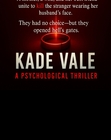
Before the world Applause
Before the world Applause
There is a particular pleasure that bestseller lists cannot give a reader.
It is the pleasure of finding a book before the world has named it important. Of opening a story with no chorus of opinion around it, no algorithm whispering that everyone else has already approved, no pressure to agree with the crowd. Just you, the page, and the quiet possibility that you have stumbled onto something alive.
This is not a small pleasure. It is, in fact, the original pleasure of reading. Before the prizes. Before the adaptations. Before the famous quotes became impossible to escape, every book that came to matter was, for a stretch of time, simply an unknown object in someone's hands.
Then someone said: you have to read this.
That sentence is where literary momentum begins. Not in the chart. In the reader.
It is fashionable, sometimes, to be cynical about bestseller lists. I am not. Most popular books are popular for real reasons — a propulsive story, an unforgettable voice, a character who arrives at the precise moment readers were ready to love them. Bestseller lists deserve their place. They are useful maps.
But they are maps of where reading has already been.
They are not maps of where reading is going.
Publishing has always had to balance art with risk, and risk is often measured in sales long before it is measured in wonder. That is not a moral failure. It is the reality of an industry trying to survive. But it also means that some unusual books must wait for a reader's courage before the wider world knows how to recognize them.
The next book that stays with you for years — the one that lives in the back of your mind for a decade, the one you press into the hands of friends, the one you reread when life narrows — almost certainly has not yet appeared on a list. It is somewhere quieter right now. Half-finished, or freshly published into silence, or sitting in the catalog of a small press that cannot afford a billboard, or self-released by a writer who is trying, with everything they have, to make something that matters.
You will not find that book by waiting for permission.
You will find it by becoming the kind of reader who does not need any.
There is a difference between consuming what is placed in front of us and searching for what might change us. One is convenient. Often pleasant. Always safe. The other asks something more difficult: it asks the reader to trust their own taste before the market confirms it.
That is harder than it sounds.
Trusting your taste before consensus arrives means you might be wrong. You might pick a book that disappoints. You might recommend something to a friend and watch their face when they hand it back unfinished. Discovery includes risk. It always has. No honest reader pretends otherwise.
But risk is exactly where the alive feeling lives.
Independent and lesser-known books are not automatically better. Some are rough. Some needed more time, more editing, more distance between the writer's intention and the final page. The shelves of small-press and self-released work include the brilliant, the strange, the unfinished, the bewildering, and the merely earnest. That is the truth of it.
And yet — every so often, in that uneven territory, you find a book that carries something the polished systems sometimes smooth away. A sentence with an edge still on it. A character too particular to have been designed by committee. A story that refuses to fit clean into a category. A book that bears, unmistakably, the fingerprints of one human being who decided to make this thing whether or not the world was waiting for it.
That kind of book does not always shout.
Sometimes it waits.
And there is a kind of reader who is especially good at hearing what waits.
These readers are not chasing obscurity. They are not performing rebellion against the mainstream. They are not too sophisticated for the books everyone else loves. Many of them adore the bestseller currently sitting on their nightstand. What they have is something else — a private hunger for the undiscovered, kept alive alongside their public enjoyment of the proven.
Their courage is not rebellion. It is curiosity with a spine.
They understand a quiet thing about how culture actually works. Books are not made beloved by publishers, prizes, or algorithms alone. Books are made beloved by the reader who took a chance, then turned to someone they trusted and said the four most powerful words in literary history: you have to read this.
A single recommendation can change the life of a book.
A sincere review can reach a stranger who would never have found the story on their own. A quote shared at the right time can become the doorway through which other readers enter. A short post written without expectation can bring the first ten readers, and the first ten readers can become the first hundred, and somewhere inside that quiet arithmetic a book stops being hidden and becomes part of the conversation.
Not because of magic.
Because someone went first.
We sometimes speak about "supporting indie authors" as if it were a charitable act. That framing is too small, and frankly a little condescending in both directions. Good independent books do not ask to be pitied. They ask to be encountered honestly — measured against the same standard as anything else, given the same patience, and offered the same fair chance to prove themselves on the page.
The reader owes no book affection.
But the literary world owes itself room for surprise.
If we read only what has already been crowned, we become excellent witnesses to other people's discoveries. There is no shame in that. Most readers, most of the time, do exactly that, and live happily inside the pleasure of well-curated taste. But something rare is lost when no one is willing to be first. The next beloved book cannot become beloved unless someone meets it before certainty arrives. The next voice cannot be honored until someone, somewhere, decides to honor it before the chorus exists.
That first meeting is not a small thing.
That first meeting is the entire foundation of every literary movement that has ever happened.
So perhaps the better question, the next time you browse for something to read, is not whether bestsellers deserve their place. Many do. They have earned the table they sit on, or at least survived long enough to be allowed it.
The question is: what are you missing when you never look beyond them?
Maybe the next book that stays with you is not waiting on the loudest shelf. Maybe it has no famous endorsement on its cover. Maybe its writer is still unknown, still refining, still hoping that somewhere in the noise of the world a few patient readers will find what the book is trying to become.
Maybe it is hidden because nobody has carried it yet.
And maybe that is where you come in.
Not as a rescuer. As a discoverer.
The next time you choose a book, let the famous ones have their glow. They earned it. Then look a little farther. Past the obvious recommendations. Past the repeated covers. Past the titles the algorithm has already decided you will choose. Find the book that makes you pause without quite knowing why. Open it. Read a page. Trust your own pulse.
Because literature does not begin on bestseller lists.
It begins when one reader, somewhere, takes a chance before the world applauds.


No comments have been added yet.