Otters!
Over on Gemæcce, my research blog, a post all about the difference between a) the static, two-dimensional profile art of the Early Medieval gospels and Pictish stones, and b) today’s more dynamic, realistic portrayal of beasts.
It’s longish, and not all readers will be interested in what it’s like to try create things like a doe and her faun, an eagle, and swimming orcas in a style that’s related to the Early Medieval. (If you do, of course, you can just follow the link above.) But my guess is quite a few of you wouldn’t mind seeing a few playful otters.
The reason I became interested in trying to draw otters was that I wanted a handmade cover for the tiny excerpt/outtake of Menewood that’s all about an otter that I posted on Patreon. (I did a cover for the entire, previously unseen chapter that went up a week later—but that was just a version of the existing book cover.) I thought it would be easy to draw a quick otter in the style I’ve developed for my zoologics series but, well, it wasn’t!
Otters, like hares, are very difficult to draw in simple black and white lines. They look reasonable enough in photos, and in colour images, and even in realistically shaded pencil sketches, but the minute you try to simplify them they become…improbable.
The first few I tried looked like Frankenbeasts: a blend of seal, weasel, and cat-turning-into-a-beaver. (One unfortunate version was rather like a manatee…) So then I decided to begin with basics: the dreaded static profile. And here I ran into a different problem: to make doubly sure they looked like *otters* and not any of the other mustelids (or marine mammals), I exaggerated things about the face and head that ended up neotonising them, turned them into cutesy baby cartoon versions of themselves.
I went back to the drawing boards—or, well, actually went to look at a lot of photos (lots and lots of photos; so very many photos—thanks to all on Bluesky and Facebook who suggested sites), plus an otter skeleton. And then I was finally able to figure out how to draw something recognisably otterly, vaguely Early Medieval, and with some personality: alert, curious, but not too cute…
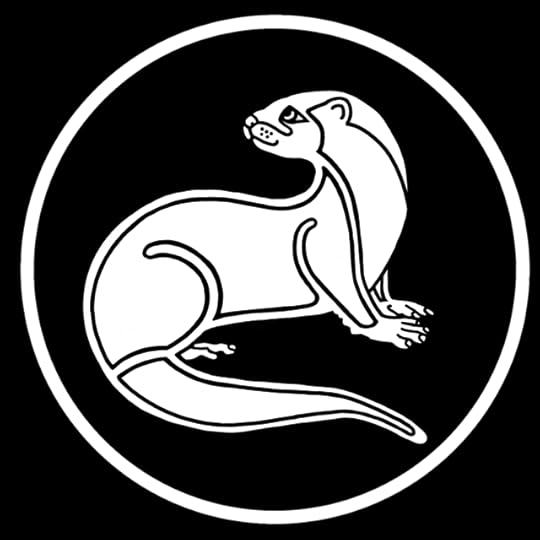
But it’s still a profile. Yes, I turned the head (I’ve learnt that’s the best way to animate an otherwise stiff pose) and artistically curved the tail but, still: a fucking profile. None of that otterly twisting, turning, diving playful curiosity that is so characteristic of the murderers with a twinkle in their eye. So then the hard work began.
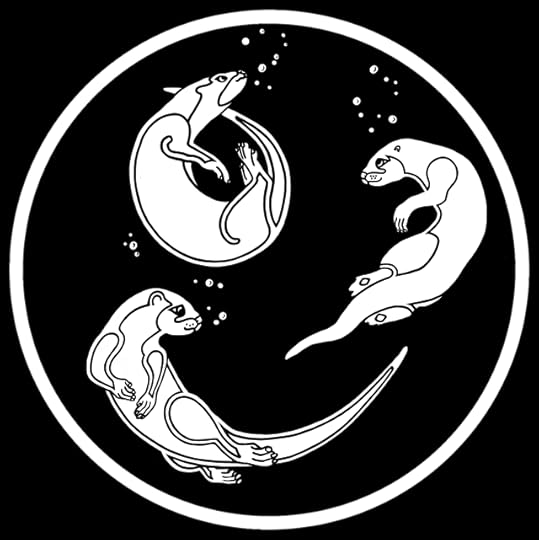
I’ll spare you the litany of woe, the shouting at my iPad, cursing the universe for making such weird and simultaneously attractive animals, and bellowing at the cats when they deleted six minutes work by thoughtfully tapping the wrong icon, and just show you what I ended up with (click through each image to larger versions).
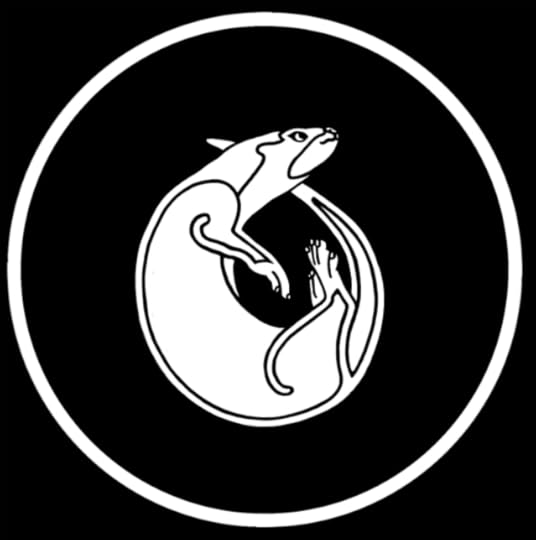


There are things about all three that I like, and things that I can’t figure out how to fix. I experimented with different ways to draw the head, the paws, the limbs. None are quite as successful in their own right as the one in simple profile. If I had to choose a favourite of these three it would be the last—it feels more alive and proportional than the other two. I don’t think it’s a coincidence that it’s also the one that’s least Medievalised. At my level of artistic skill (beginner, self-taught), that mix of Lindisfarne Gospels and Pictish Stones style that I’m fond of does not play nicely with dynamic movement and personality. Could an actual artist do it? Very probably. (And if one of you wants to have a go I would absolutely love to see some otters done right!)
And here, just because I can, are all three otters playing together.