Simon Lazarus
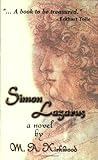 Simon Lazarus by M.A. Kirkwood
My rating: 5 of 5 stars
I picked this book off of my shelf at one of those rare times when I found myself looking for something to read (I usually have 3-4 books waiting). I don’t know where or how I got it, or why I never read it. So I started. From the first page, I was captivated, and during the following days until I had finished it, I found all sorts of excuses for getting back to it, even though I had other stuff I should have attended to. It is one of those exceptional books that grabs you, won’t let you go, and manages to wiggle itself inside and touch something deep within.
It was written in 2003, and the author, Mary Ann Kirkwood, only wrote one other novel, Claire Ange, in 2012. Kirkwood is something of an enigma, as she seems to shun any kind of spotlight. Kind of like J.D. Salinger, which is interesting, because “Simon Lazarus” is often compared to “The Catcher in the Rye.” She was probably in her fifties at the time she wrote it. Otherwise she was active in writing TV scripts and advertising.
This book never really received the attention it deserves. People seem to be totally taken in by it or totally put off. My take is: probably only students of Jungian psychology can really appreciate this book. It is told from the POV of an 18-year old young man in a way that makes you the reader feel he is confiding in you. He’s a bit of a mess: he’s cynical to the nth degree: about his school, his college roommates, his therapist, his parents. Most of all, he is cynical about himself. The only two people he is not cynical about are his sister and his girl, Lisa. And even with Lisa he sometimes goes into cynical mode. This cynicism springs from his doubting just about everything, particularly himself. It is only through the remarks he makes and of those around him that he learn that he is not such a dope as he makes himself out to be.
I am not an accredited Jungian, but I have studied his theories with some seriousness. Simon’s dreams are fascinating, and without some understanding of Jungian dream interpretation, it is hard to follow what they purport. In fact, the entire book is really about a young man “individualizing,” which is a Jungian way of saying that he is coming into his own.
Simon is often listening to music that was popular at the time, and it helped me a lot to keep Spotify open and listen to some of it to get an idea of the mood he was in. If you are reading this as a person who is not familiar with the bands, you lose out on a lot.
Without apparently intending to be, Simon is very funny. He makes half cynical half impish jokes about those around him, about himself. He gets himself into hilarious predicaments.
And then, out of the blue, in the middle of the book, this:
“The sky is all aglow in these incredible colors of orange and pink. And there is even a slight breeze cooling the grass. There isn’t a soul in sight. And I feel like being nature-boy right now or something. I strip off my clothes and wide into the river, leaving my things on the bank. I eye them now and again as I wade into the cool water and rest myself against some rocks. I swim out a bit further, the cool water running through my fingers as I float on my back and wade. The sky has softened into the oncoming shade of night, and I can see the moon and the stars beginning to appear in the summer sky. And I like the way my body feels, naked in the water, that I am just a guy living in the elements, without time or reference, without identifiable demarcations of this or that generation or nationality, for that matter. I just am. A being in the physicality of life. In a place where I’m to live my spirit out for testing. For testing of a self that is forever evolving. A self that always was and will live forever on, in this or or that incarnation; in disparate roles in succession, always leading to more infinite knowledge, a furtherance of co-creating with the orchestral maneuvers that spawn this great universe. It occurs to me that I’m thinking this without hallucinogens. I brought no herb with me on this trip and it’s going to remain that way.”
Even though I might wish a tweak here and there, this book gets five stars from me.
View all my reviews


No comments have been added yet.