The Bridge Between Us
I could feel her eyes fixed on me from across the gift shop, curious and watchful. A few minutes later, she rolled closer, a sweet young girl in a floral fall dress and warm tights, her face alight with interest.
“Can I help you?” she asked politely.
I learned her name was Kindle. She was nine years old.
And she was in a wheelchair.
“Yes, I’d love some help,” I answered. I told her I was looking for a birthday card for my husband, but nearly all of them seemed to be intended for women. We looked through the carousels of cards and, together, settled on the most convincingly masculine one we could find.
She moved around the store with confidence, so at ease it almost seemed as if she owned it. I couldn’t help but wonder why she was there on a weekday morning. Delighted by my question, she replied, “Oh, this is my shop.”
And I believed her. There was something about her presence, her poise, her intelligence, her joy, that filled the little shop with warmth.
“Do you have any children?” she asked.
Why yes. Four boys, four girls, I told her. Her eyes went wide.
“Really? Do you have a picture?” she asked eagerly.
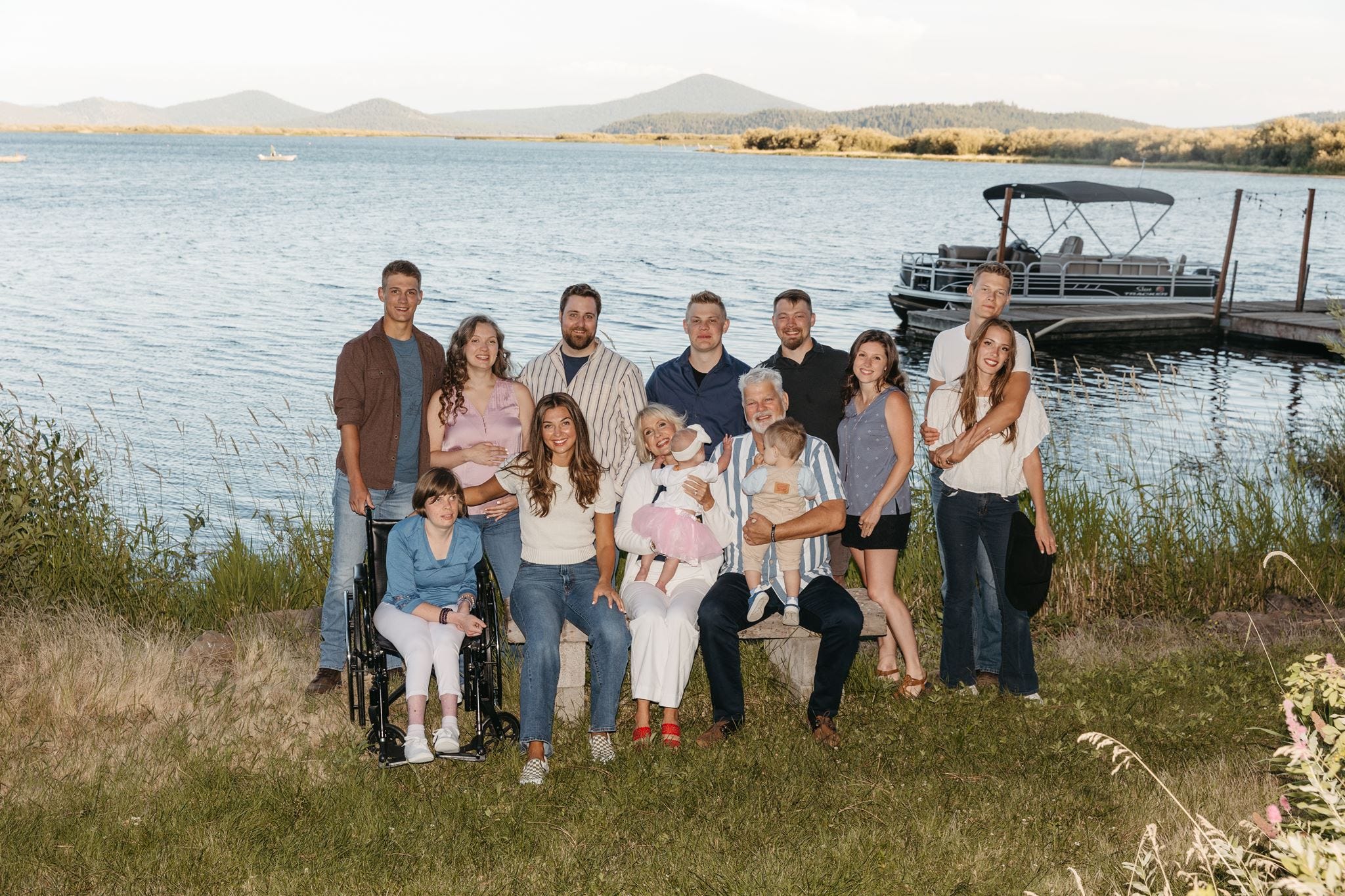
So I pulled out my phone and found a recent family photo, a big, happy group gathered around the lakeside, including several spouses and a couple of squirmy grandchildren.
She studied it much longer than I’d expected. Then she suddenly stopped. Astonished, she pointed to our youngest daughter, a childlike twenty-five-year-old.
“She’s in a wheelchair!”
“Yes,” I said.
“Just like me!”
“Yes, just like you.”
That’s when her mother stepped out from behind the cashier’s counter to see what had captured her daughter so completely. We’d never met, but somehow introductions seemed unnecessary.
“Kindle has spina bifida,” she informed me simply. “What about your daughter?”
“She had a stroke in utero,” I replied.
Her mother nodded in understanding, as if we were discussing something as ordinary as eye color.
I liked that.
There was no awkwardness, only a comfortable recognition—the kind of understanding that passes between mothers who share similar roads.
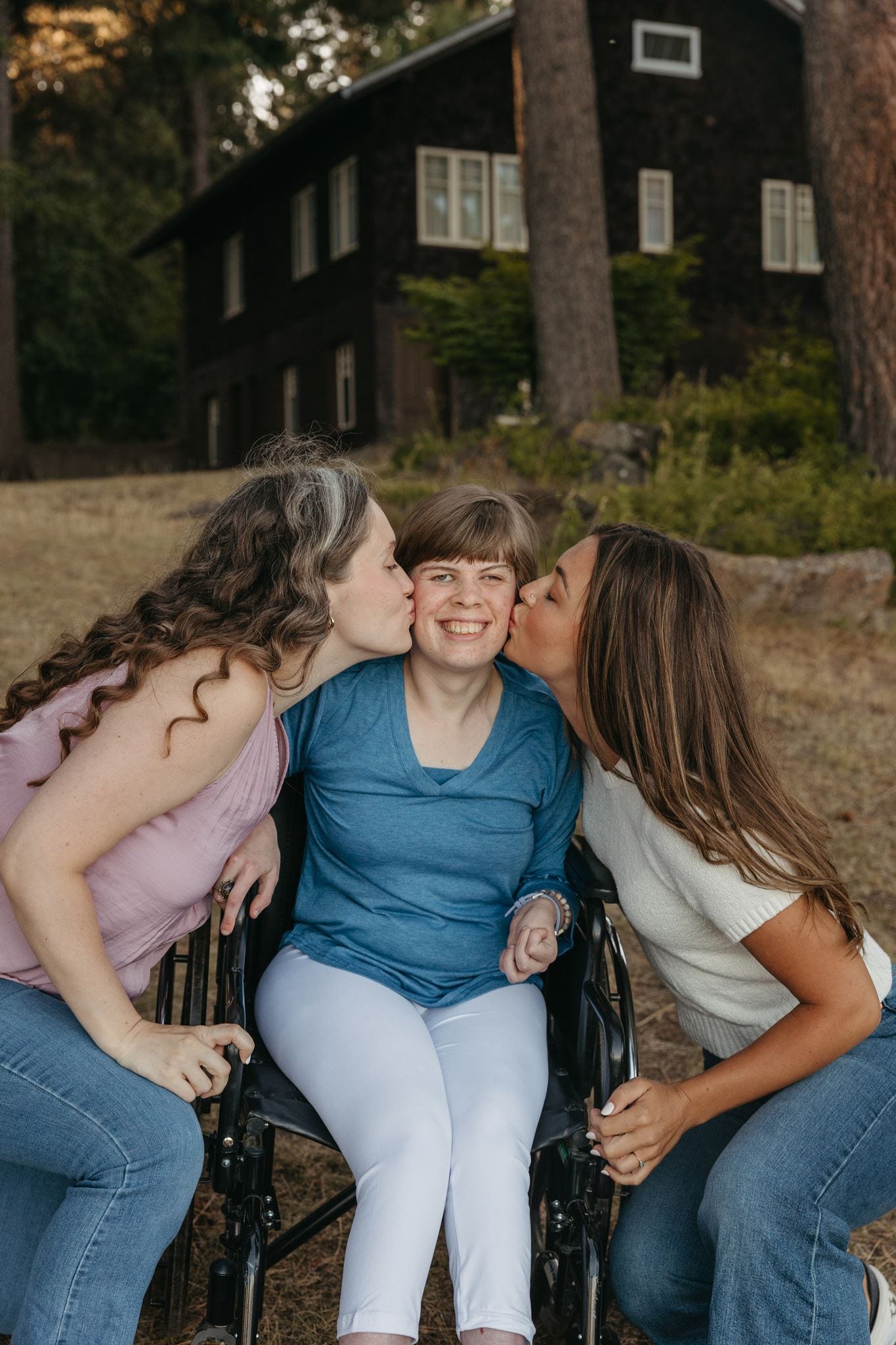
Kindle continued to be captivated by Avonléa’s picture, so I found myself asking, half on impulse, if she’d like to meet her in person.
“Please, I would!”
So the next thing I knew, I was driving twenty minutes across town to pick up Avonléa and bring her back to the shop. I pushed her wheelchair up the ramp, where Kindle was patiently waiting to meet her on the small porch.
The girls were a bit shy at first, but before long Kindle was showing Avonléa around “her shop,” enthusiastically pointing out shelves and displays with pride. Within minutes, the two of them were laughing at something only they understood.
Kindred spirits meeting for the very first time.
I stood back and watched them—sixteen years apart in age, worlds apart in other ways—and I could not stop looking. Two girls in wheelchairs, gloriously unbothered by anything except the joy of having met a new friend.
And I thought about myself, about the grief of relationships that did not turn out as I had hoped—someone I love who is no longer close, a friendship I once believed would last. Those losses have left their mark. Sometimes I wonder how much they have shaped me. They can make me more guarded than I want to be, wondering whether it is wise—or safe—to let someone come close again.
And I wondered whether you have your own reasons for holding back.
And yet, I don’t believe that’s how God sees it. He doesn’t view our weaknesses and vulnerabilities as barriers. Rather, He wants to use us exactly as we are—scarred, unpolished, unfinished—to build a bridge to someone we might otherwise have missed.
Our hardships and heartaches, whatever they may be, can become the very thing that connects us to someone who has been longing to know they aren’t alone.
So the next time you catch yourself wishing away some weakness, some wound, some grief, think of a darling nine-year-old shopkeeper. She wasn’t looking for someone without struggles. She was looking for someone who understood hers.
Someone she could look at with delight and say,
“Just like me.”
In His grace,
Lisa
P.S. This one is available to listen to as well — I recorded it in my own voice, which felt right for a story this personal. There's something about hearing a story that gets me every time, and I hope it does the same for you. You'll find the audio at the top of the page.
If this writing strengthens and steadies you, consider subscribing — as a free or paid reader — to receive future reflections and help sustain this work.