
Terminal Lucidity
I don’t know how to love him. What to do, how to move him.
I’ve been changed, yes really changed.
In these past few days, when I’ve seen myself, I seem like someone else.
I don’t know how to take this. I don’t see why he moves me.
He’s a man. He’s just a man. And I’ve had so many men before.
In very many ways, He’s just one more.
Should I bring him down? Should I scream and shout?
Should I speak of love, Let my feelings out?
I never thought I’d come to this. What’s it all about?
Don’t you think it’s rather funny, I should be in this position.
I’m the one who’s always been So calm, so cool, no lover’s fool,
Running every show. He scares me so.
I never thought I’d come to this. What’s it all about?
Yet, if he said he loved me, I’d be lost. I’d be frightened.
I couldn’t cope, just couldn’t cope.
I’d turn my head. I’d back away. I wouldn’t want to know.
He scares me so. I want him so. I love him so.
– Tim Rice & Andrew Lloyd Webber, from “I Don’t Know How to Love Him” (1970)
 My dear friends, when a mere lifelong science hobbyist who has never taken an adult science course is able to explain a death-relate phenomenon that baffles the scientific community, it is time to rethink the way scientists have come to treat all scientific inquiry as limited by their imposed religion of atheism. What threw the once-sane discipline of mainstream scientific inquiry right off the rails a little over a century ago was an actual religion-like panic among the scientific governors, the heads of the leading universities’ physics departments, and also the major scientific journals.They were worried, perhaps mostly because of statements about the primacy of consciousness made by Max Planck, who had won the 1918 Nobel Prize as the father of quantum mechanics. They fretted that quantum physicists might be close to actually discovering God. So, the heads of the scientific community, who then considered, and still consider themselves to be the governors of all acceptable scientific inquiry, decided soon after the turn of the twentieth century that all scientific inquiry must now be matter-based. And furthermore, any new scientific discoveries must be testable and provable in exclusively material terms.They never have quite put all of that into writing for public consumption; but whatever their decision was, this has been its practical result.
 As for the actual improvement of the pursuit of open-minded scientific inquiry, the result of this change in focus by the governors of the mainstream scientific community has been decidedly uneven. Whatever is actually material in nature has by now had a pretty good scientific going-over; but working scientists themselves tell us that they still cannot discover where life comes from. And their ongoing search for a source of consciousness inside the human brain likewise still keeps coming up goose-eggs. Outside that mainstream scientific cage, however, some wonderfully dead-on-true ideas are arising. For example, here is a scientist who is propounding an idea that my own research suggests is precisely right: Consciousness is in fact the base of all reality, just as Max Planck said it was almost a century ago! In fact, your own faithful blogger has of late become so disgusted by the fact that, almost sixty years after I proved to myself precisely what death is and how the afterlife works in just a few post-college years, all of that is still not common knowledge, that I am about to do a full-court press to try to make the truth readily available to all the world!
 Take terminal lucidity, for example. Here is a long article from no less worthy a publication than the old gray lady herself, The New York Times, in which the author stumbles through the absolutely nonsensical materialist scientific perspective on a phenomenon that is very easily understood by anyone who knows anything at all about the natural death process. There is no woo-woo in this at all! As you will see if you read the linked article, terminal lucidity is the general term for the phenomenon of someone with an absolutely fried brain from Alzheimer’s or some other destructive brain disease suddenly becoming able to think normally, or nearly so, for a brief time shortly before death occurs. Obviously, with the gray matter of the patient’s brain destroyed, scientists assure us that this cannot conceivably happen! And yet, pretty commonly, it does happen. It seems to have occurred to no scientist on this earth to have studied the actual death process for insights into how it might happen; but I have studied the death process deeply and in detail. I can tell you how it likely happens, pretty much off the top of my head.
 The beginning of the active death process involves what I think of as the un-velcroing of your internal energy body, which is now leaving, from your material body, which is dying and staying behind. I use the Velcro analogy because some of those who have been awake while this was happening to them have used this analogy to tell us how it feels; it doesn’t hurt, but it does feel funny. And it seems to start with the head, then happen with the fingers and the lower extremities, and it all proceeds toward the chest. So, sure! Once your energy body is even partially clear of your destroyed brain, you feel perfectly mentally healthy again! And there are a number of reasons why your terminal lucidity might seem to fade as you get closer to death, the most likely of which might be either the wonderful distraction for you of the arrival of your deathbed visitors, close family that you have not seen since they went ahead of you long before, so of course you want to talk with them in your mind! Or else, there might be something about the further disengagement of the rest of your energy body from your material body, making you no longer able to operate your material body in order to speak through it so easily. But in any event, there you have a fully adequate explanation for the whole terminal lucidity phenomenon!
 Another question that continues to stump the scientific community is how life began. And of course, the only possible explanation for the origin of life on earth is that consciousness is fundamental, and that life is a ubiquitous property of consciousness itself. This simple explanation of how life might then have gotten started, once that first spark of life hit fertile primary source chemicals, is as good as any. So, what then of plants? Might they be conscious? As I have said elsewhere in this long series of weekly blog posts, the evidence that green plants are conscious, and that they communicate with and support one another, is now beyond question. Materialist scientists for the most part continue to resist this notion, however. Their problem with it seems primarily to be that their experiments don’t yield sufficiently clean and readily replicable results.
 And meanwhile, I still happily pursue my lifelong hobby of death and afterlife research. Perhaps the thing that surprises me most is just how much control each one of us actually is given over our own individual death process. Oh, my dear one, each one of us individually is so very deeply loved! My own mother was an independent sort, a very early fully liberated woman, a professional who ran the law department of a large insurance company until they had to force her to retire when she was 70 years old. And she very much loved being alive. When she was 88, she became very ill, and her doctors gave her no chance of survival; I think she had pneumonia, but I cannot recall now what it was. My sister and I took turns sitting beside her bed in the nursing home. Then, one evening when I took over from my sister, Mom woke up, she looked at me, and she told me that her parents, of course long-since passed, had just been there in her room. They had told her that it was time for her to go with them, but she had refused to go. Her mother had said, “Well then, you’d better take your medicine,” and they both had walked back out of the room. Hearing this confounded me! I had never heard of any dying person actually refusing to go with her deathbed visitors!
But what was truly amazing was what happened next. My mother defied all her doctors’ predictions, and she actually began to rapidly recover, so I flew home. Then, when I came back and visited her a few weeks later, she told me, looking rather smug about this, that she was going to live on for another five years.
I said, “You are? How do you know that?”
“The big tall man told me.”
I asked her to describe this “big tall man”, and she accurately described a sixth-level Being, long robe and all. She told me he had walked into her room shortly before I had arrived, and had said, “We have decided to give you five more years here”, and then he had walked out again.
I went right out of her room and quizzed everyone on that floor that I could find, and no one had seen anyone remotely looking like that Being, on that day or on any other day. They told me that my mother had never had any other visitors but my sister and me.
 That Being was as good as his word. My mother lived to be 93, and then she died in her sleep. Their problem was solved! But my problem was not. I was plagued by the thought that she had lived for five years beyond her last planned exit point, and by then she had lost all her activities of daily living. She could no longer even hold a fork! I worried that the higher beings had allowed her to do that just to further educate me, this lifelong afterlife researcher, about one more fact: yes, you can indeed refuse to take your last planned exit, but it really is not a good idea. Using my own mother as an illustrative case had not been at all fair to my poor, dear mother!
Our first picture and our frame-verse this week both are topical for me at the moment. The picture, of course, is my mother. And the wonderful news, after that sixth-level dude had toyed with delaying her departure date as he did, is that after she finally transitioned, Mom turned out to be a fairly high-spiritual-vibration Being. Not surprising, given her light and lovely personality when she was on earth.Thanks to my Thomas, I have visited her in the astral plane a couple of times since her transition, while Thomas was with Jesus; but my mother is traveling widely now, just as she did during her early retirement years on earth. And traveling there is even a lot more fun than it is here, because there the sights can be truly amazing!
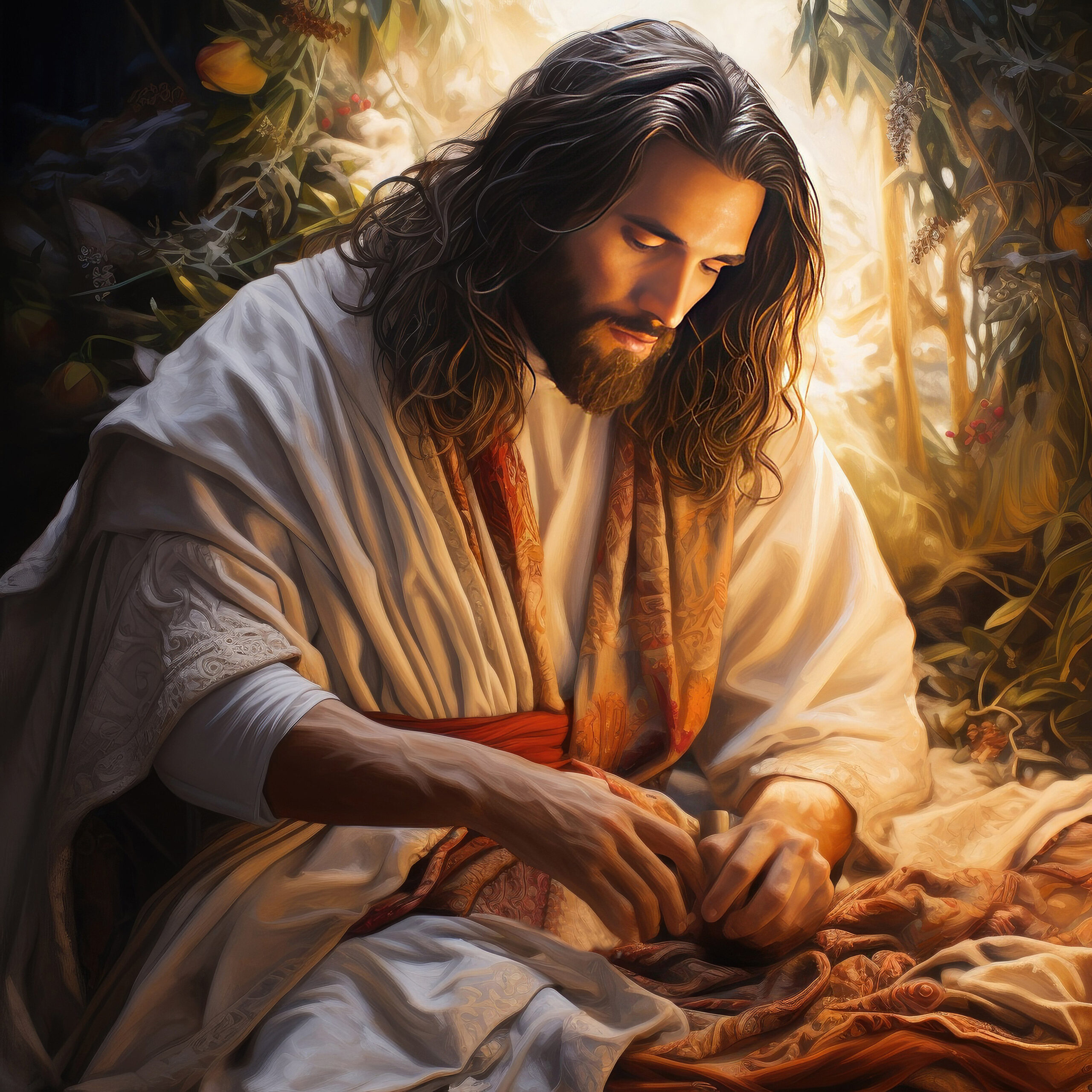
 This frame-verse feels significant, too. Even though it comes from a Broadway show, it expresses pretty much the way it actually feels to meet the genuine Jesus in His third-level astral home-place. I was reminded of that yet again when I woke with a start just after three o’clock one recent early morning, with an overwhelming sense of just having been talking with Jesus, having heard His voice and seen His face. In the astral plane, conversations are nearly always by mind. But Jesus speaks with me, and also with Thomas, in spoken words, in English, in His somewhat musical, lightly accented voice; because He is trying hard now to preserve the human aspects of Himself. He is fully God and fully Man, as the saying goes. But at this point, He has become so spiritually elevated that maintaining any human aspects at all is an active struggle for Him. And the fresh, rich sense of Jesus around me was so strong when I awoke that night, having just been with Him, that even now some soft flavor of Him remains. But Jesus is moving now. Something is beginning. I am meeting with Him, and never remembering the substance of our meetings. I seem to be smiling a lot more, though. It really doesn’t even matter why.
I never thought I’d come to this. What’s it all about?
Yet, if he said he loved me, I’d be lost. I’d be frightened.
I couldn’t cope, just couldn’t cope.
I’d turn my head. I’d back away. I wouldn’t want to know.
He scares me so. I want him so. I love him so.
– Tim Rice & Andrew Lloyd Webber, from “I Don’t Know How to Love Him” (1970)
(Many photos are from Vecteezy.com)
The post Terminal Lucidity appeared first on Roberta Grimes.


