
Defy Convention
“We thought they’d never end.”
A lot of us are looking back these days at the freedom we once had; where the American dream was a thing and available to all.
As I have shared, I had an unusual upbringing marked by privilege but not without its terror. Nowadays kids have drills on what to do when a shooter is on the loose. We had drills on how to hide under our desks in case of nuclear attack.
Let that sit a minute.
My teenaged-self had no larger goal than to have fun and dodge the shame of not meeting my parents’ expectations which were off the charts. The tradition in our family was you spent your summers racing sailboats on Lake Michigan, whether you were the captain or the crew, the family reputation was at stake and participation was non-negotiable.
I met this challenge dutifully but not without angst. I was the only girl skipper in the small fleet of Flying Scots my father started at the Ephraim Yacht Club in the 1960s. My older siblings, who might have been championing the family name with me had already completed their servitude and had flown the coop. You didn’t rest your head at night without meeting the high expectations of my father and mother.
Racing sailboats is very competitive. At the start of the race, the starting line is typically aligned so the wind is directly on the nose. This means sailors have to choose a strategy based on what tack they will take and where they will be when the gun goes off. This is often a small cannon that issues a really cool explosive boom followed by an impressive issue of smoke adding to the drama.
Thanks for reading Defy Convention! This post is public so feel free to share it, like it or restack so others can see it.
Racers are given a 10-minute and 5-minute warning and during this short time the sailboats jockey for position. Typically, you want to be on the Starboard tack because you will have the right of way, and you want to be above the wind from all the other boats where you will have clear wind as you charge toward the line, but you have to carefully judge so you don’t cross the line prematurely—which will cause you a penalty and most likely the race—or slam into another boat. This happens. Many sailboat races are determined by the start, but a lot can change throughout the course like wind changes, mechanical screw-ups, or bad strategic decisions.
Even in the climate of 1969 it was unusual, for a sixteen-year-old girl to trailer a nineteen-foot sailboat 30 miles to a regatta, launch the boat, race all day in a howling wind, and return that night before dark because I was too young to drink at the local teen bar with the rest of the sailors. You might say I became a feminist by default. Would I have participated in this high-stakes sport without all the expectations balanced on my shoulders? Maybe not and yet I did. Knowing nothing of white privilege then, I did listen to the inner voice, that whispered, ‘this is your life make of it what you can.’
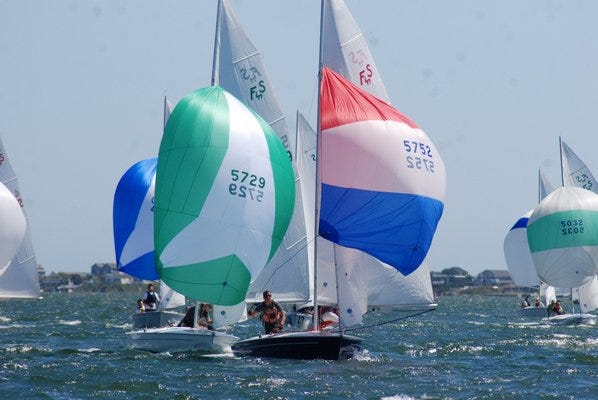
Still very ingrained in my mind is this memory…we’re riding a stiff wind like an air hockey puck scooting across the water with the centerboard all the way up and the chute tugging us toward the drawbridge like the eightball on the last shot. Adrenaline is still running high, but the anxiety of the day filled with competitive sailing is behind me.
I’m sure there were two of my most loyal friends who served as crew members in the cockpit with me at that moment— indispensable for the 3 races we sailed that day, typically a triangle completed by a windward leeward loop—but after all these years their faces have melted into the wind and all I can remember is the high of sliding through the drawbridge with the spinnaker pulling us forward like a projectile released from a slingshot.
For such a moment, the skipper stance for a downwind leg in a Flying Scot is to stand with each hand gripping a spinnaker sheet pulling at you, like a kite on steroids while the downwind helm is forgiving and easy to control with your legs. It wasn’t terribly risky to sail like this through the lifted bascules of the Sturgeon Bay drawbridge pointing toward the sky, but it produced a heady triumph to the moment.
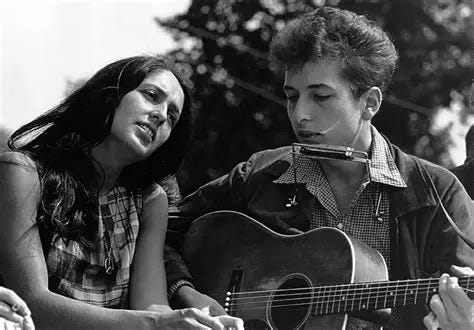 Joan Baez and Bob Dylan
While I had no clue how privileged I was, there was freedom in the air, in the music, in the attitudes of young people. Because of the introduction of “the pill” women had the opportunity to explore their sexuality like their male counterparts did without fear of pregnancy. For the first time in human history, sexuality was not a moral issue baked into social mores, although that antiquity of the double standard has resurfaced in recent years thanks to a lot of hypocrites who think nothing of voting for a man who has been judged guilty in a rape case, recorded as saying horrible things about women and boasting of taking advantage of them, all the while prominently appearing in pictures with underage girls in the Epstein files.
Defy Convention is a reader-supported publication. To receive new posts and support my work, consider becoming a free or paid subscriber.
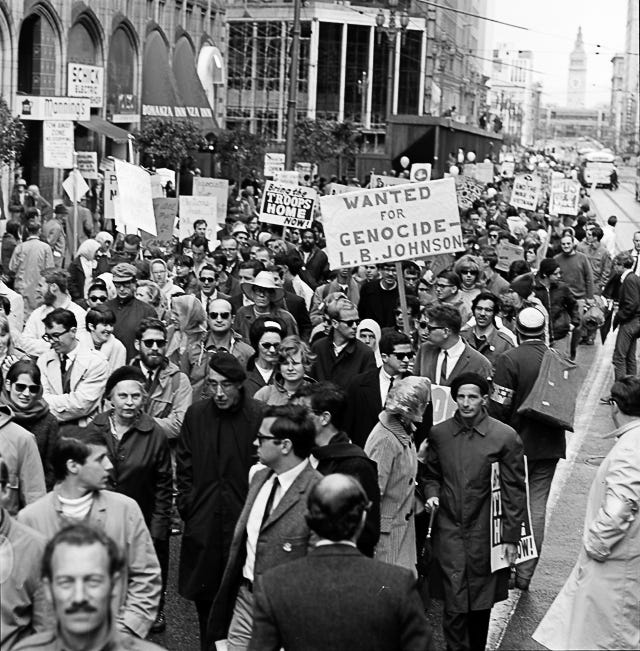
In contrast to today’s youth who are witnessing the dismantling of Democracy, we had so much to look forward to. We even saw the power of our vocal outrage convince a War Hawk like Lyndon B. Johnson to end the Viet Nam War.
In contrast to how children are being raised today, I see my parents’ parenting style was on the dysfunctional side of the fulcrum. Expectations and shame were yielded like swords, but I think this was fairly common for post WWII parents who had looked down the gun barrel of Nazi Germany and its horrors, and persevered. They were a tough bunch inspired by such heroic events as the storming of Normandy and their progeny the product of their communal victory. When I fell and skinned my knee, my mother told me to brush it off, while my father frequently advised me ‘the truth would set me free.’
Another example of the rough-shod parenting I was exposed to was when I was about 10 when my father helped me induce our $200 horse he purchased from a riding stable—I loved Hunter dearly but he was just a step above a mule with his really tough mouth and bad feet—jump over a two-by-four perched on an upended oil barrel by standing nearby with another two-by-four in his hands, threatening to whack Hunter with it. Horse and rider accomplished the leap over the crude three-foot-plus obstacle. Did we have a choice?
There is something inspiring about how a horse leaps with you on their back. You grip with your knees, raising your body off the saddle and lean forward into it. It was probably the highest hurdle I’d ever gone over on a horse, and I can assure you it was terrifying. I’m pretty confident that’s what Hunter thought about the event as well.
However dysfunctional my family of origin was, we had great adventures, and meeting those challenges toughened me for the life to come until now. I was never prepared for this. The end of Democracy. Perhaps we can slowly pull it back out of the sewage and resurrect it with improvements. I certainly hope so for the sake of our children and their children.
While the past is the past it is important to see it for what it is, how it has affected us, what we learned from it and how we allow it to shape our future. Unlike the summer of 69 I do not see young people engaged in their future the way we were back then. The rich and powerful continue to arrange warfare for the young to fight, but the fight has become so insidious, now it is not only on foreign shores, but it has killed Democracy, crept into our privacy, our bank accounts, our ability to find work, and our minds. Rudeness prevails. We must resist.


