FINDING LINCOLN
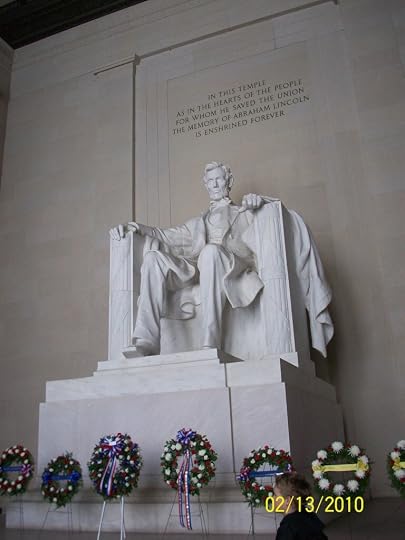
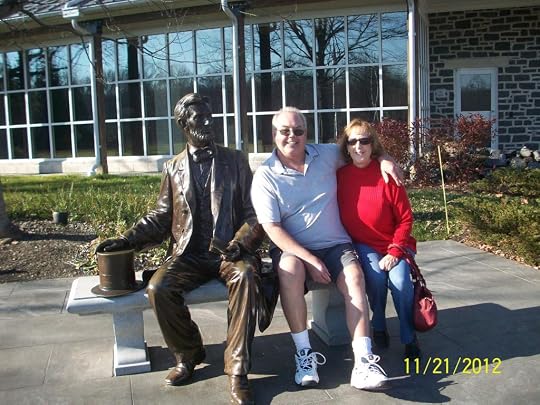
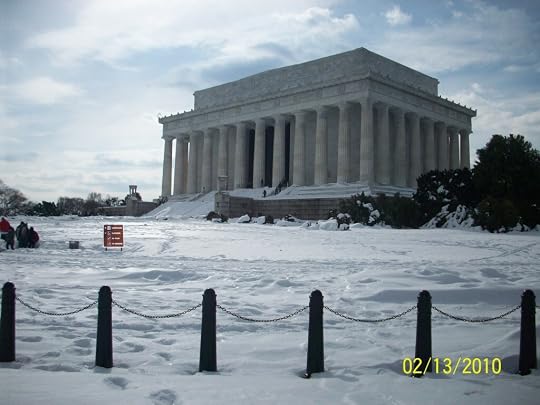
Abraham Lincoln is an inspiring man. I know he’s been dead for 161 years, but he lives on in the hearts and lives of people all over this country and the world. We visited the Lincoln Memorial in February of 2010, as you plainly see in the photo. We had a fun time hiking through the snow and ice that day. A few years later, we visited Gettysburg, the site of one of the Civil War’s longest battles and a turning point for the Union cause. In this 250th year of the signing of the Declaration of Independence, I’ve been thinking about the leaders our nation has been blessed with, men of character and honorable intentions, who made a difference at critical times in our history. George Washington, Abraham Lincoln, and FDR come to mind quickly. Our nation has also had our share of those who weren’t as dedicated to honor as we hoped when they were elected, with administrations prone to poor judgment, such as Warren G. Harding and the Teapot Dome scandal, or Andrew Jackson’s support of the Indian Removal Act, culminating in the infamous Trail of Tears, causing thousands of deaths from starvation, disease, and exposure. Many of us remember the Watergate scandal of the Nixon years, or Reagan’s lapse of “knowing” anything about the Iran-Contra Affair. None have been perfect. But most tried to do their best for our country.
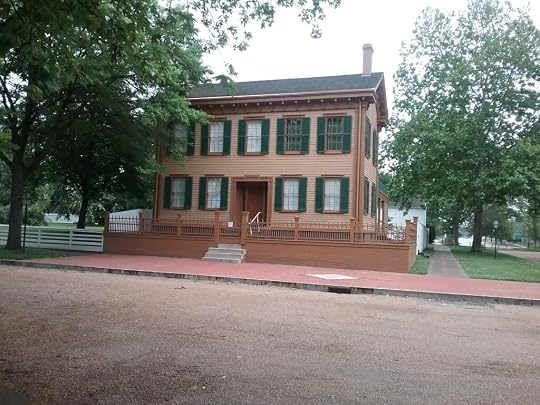
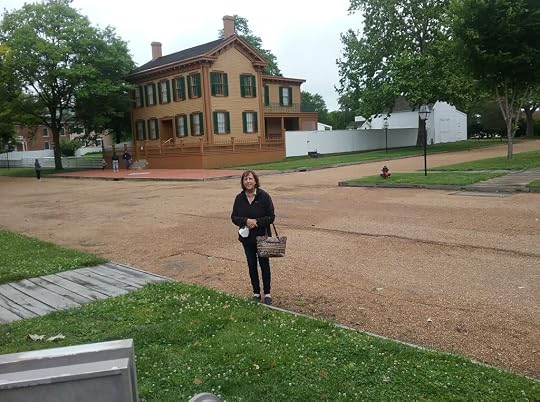
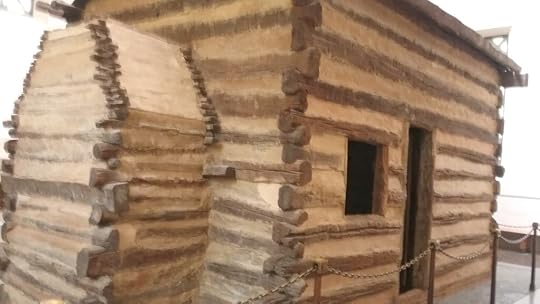
During the later part of the Pandemic, we visited Springfield, Illinois, and walked through the deserted streets where Lincoln and his family lived for many years prior to his Presidential election. Of course, everything was closed, and we couldn’t see much. That original neighborhood has been preserved as close as possible to how it appeared in the 1860s, right in the middle of the city. I thought about how his young family lived in this house in a thriving city, his sons growing and romping like boys do. Lincoln loved his sons, and he was devoted to them. He understood the problems of the common man: trying to succeed in life, care for his family, and give them the benefits of education and a better life. It was fascinating, and I hope to visit again. Another time, we visited the Abraham Lincoln Birthplace Memorial in central Kentucky, where we saw a replica of his birth cabin inside a museum. It was tiny, but I could visualize a young Abe next to a fireplace, reading a borrowed book. He said he learned by “littles,” a little bit at a time. He didn’t waste a moment.
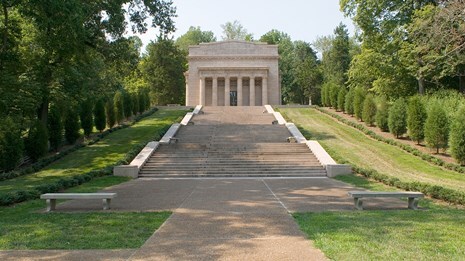
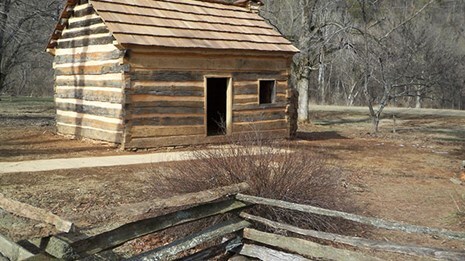
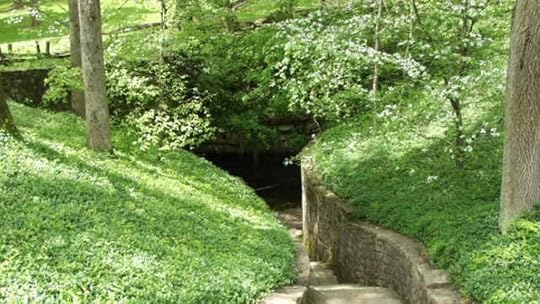
We enjoyed roaming this large, uncluttered area, which gave us a good feel for how Lincoln started out in life. The far right photo is of Sinking Springs, which had other names, but was a natural water source the Lincolns used. It was a beautiful place. After their move to Indiana in 1816, Abe and his older sister later attended what was called “blab” or ABC school, a typical primary school with no books or pencils, where they learned orally: the teacher ‘blabbed’ out the lessons, and the students ‘blabbed’ them back. You may not know that Lincoln was a middle child. He had a younger brother, Tommy, who died at 3 days old. High infant mortality was common. We know that other men who became President came from humble beginnings like Lincoln. He struggled throughout his life, was self-educated, hard-working, and suffered losses along the way that deeply affected him. It was in Indiana that his beloved mother, Nancy Hanks Lincoln, died. He also struggled off and on with depression. It never stopped him from doing what he needed to do -the right thing. He didn’t believe in excuses.
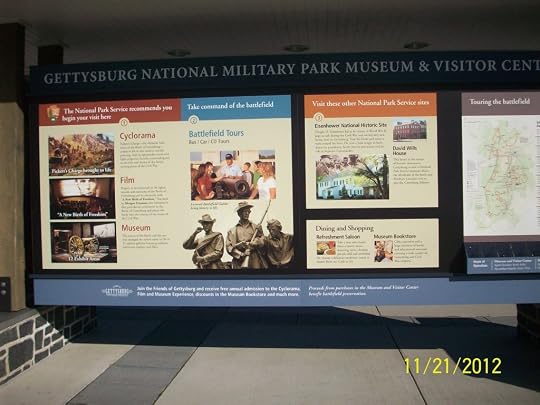
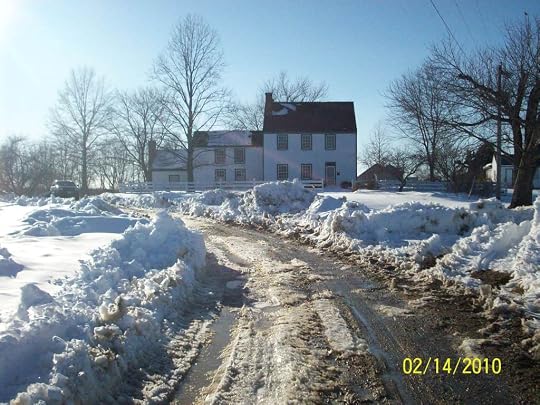
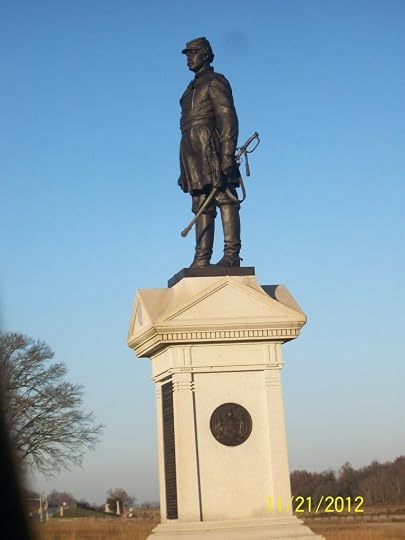
The Civil War defined Abraham Lincoln. It was the deadliest conflict this country has ever fought. Recent research of digitized census data puts the death toll at 750,000, with most from disease causing the majority of the deaths. No number can capture the people whose lives were forever changed. The deep wounds of that war still haunt us today. My own great-grandmother, Malissa Reed, was one who lost her home in Mississippi and moved with her family to Texas to start again. Carpetbaggers ran rough-shod over those struggling to survive, stealing everything they had left. Many of these things only happened because of the assassination of Abraham Lincoln, but we can never be sure. Andrew Johnson’s lenient Reconstruction, with minimal reforms and failure to oppose the numerous Black Codes legislated in the readmitted southern states, set the tone for over a century – still hanging over this country like a toxic cloud. The house in the middle above is a picture of the home of Dr. Samuel A. Mudd, a physician in southern Maryland who was hanged for his part in aiding John Wilkes Booth’s escape after he assassinated President Lincoln. Debate continues over whether Dr. Mudd even knew the identity of the man he patched up.
Several years ago, I read the book by historian Doris Kearns Goodwin, Team of Rivals. It is a fantastic book and a superb read. This man chose men for his cabinet from those who had opposed his presidency. Some called him ignorant, unfit, a gorilla, a buffoon. Some craved his position. President Lincoln put those men closest to him – in his cabinet. He didn’t want “yes” men; he wanted to be challenged, to hear all sides of an argument, and to learn from each man’s perspective and expertise. Abraham Lincoln wasn’t perfect. He was too forgiving with his Generals. I suspect that because they were highly educated and trained, he tended to accept their ideas. But he was also smart. When they failed him time and again, he fearlessly stepped up, replaced them against all advice, and finally saw the tide turn. In the end, he gave his life for the Union, but he righted a terrible wrong – he broke the shackles of a people who were different from him. It was the right thing to do.
Thank you for reading my post and I hope you enjoyed it. See more about my books and other writings at https://vcwilliamsauthor.com
Like and Comment below! I’ll see you next time.