What Is Speculative Fiction?
 The Minnesota Speculative Fiction Writers Group (aka MNSpec) occasionally does some public events, such as the 2013 Speculative Fiction Writers Showcase which I hosted at Acadia last month. Whenever we show up in public, the question always comes up:
What is Speculative Fiction?
For the record, no one has ever asked me to explain the categories of Fantasy or Science Fiction. Most people learn at an early age that if a story has dragons in it, then it goes in the fantasy section, and if it has time travel in it, then it goes in the science fiction section. But then someone came up with time-travelling dragons and pitched a spanner in the works. Imagine the poor librarian, trying to decide where to put a book about cybernetic fairies, or spaceships powered by dwarven runes!
So the lie I like to tell is that “Speculative fiction encompasses sci-fi, fantasy and horror.” This isn’t necessarily a lie. It’s a common use for the term, which is no surprise. Due to its very nature – that of speculation, or ‘what if?’ – it does lend itself to stories with elements of the fantastical or the bizarre. Wikipedia agrees:
“Speculative fiction is an umbrella term encompassing the more fantastical fiction genres…” From: http://en.wikipedia.org/wiki/Speculative_Fiction
Given its cutting-edge content, you might assume the speculative genre is a relatively new concept. Robert A. Heinlein is credited with using the term back in 1947. But speculative fiction has been around for almost as long as we have been telling each other stories.
One of the earliest examples may have been by the ancient Greek Euripedes who shocked and offended his audience by writing a play in which the goddess Medea, rather than having her children killed by the Corinthians, killed and even, in some versions, ate them herself. This changed mythology forever and gave us the Jungian archetype of the devouring mother. Shakespeare’s ‘A Midsummer Night’s Dream’ was the speculative fiction of its day, bringing together an Amazon queen, an English fairy, a Roman God and a Germanic king in a fictional Fairyland.
Speculative fiction (or ‘spec-fic’) is used to describe stories ranging from simple alternative, to cutting-edge, all the way to the weird and disturbing. It’s much more than simply the collection of sci-fi, fantasy and horror. And it’s more than just ‘fiction that speculates’, because all fiction does that.
Some have even asked “Isn’t all fiction speculative?” And to some extent, it is.
So why the distinction? Why have the term at all? And if speculative fiction isn’t just a meta-genre for sci-fi + fantasy + horror, then what is it?
Speculative Fiction, Un-Defined
Much of the discussion about speculative fiction is… speculative. Read a dozen blog posts, and you’ll get a dozen answers. (For even more fun, search for Venn diagrams of speculative fiction.) You’ll find that not all bloggers are in agreement, and even the definitions between ‘authorities’ differ. They clamor over one another, muddying the waters with overly simplistic or overly complicated attempts to draw the line between what is and what is not speculative fiction. Read them all to find the essence of speculative fiction and you’re likely to come away knowing less about the subject than you did when you started.
The very worst part is that none of them are necessarily wrong. One thing they all agree on is that speculative fiction does exactly what its name implies - it speculates.
Spec-fic poses a ‘what if?’ scenario and runs with it, often into deliciously dark places. It speculates about the big questions, about what it is to be human (or not human). For example, a sci-fi novel may explore humans in the future who discover a way to travel faster than the speed of light. But in a speculative novel, the whole concept of ‘speed of light’ turns out to be a vast inter-galactic conspiracy run by the descendants of the dinosaurs. A typical horror film may feature a schizophrenic trying to cope with his delusions only to discover he is, in fact, not mentally ill but possessed by demons. In a more speculative tale the schizophrenia sufferer uncovers that the disease itself is a result of humanity’s interrupted evolution towards its true demonic state.
Speculative fiction also provides a safety net for stories that slip through the bounds of traditional genres, or stories which break all the norms of the genre you would typically associate the tale with. Alternative histories such as Robert Harris’s Fatherland (set in Germany in the sixties after Hitler won the war) can be classed as speculative fiction. Dystopian fiction, like Suzanne Collins’s The Hunger Games, is another prime example. While there are elements of sci-fi, horror and/or fantasy in these stories, they can’t be neatly categorized into any of them.
Another problem in defining spec-fic is that there can be some subjectivity as to what qualifies as speculative. A medical thriller may seem very speculative to me if it contains some weird technology I’ve never heard of, but it might not seem speculative at all to a scientist who works with that technology every day. This is a clue, pointing at the essence of what we mean by speculative fiction.
Speculative Fiction, Redefined
Fiction means non-factual. Un-real. Made-up stuff. All fiction, by definition, contains elements that do not exist. But for something to be called speculative, it has to be more than just made up. It must be about events that we cannot experience, beings we cannot meet, doing things we cannot do in places we cannot go. Elements not just outside of our world, but outside of our very reality.
Spec-fic is about worlds… but not this one. The more the world is unlike our own, the more we must turn to artists to speculate on what it might be like, and therefore, the more “speculative” it is. This means that speculative fiction is not a hard-and-fast definition marked off with a thin, red line. It is a continuum. A spectrum. This explains why the definition itself is so slippery. So here’s my suggestion:
Speculative Fiction is a measure of un-realness. The more a fiction story contains elements that do not or can not exist in this world, the more speculative it is.
The Shallow End – More Fiction Than Speculative

The Catcher In The Rye by J.D. Salinger. Fiction? Yes. Speculative? Meh.
J.D. Salinger’s The Catcher In The Rye is unarguably fiction. The characters in the story do not exist in this world, and the events that take place in the story never happened here. So while The Catcher In The Rye qualifies as spec-fic, it rates low on the scale. Holden Caulfield’s world is very much like our own. It is not much of a stretch to your imagination that he might actually exist. It makes more sense to call The Catcher In The Rye fiction rather than speculative fiction, although neither is incorrect.
In the crime fiction story Darkly Dreaming Dexter, a serial killer becomes a detective in order to hunt down and kill other serial killers. Darkly Dreaming Dexter is definitely fiction, definitely dark fiction, and it is speculative, although it also ranks low on the speculative scale. In fact, the darkness of the story far outweighs the speculative-ness, so it makes more sense to categorize Darkly Dreaming Dexter as Dark Fiction even though it does still qualify as speculative.
Most Romance also tends to rank low on the speculative scale. Jane Eyre by Charlotte Brontë qualifies as speculative fiction, but there’s nothing in the story which makes us believe that Jane Eyre’s world could not be real (or perhaps I should say, ‘was not real at some point.’)
Notice what all of the above stories have in common – they work best if you believe that they take place in the real world. Your real world. Holden Caulfield might be the moody kid who lives just down the street. You might have sat through college algebra with Dexter. And Jane Eyre might be an autobiography. (In fact, the events in Jane Eyre were drawn from many of the author’s real-world experiences and the story was originally titled Jane Eyre: An Autobiography.) This goes beyond simple suspension of disbelief to belief that these are really real people in the world you know. With this mindset, the story goals of making you think, or cringe or swoon are much more effective.
It’s when we start to add in elements unfamiliar to our reality that the fiction gets outweighed by the speculative.
The Middle Ground of Spec-Fic
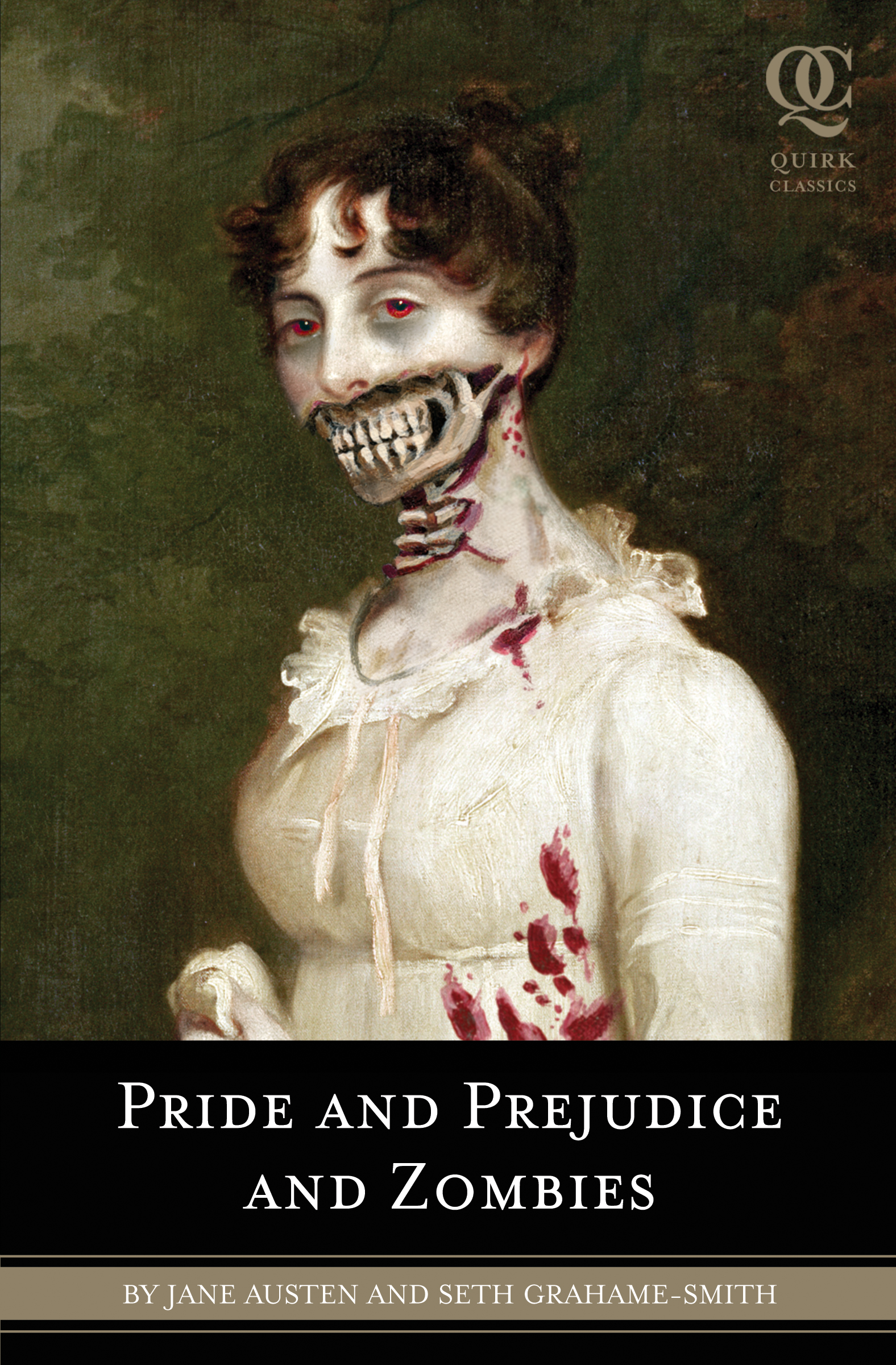
Pride and Prejudice and Zombies and Speculation
As we move from Romance to Paranormal Romance, the fiction becomes more blatantly speculative. Until you can get your hands on a vampire, werewolf or ghost, we must turn to authors like Anne Rice or Charlaine Harris to speculate about what it might be like to fall in love with them.
The bread-and-butter of speculative fiction contains elements that do not exist in our reality. Notice how simply changing from Jane Austen’s Pride and Prejudice to Seth Grahame-Smith’s Pride and Prejudice and Zombies moves the story along the speculative scale? Change the location of your story to Pluto, Atlantis, or The Nine Planes Of Hell, and it becomes more speculative. Amusingly, if we ever establish colonies on Pluto, Atlantis, or the Nine Planes of Hell, then that same story becomes less speculative. This brings up an interesting point.
Fiction about future events can become more or less speculative over time, depending on how the real world events play out. A Science Fiction story about what might happen when scientists crank up the Large Hadron Collider in 2014 would be speculative, for now. But that speculative-ness would change drastically once scientists actually push the button. After that, the story becomes alternative history (if the story gets the events wrong) or it becomes science fiction (if it gets the events right). The first case would see the story become more speculative, and the second case, less.
Like science fiction, Fantasy is a shoe-in for the speculative fiction seal, priding itself on speculation, if not outright demanding it. J.R.R. Tolkien’s The Lord of the Rings set the bar for building worlds that are not like the world you live in. George R. R. Martin’s A Game Of Thrones continues that tradition. You would never imagine that these were places you could go to on vacation.
Fantasy also bears special mention because of the distinction between Urban Fantasy (set in this world) and High Fantasy (set in a completely different world.) This doesn’t mean that Urban Fantasy is less speculative than High Fantasy. Urban Fantasy maintains its speculative status not by making new worlds, but by taking this world and adding elements that don’t exist. Jim Butcher’s Storm Front starts with the downtown Chicago that you already know, and adds a real wizard capable of performing real magic. In my own horror-comedy, Pinky the Invisible Flying Pony vs the Giant Carnivorous Poisonous Exploding Spider-Leeches, I start with a thirteen-year old girl attending school in modern-day, Belle Plaine, Minnesota and add… well, I’ll bet you can guess.
In some cases, urban fantasy ‘cheats’ by adding a gateway from the world we know into the one we don’t. We take the train to Hogwarts, or a tornado to Oz, or simply walk through the wardrobe to get to Narnia. These stories tread the middle ground between high fantasy and urban fantasy exactly the same way that their realness treads the middle ground between Standard Fiction and Speculative Fiction.
Guess what happens when they go too far?
Off The Deep End – The World Of The Weird

Weird Tales. If this ain’t speculative fiction, then nothing is.
As we approach the far end of the spectrum, extremely speculative works tend to be obvious. They hit you over the head with their non-realness. These are the stories from The Twilight Zone where your imagination is pushed to its limits and beyond. Stories told from the point of view of monsters, aliens or inanimate objects. The laws of physics are completely different, or no longer apply. Reality twists on itself and sprains its back.
For these stories, simply suspending your disbelief is not sufficient, you have to suspend it from the ceiling in a rubber gimp outfit, feed it LSD cupcakes and show it Lady Gaga videos in High Definition 3-D until it breaks.
I’m talking about Weird.
Weird Fiction is the blanket term for fiction that doesn’t follow the rules. Check out Tales of the Unanticipated. Or Weird Tales magazine. H.P. Lovecraft is probably king of this realm, but I’ve read stories that would make even Lovecraft say WTF, mostly by self-published authors, probably because they are just too weird for traditional publishers.
What is Speculative Fiction?
Speculative fiction is not simply a pass/fail stamp of approval we put on things that are already sci-fi, fantasy or horror. Or some Island of Misfit Genres, a home for genre outcasts that don’t fit anyplace else. True, it can serve these functions, but there’s more to it than that.
The speculativeness of fiction is a measurement on a scale, somewhere between “what if?” and “what the fuck?” Trying to draw a line between speculative and non-speculative is as tricky as trying to draw a line between hot and cold on a thermometer. It’s when the non-realness of the story outweighs the other aspects that we call it spec-fic.
Speculative Fiction is an exploration of You Are Not Here. An imaginary, creative and innovative attempt to make sense of the world, the unconscious, and often, the darkest aspects of human psychology, although not always making use of familiar science fiction, fantasy and horror elements.
To quote Lida E Quillen of Twilight Times ”it is writing that pushes the boundary of the imagination.”
[Many thanks to my assistant Claire, who helped with research and content for this article. -Z]
 Yours Darkly,
Conrad Zero